🎉 Small Bites, Big Flavor 🐺
With Father’s Day around the corner, we’re thinking about all the ways dads show up — and snack time definitely counts. Happy Wolf makes soft, fridge-fresh organic bars that are kid-approved, allergy-friendly, and honestly… pretty great for grown-ups too.

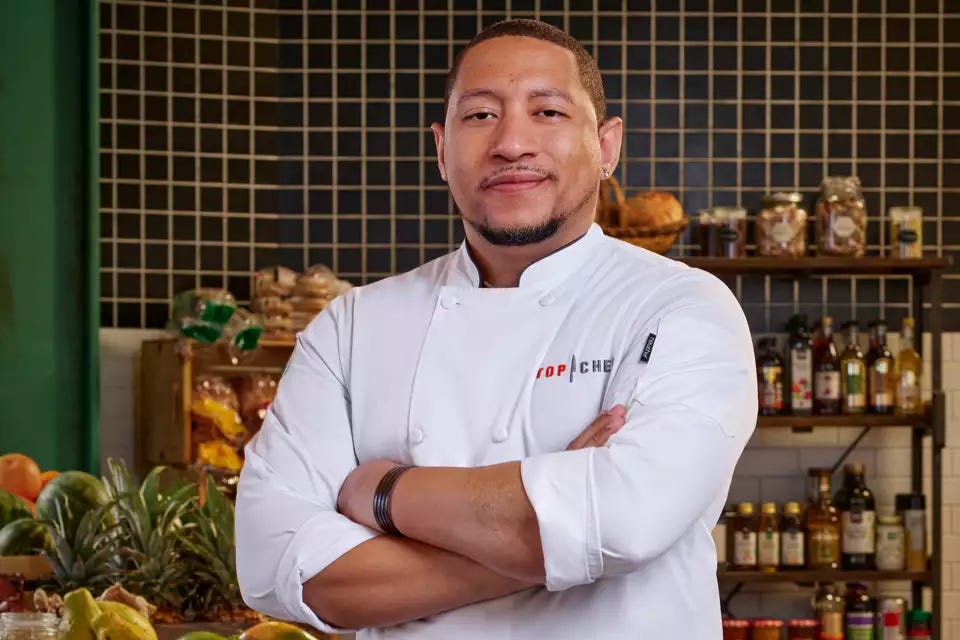
Before Chef Nelson German opened three standout Bay Area restaurants and became known for his bold, heritage-rich cooking—including a run on Top Chef: Portland (Season 18)—he was a kid quietly watching his mom cook, soaking in the joy of bachata, sizzling oil, and family gossip swirling through their Washington Heights kitchen. That kitchen, he tells us, is where his sense of flavor and family first began.
Now based in Oakland and raising a baby boy of his own, Chef Nelson is building something bigger than a food empire. As the Executive Chef and Owner of the award-winning alaMar Kitchen & Bar, Sobre Mesa, and most recently, Meski, Nelson has made it his mission to celebrate Afro-Dominican roots, tell stories of the African and Caribbean diasporas, and invite real community into his spaces. At home, he’s doing the same—just with smaller plates and softer spoons.
We caught up with Nelson the week leading up to Father’s Day, just as his six-month-old son Mason was starting solid foods. Between spoon-feeding purées and running kitchens, he shared how becoming a dad is reshaping his relationship to food, health, and the kind of legacy he wants to pass down—from his grandma’s pollo guisado to the plantains he hopes will be Mason’s first favorite bite.
From tips on feeding a baby while running restaurants to reclaiming cultural dishes in wellness spaces, Nelson speaks with heart and intention. Whether you’re a new dad, seasoned parent, or simply someone who knows the power of a good family meal, this one’s for you.
Happy Father’s Day to all the One Potato dads, stepdads, father figures, and food-loving families out there—we see you, and we’re cheering you on. 💛
A special message from our friends Happy Wolf:
Snack Time, Solved (Especially for the Littlest Wolves)
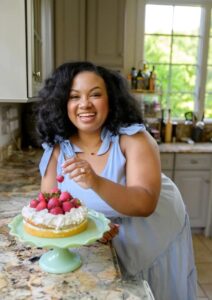
We love discovering mom-founded brands that just get it — and Happy Wolf Snacks is one of our new favorite finds. When Jana couldn’t find snacks that were both school-safe, allergy-friendly and made with real, nourishing ingredients for her own kids, she decided to create them herself.
Happy Wolf fridge-fresh snack bars are made with organic seed butters, oats, dates, & fruit – these ingredients are so clean & simple you could make the bars yourself, but you know what? They did it for you. Because who has the time?
Perfect for busy mornings, play-dates, or diaper bag snack emergencies, these bars are made with clean ingredients you can feel great about — no gluten, dairy, soy, or artificial junk. Just real food for real families. And they taste great, too- approved by even the pickiest of palates!
👉 Try Happy Wolf snacks here, or find them in the fridge at Whole Foods, and get something you’ll feel good about handing your kid — or sneaking a bite of yourself.

One Potato’s Order Up! Interview: Chef Nelson German on fatherhood, heritage, and feeding his family roots-first.
Introduce Yourself:
I’m Chef Nelson German. I was born and raised in Washington Heights in New York City, but now I’m based in the Bay Area, repping Oakland all the way. I’ve been married to my incredible wife, May, for 14 years, and we just had our first baby—our beautiful six-month-old son, Mason.
Having him has been the biggest blessing. It’s the hardest job I’ve ever had, but also the most meaningful. Watching him smile back at us—it’s surreal. It’s changed the way I think about everything, not just as a chef, but as a dad and as a family man.
Tell us about your restaurants.
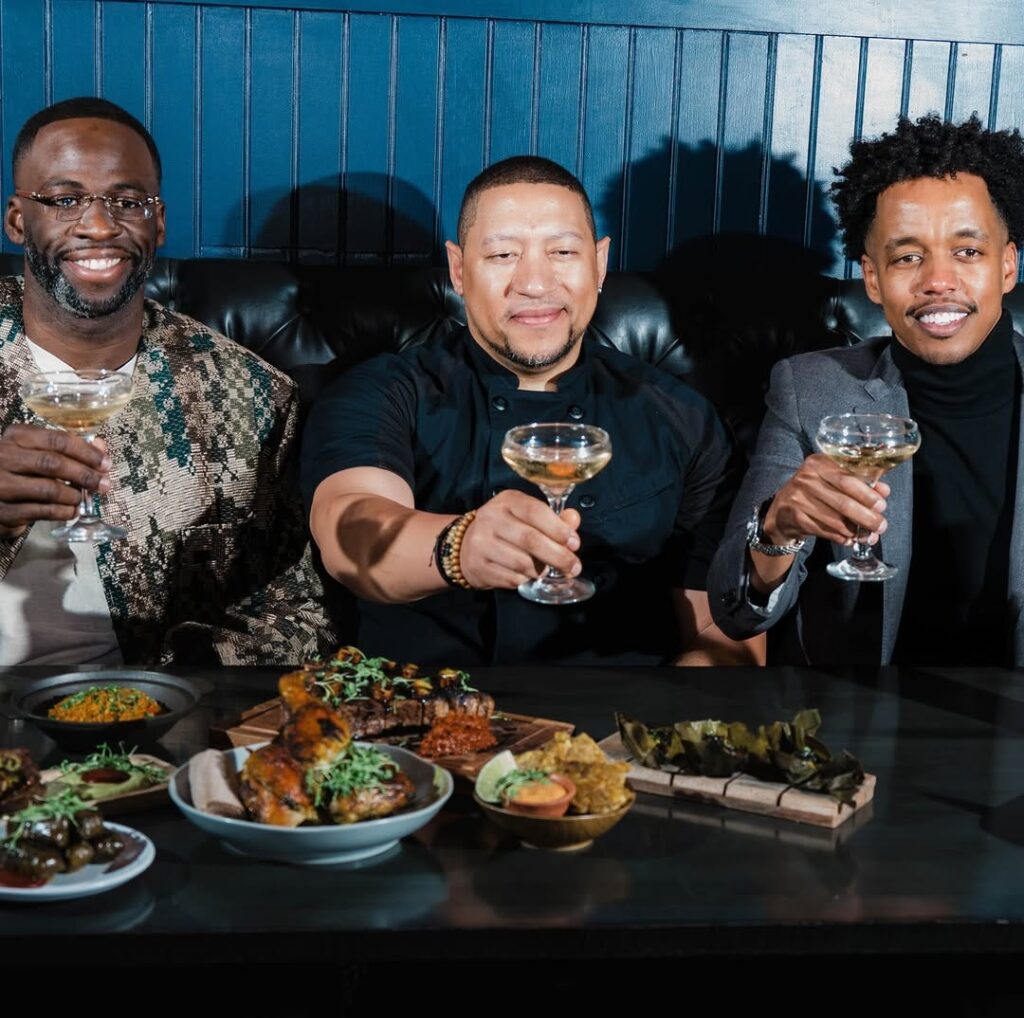
Right now I have three. My newest one is Meski in San Francisco, which has been a dream of mine for years. When I left New York, it was tough—but I knew I wanted to be in the Bay. San Francisco is such a food mecca, and I wanted to grow here. But Oakland—that’s my heart. Oakland gave me my first restaurant, and I’ll always fight for this town. The sense of community, the history, the pride—it reminds me of New York in that way.
Do you remember being in the kitchen as a kid? Did you cook with your mom or grandma growing up?
I was always fascinated by the kitchen, but too shy to step in. Part of it was that old-school Afro-Latino mindset—men weren’t usually expected to cook. I thought I was supposed to be doing homework or hanging out with my dad, not in the kitchen. But I was always watching my mom. She’d be in there cooking and dancing, watching novellas or chatting on the phone. It was full of life.
As an adult, now that I’m a chef, I finally get to cook with her—and when I do, I’m not the chef. I’m just her son. A few years ago, I told her how I used to feel, and she said, “You should’ve just come in! I would’ve taught you.” My grandma said the same thing. They never had a problem with it—it was all in my head.
One of my favorite memories was Thanksgiving 2022. We all went down to Florida—me, my brother, my mom, my grandma, my auntie—and cooked together. There’s this amazing photo of all our hands in the pot, cooking together. I actually used that photo in a collaboration with Levi’s—it’s printed on the back of a custom denim jacket. That image reminds me where I come from. My biggest inspirations weren’t fancy chefs from Europe—it was my mom, my grandma, and my auntie. They were the ones who made me want to cook.

Your menus are so full of bold flavor and heritage—you’ve talked about your connection to your mom and grandma, especially with dishes like your pollo guisado. Your son’s still little, but are there certain flavors or dishes you’re especially excited to introduce to him?
I can’t wait for the moment he tries plantain for the first time. In Dominican culture, plantains are everything. You eat them at every meal—breakfast, lunch, dinner, even dessert. And there are so many ways to prepare them.
We’ve been making homemade baby food—mashing bananas, puréed carrots, avocado, poached pear. He’s starting solids now, more mashed foods, so we’re almost at the point where I can try some sweet plantains and see how it goes. But the real moment will be when I can crank up the music, fry some plantains, and watch him experience that. That’ll be one of those “he’s officially Dominican” moments.
I’m excited to keep sharing these moments with my son. I want him to grow up tasting those same flavors, not just because they taste good but because of what they mean. I want him to feel connected to where we come from — to the Dominican Republic, to my mom, his abuela, and the people who made me who I am. My wife is Chinese, and in her family, food is really healthy and fresh too. So we’re both bringing our cultures into what he eats, even now. And with my wife’s background too, it’s going to be beautiful to see him grow up with both cultures. We’ll have dumplings and tostones on the same table, you know?
It’s wild to think that one day he might remember a specific flavor or dish from our home and it’ll take him right back to childhood. That’s what food has always done for me — it’s memory, it’s emotion, it’s identity. So I’m trying to build that for him now.
You’ve said you didn’t always cook from your heritage. What changed?
That’s true. Early in my career, I focused on other cuisines—Mediterranean was a specialty of mine. I trained in New York, traveled, cooked abroad, but it was always someone else’s food.
It wasn’t until more recently that I started to dig into where I come from. My first restaurant, alaMar, is turning 11 years old. It wasn’t always Dominican-focused; we started as a seafood spot with Mediterranean influences. I had one Dominican dish on the menu—braised oxtail with tostones—as a tribute to my mom’s first restaurant.
People would ask, “Where does this dish fit in?” And I’d say, “It’s my place—I can tell my story.” That oxtail became iconic. I’m even serving it as a pasta dish at my new restaurant now. Looking back, that was the beginning of it all.
Turning alaMar into a full Dominican restaurant made me emotional. I looked around at the food, the vibe, the music, and felt a deep pride. I’m the happiest I’ve ever been as a chef. I’m still learning, still digging deeper into my culture, and doing it through food.
Let’s talk about your newest restaurants. How are you exploring those Afro-Latin roots right now?
This journey has come full circle. After a trip to Cuba in 2019—my first—it really clicked for me. Being there was like going back in time. I saw how people live with so little, and yet they’re still living fully. The food, the culture—it was a reminder of what really matters.
That trip helped me reconnect with my roots in a deeper way. I was born in New York, but my mom came here pregnant with me from the Dominican Republic. And on my dad’s side, I’m West African—Cameroon. I started thinking more about who I am and the kinds of stories I want to tell through food.
That’s when Sobre Mesa was born—my Afro-Latino cocktail lounge with West African touches. It let me celebrate my culture and my Blackness, and Oakland played a big role in helping me feel empowered to do that.
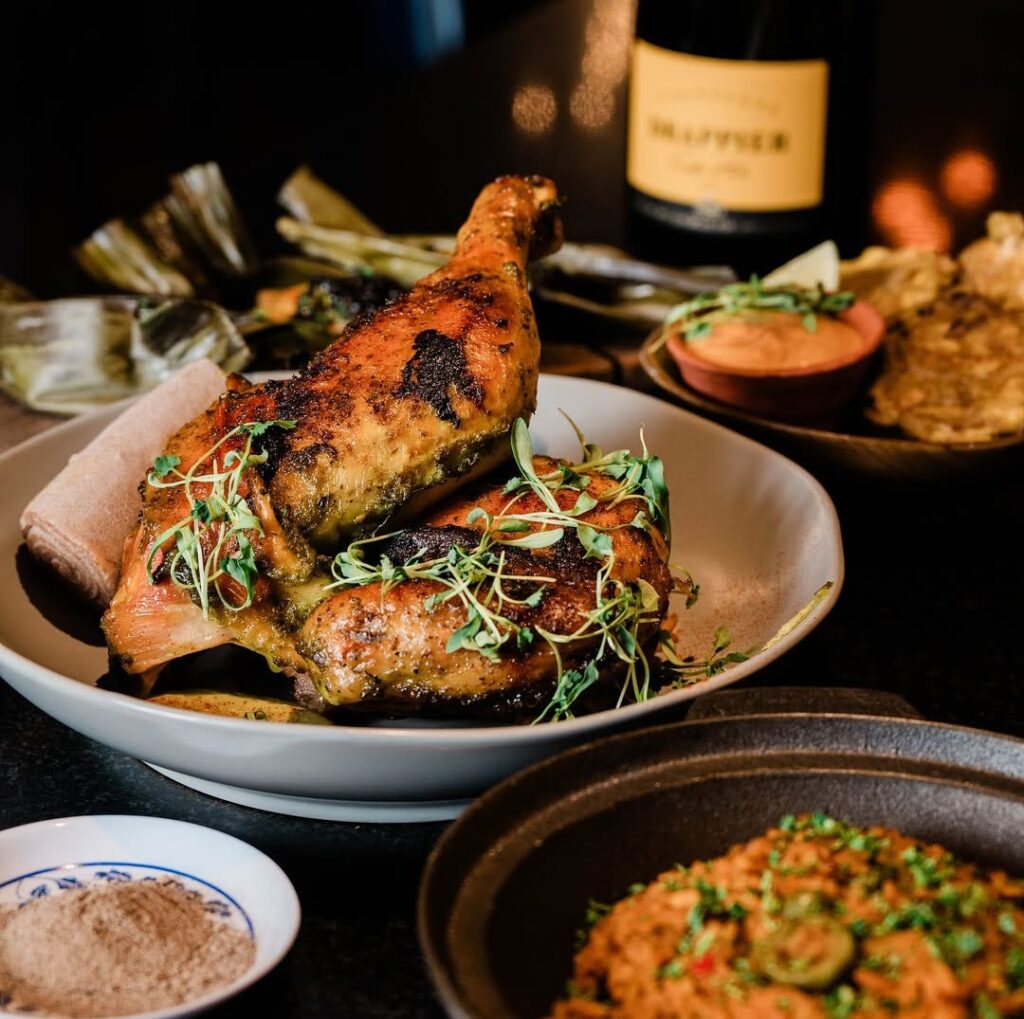
Now with Meski, I’m going even further—showcasing Afro-Latino culture alongside East African flavors. I’ve been pairing Dominican dishes with Ethiopian ones—like my mom’s rice and beans alongside misir wat, which are spicy lentils, made with my friend Guma’s mom’s recipe. We’re putting love on a plate and showing how connected the African diaspora really is.
People don’t always realize the origins of the ingredients they use—plantains, cassava, rice. They all came through West Africa to the Caribbean, often through the tragedy of the slave trade. But there’s power in reclaiming that history, in honoring it through food. This is Black history. This is Black food. It’s not just fusion—it’s truth.
Diners want to learn about new cultures. And food—food is one of the best ways to do that. It breaks stereotypes. It opens minds.

Okay, end-of-day, quick and comforting—what’s your go-to meal at home
Pollo guisado. It’s a braised chicken—simple, old-school, super fast. You sear the chicken, simmer it down, and take the flavor wherever you want. Dominican one day, Chinese-inspired the next. We pour it over rice, add some plantains on the side. It’s quick, comforting, and always hits the spot.
You’ve been on Top Chef, opened three restaurants, and have done a lot of big things—what’s been the biggest good surprise in your career?
The community part. I was always shy. I used to hide in the kitchen. At alaMar, we had a sink right in the middle of the dining room—partly for seafood boils, but also so people would come wash their hands and I could talk to them without having to leave the kitchen. That was my comfort zone.
Now I’m doing public speaking, mentoring, visiting schools, being called a community leader. My mom wouldn’t have guessed I’d be that guy. But I’ve grown. I’ve opened up. And now that part of the work—the uplifting, the inspiring—that’s become more important to me than the accolades. It’s humbling.
How about parenting? What’s been the biggest surprise there?
The long-term thinking. I didn’t expect how early you have to start thinking about schools and daycare—it came up fast. Now we’re planning years ahead. We want our son in a place that’s diverse, safe, nurturing. Somewhere he can grow and feel seen. That shift has made us more thoughtful about the kind of world we want him to grow up in.
Before we wrap—anything else you want to make sure we include?
My Top Chef experience played a huge role in this journey. I was on Season 18, and that show solidified my path. Episode 4 was the Pan-African challenge, and we visited a Senegalese restaurant in Portland called Akadi. Eating that food—it felt like home. That’s when I knew this is who I am. I’m African. I’m Black. This is our food.
After that, everything shifted. When I leaned into those roots on the show, the judges responded. When I veered into more classical French, not as much. So I came out of that experience more sure of my purpose. Cooking Dominican food, West African food, East African food with Afro-Latin touches—it’s been incredibly fulfilling.
If your readers haven’t watched that season, I recommend it. We filmed it during COVID, and it was the most diverse cast and crew the show had ever had. We changed the game—and it helped me become a better version of myself.