Small Bites: Torie Borrelli Hall tells us this week that a kid may need to see a food eight to 15 times before it sticks, and that forcing it doesn’t help. The Picky Eating Playbook from our friends at Raising Healthy Families is built for the parent’s side of all those tries, with short videos and one small thing to try after each. 👉 Learn More
Grab your copy of Torie and Eric’s book: Eating for Life: A Holistic Cookbook for Pregnancy and a Thriving Family [Buy it on Amazon]
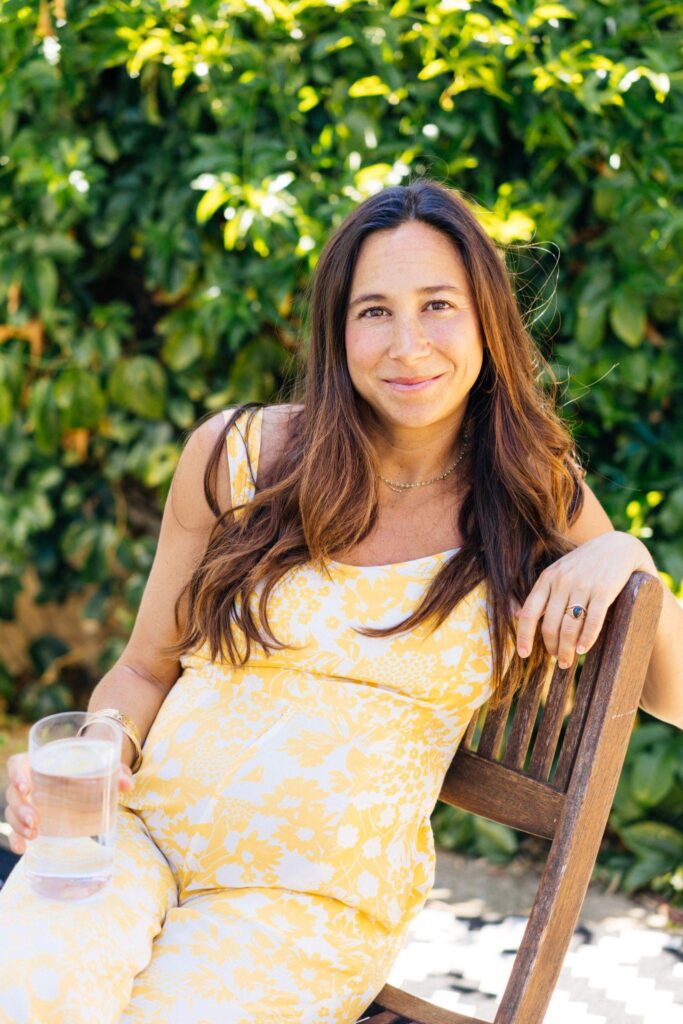
“You Understood the Assignment”: Torie Borrelli Hall on Teaching Kids to Listen to Their Bodies
When Torie Borrelli Hall was a kid, her family talked about dinner at breakfast. Her dad did all the cooking. He’s Italian-American, from Philadelphia, and he grew up in his grandfather’s pizza shop. At dinnertime you picked a job: salad, chopping, or dishes. Torie always picked the food. Her sister picked dishes, and she still likes to clean.
Torie was also sick for most of her teens, in a way nobody could see. She played high-level soccer and surfed competitively, and she was missing school every month because of her period. The doctors kept offering birth control and stool softeners. At 16, an aunt pointed her to a naturopath, and Torie went home and started reading food labels in an Italian family that thought going gluten-free was insane.
Now she’s a functional nutritionist in San Diego and a mom of two: a four-year-old son who eats sardines straight from the can, and a two-and-a-half-year-old. Her new cookbook, Eating for Life: A Holistic Cookbook for Pregnancy and a Thriving Family [Buy it on Amazon] came out in September and is available to order now. She wrote it with chef and photographer Eric Wolfinger, who told her she was crazy for wanting five egg yolks in a carbonara.
We talked about the liver in every pound of ground beef in her house and why the book is organized by nutrients instead of meals. She also told us about the nights she bribes her son with ice cream, after swearing she’d never be that mom.
What she wants most for her kids sounds simple and takes years to teach: that they pay attention to how food makes them feel.
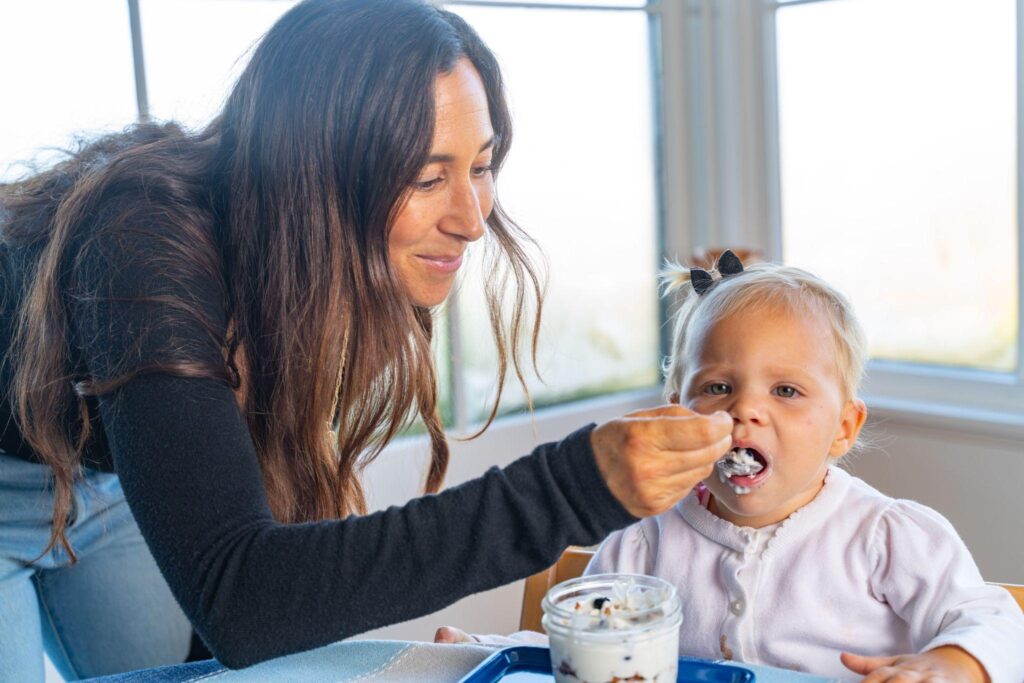
A Conversation with Torie Borrelli Hall, Nutritionist and Author
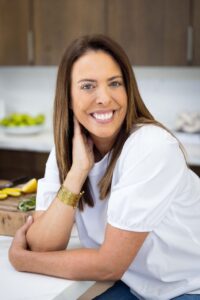
Introduce yourself: I’m Torie Borrelli Hall. I’m an integrative nutritionist, author of two books, and a mom of two, a four-year-old and a two-and-a-half-year-old.
What did dinner look like in your house growing up, and who was doing the cooking?
My family wasn’t very traditional. On the Mexican side, culturally, the women do everything. But in our house my dad was the cook. He’s Italian, born and raised in Philadelphia, and he comes from a foodie family. He grew up with his grandfather in the kitchen, literally at a pizza shop. He made all our lunches and all our dinners. My mom could cook, but he was in charge.
At dinnertime you had to choose. You could make the salad, help chop, or do dishes. I always chose the food side. Cleaning is my least favorite part of food. My sister likes to clean everything to this day, so I think it got instilled in her. And to be honest, we didn’t really eat out. If we were craving something, we made it. We’d be talking about what we were having for dinner at breakfast time.
When did food start to feel connected to your health?
Because of my own health issues. When I was little, I didn’t know I was different. I didn’t know it wasn’t normal to go to the bathroom once a week, or that other people’s stomachs didn’t hurt after they ate certain foods.
Then I hit my teens and my menstrual cycles were debilitating. I thought my appendix was bursting and I’d end up at the hospital. And it was the same thing every time. The doctor says go on birth control. The doctor says take a stool softener. When you’re young you just listen to your doctor, so of course I tried everything.
I played really high-level soccer and I was a surfer, and lived a really active lifestyle. From the outside I looked totally normal, but I struggled with gut and hormonal issues, and when I knew my period was coming I’d cancel everything. This was my level of normal. That’s why I’m so passionate about what I do: It’s not normal for a 16-year-old girl to miss school because of her period.
What finally changed?
Around 16, an aunt who was really into health said maybe I should try an alternative approach. I went to a naturopathic doctor, and I remember it so clearly. She told me I have thalassemia, which is a genetic type of anemia. It doesn’t go away, but it explained so much about my cycles, and now my fertility journey makes so much more sense too. I also had tons of parasites; when I was growing up, we spent a lot of time in Mexico, ate a lot of seafood.
So I started working on my gut health. I went gluten-free back when it wasn’t even a thing, and my Italian family thought I was insane. I started fermenting things at home, buying organic, looking at where my meat came from.
At the same time, I was still trying to be a normal kid. I started a blog at 18 called Skinny Fat Kids, because everyone said all I talked about was food, so I should be a fat kid, but I was tiny. I’d post recipes for flaxseed crackers and liver pâté. I minored in nutrition in college, then studied nutrition after. It was a slow progression into realizing this is what I wanted to do and how I wanted to help people.

A lot of parents carry a quiet guilt that they’re not feeding their family right. What do you wish they heard about food and shame?
Shaming is going to create long-term issues. There’s a better way to do it. The science shows you need to show your kid a food eight to 15 times.
Take liver for example. Organ meats are one of my superfoods. My kids ate them as solid first foods, coming off breast milk, along with bone marrow; foods maybe even you didn’t grow up eating. Now every time we have ground beef, whether it’s a hamburger, meatballs, or pasta sauce, liver is going in there.
I know it’s overwhelming to try liver eight times. But if you’re not forcing it down their throat, rather they see you eating it, or big brother or a cousin eating it, it works. My sister has two boys, and when they come over she’s like, “Why do they always eat your food? Does it taste better?” The answer is no, I just do things differently. Her son only eats carrots and cucumbers, so I put out the protein ranch from my book with all these other vegetables around it. And there are no crackers on there. If there are always crackers and pretzels, they’re going to choose those. So would we. Carbs are crunchy and satisfying! But if they’re not even on the plate, they aren’t an option.
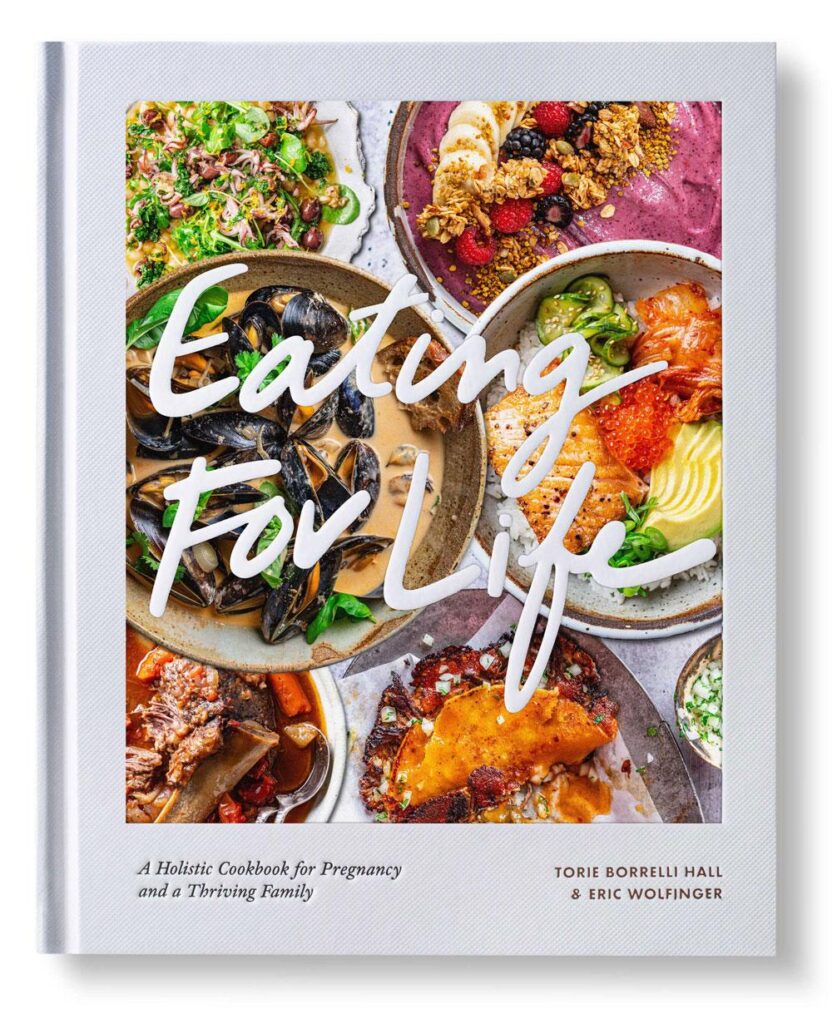
Eating for Life is organized by nutrients, not by meals. Why?
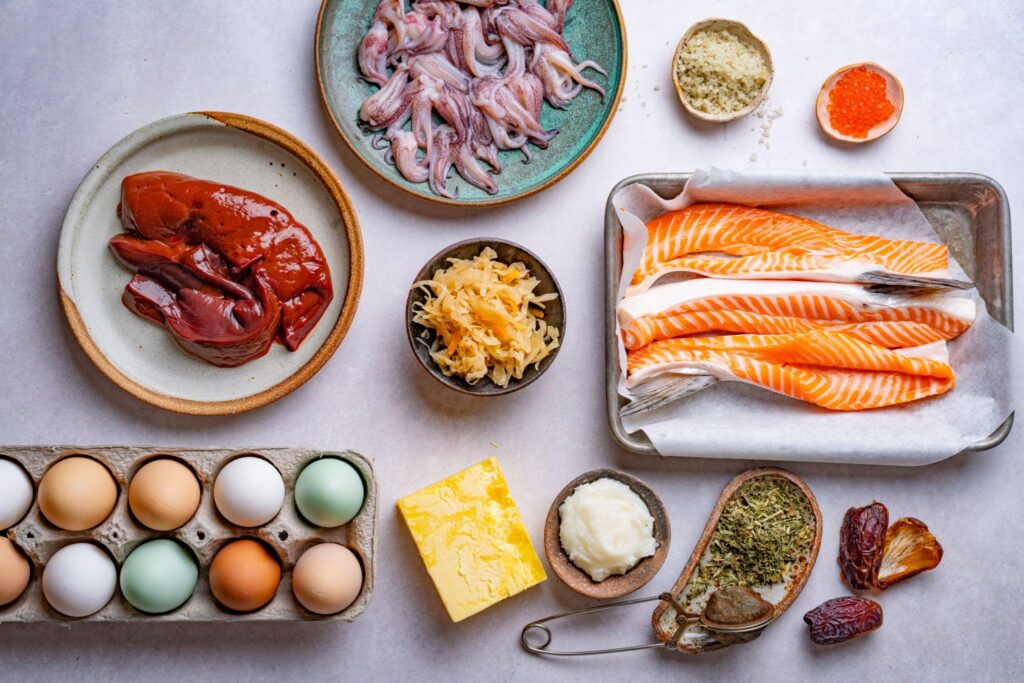
When I was in my fertility journey and working with clients, I started asking: what is a prenatal made of? These vitamins and minerals are the core of building a healthy baby. Well, what foods do they come from? And some of those foods are the ones being demonized. You can’t have runny egg yolks. You can’t have shellfish. The amount of texts I get from friends and clients saying, “But I’m craving this so much.” There’s a reason we crave things. Our bodies need it.
The research is nuanced. The CDC wants to keep us safe, and I’m not trying to just be that person. But take choline. It’s building the baby’s brain, and 90% of women aren’t getting enough. Egg yolks are the most nutrient-dense source, and you’re told to cook them, so you cook out the choline. It’s missing the point.
So my whole thing is, I’m not your doctor. I’m not going to tell you what to do. These are the foods these nutrients come from. Look at the research and make your decision. And be smart. If that egg smells bad, don’t eat it. I would never eat sushi from 7-Eleven. Ever.
And if something doesn’t feel right to you, like putting an egg yolk in your coffee the way I tell you to, don’t do it. It’s okay. But if you’re in your first trimester and you know eggs are important and they make you nauseous, here are some recipes to sneak them in.
Wait, egg yolk in your coffee?
My business partner said, “I can’t believe you’re about to ruin my coffee with this egg yolk.” You mix an egg yolk with a little sweetener. I’m not anti-sugar, so honey or maple syrup. Then mix it into your warm milk. Don’t heat it too much or you’ll make scrambled eggs. Put your coffee on top. It’s creamy and delicious. Froth in some protein powder and you’re close to 30 grams of protein, which is my goal for women at breakfast.

You wrote the book with Eric Wolfinger, a trained chef and food photographer who cooked for his partner through her two pregnancies. What did he bring to the recipes?
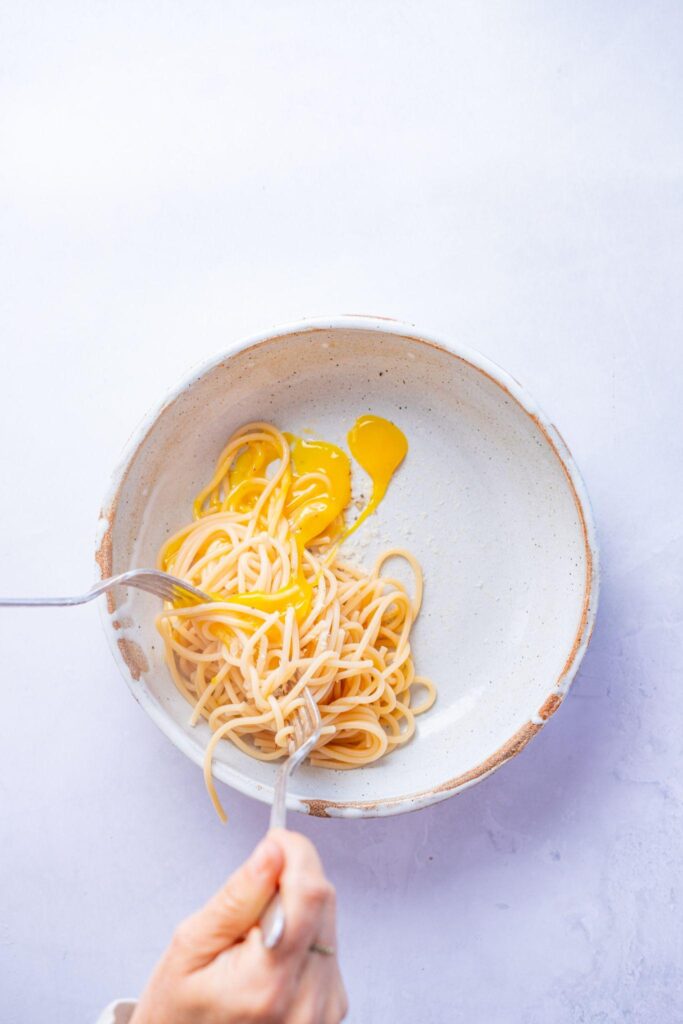
He knows food, and it was really fun. The carbonara is the perfect example. I’m Italian, I love carbonara, and I told him the eggs can’t come up to temperature. He said, “You want five egg yolks? You’re crazy.” Then he figured out that if you preheat the bowl, the eggs don’t cook, and you get this creamy, custardy carbonara. A lot of the recipes are mine, a lot are his that I tweaked, and a lot we created together.
I changed his mind on a couple of things. Liver was a huge one. He said, “You are not messing up my burger with liver,” and now he says he can’t even taste it. There’s an avocado mousse with cottage cheese in it, and he said it sounded disgusting. Now he says you could trick someone who knows a traditional chocolate mousse. Having a trained chef’s input means these recipes are solid, but a teenage girl should still be able to make them. There are no crazy three-day recipes.
The book started as a pregnancy cookbook. Who is it for now?
I wanted to make a pregnancy book because I felt like there was no pregnancy book out there. I had all the books on my desk, but nothing that had food and nutrition. Then during our Kickstarter, people kept saying, “Isn’t this book for everyone? Why does it say pregnancy on it?” So we changed the name during the Kickstarter.
We named it Eating for Life because the protein and the nutrients we’ve talked about matter at every stage. One reporter told us she’s 70, doesn’t have kids, and didn’t think the book was for her. I thought, oh boy, this is going to be a bad interview. Then the piece came out and she wrote, if you’re pregnant, know someone who’s pregnant, or are very much not pregnant but want to eat well, there’s a new cookbook called Eating for Life. She got the message.
Where do tired parents usually give up on batch cooking, and how does the book help it stick?
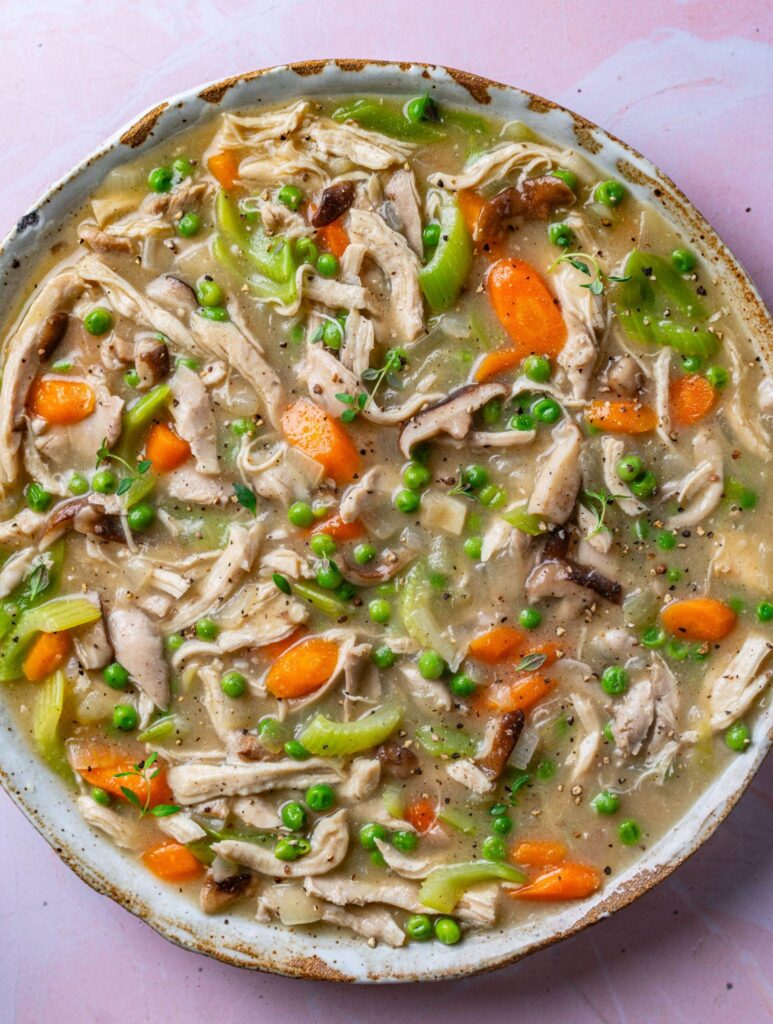
I’m not a big believer in eating the same thing every day. Most people like to switch it up. So the idea is you go to the egg chapter and pick a couple of things that sound good. Every single recipe has a photo. When you’re in your first trimester, or tired postpartum, nothing sounds good. You open the fridge a hundred times. This lets you eat with your eyes.
Then batch cooking looks a little different. You’re not just making a bunch of chicken breasts. You make shredded chicken in the Instant Pot, and with that shredded chicken you can make four recipes.
I’m not one to plan the whole week, but I plan my proteins. My son is anti-egg right now, so I make my protein muffins. There are 10 grams in one muffin. At least I know he got some protein in.
Every recipe also has a scan-and-share code. What’s that for?
When you’re pregnant or postpartum, or you just need a little support, people want to help, and meal trains turn into Postmates. Pho sent to you is great. Three nights in a row of different takeout is not what we want.
So you see something that sounds good and send it to your husband on the way home so he can pick up the ingredients. Or send it to your grandma who’s coming over later. Or the neighbor who keeps asking to bring you food. People love that. You told them exactly what to make.
And sometimes when someone else cooks it, you can eat it. So many weird things happen when you’re pregnant. You don’t want the meat smell in your house, but you’ll eat tacos with meat in them if someone else cooks them and brings them over.
How do you keep offering new foods to picky eaters when half of it comes back untouched?
I let them be kids and let them try things. My son’s favorite food is clams. Clams are not cheap. He’s like, “I’m just going to have clams tonight for dinner,” and I’m like, where are we going to get those? It’s Tuesday.
We self-published, so instead of traditional recipe testers we sent recipes out to our community. Around 200 people signed up and each tested two. One mom made the spaghetti and clams, and her kids loved the clams. She would never have given them clams before. Not because she’s a bad mom, she just didn’t know they would eat them, and she didn’t think to cook them.
You might make it and nobody eats it. Two months later you try again, and you might be really surprised. Keep putting that vegetable out. Maybe mix it up, don’t always serve broccoli.
And get them in the kitchen. People trip out that I let a two-year-old use a regular knife. Kids learn fast! My son is four and he can flip an egg. We have a couple of little raised beds in the garden, and my kids eat tomatoes because they grew them. My son will go into the pantry and eat a can of sardines, and people ask, “What did you do?” Well, I eat sardines. They copy you.

What did you believe about feeding kids before you had them that changed?
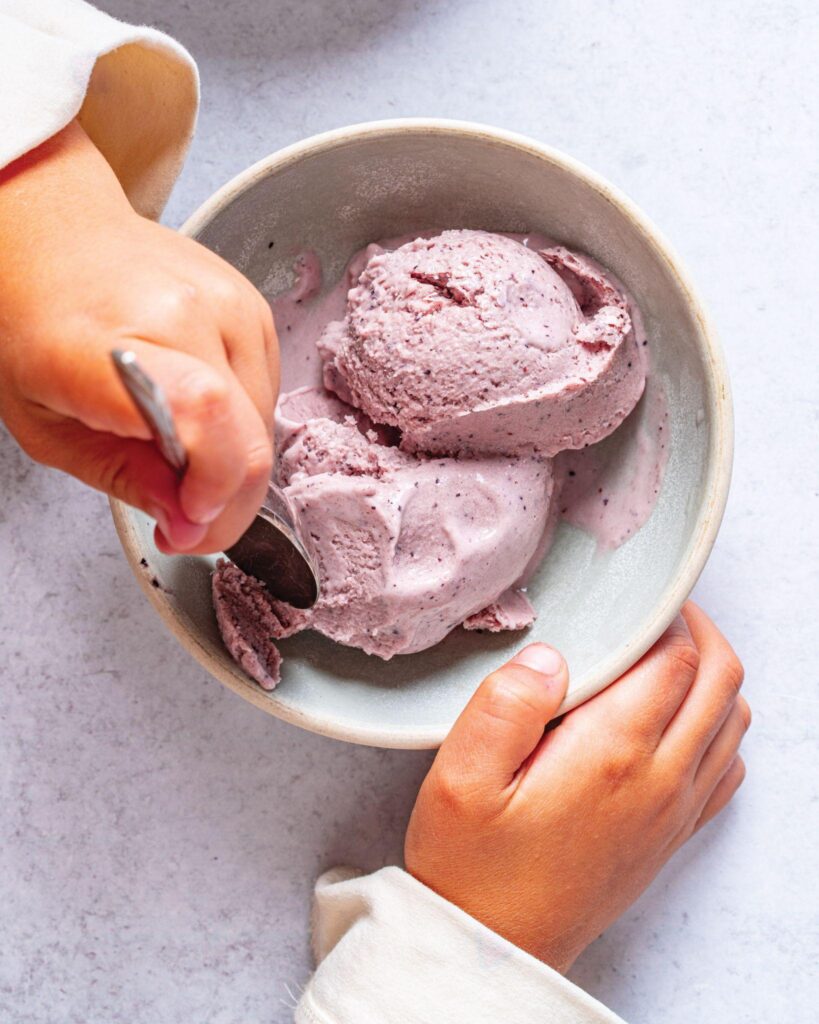
Sugar, for sure. My son is definitely a sugar addict. I was never going to be the mom who says, “If you eat your dinner, you get ice cream.” What I’ve learned in four years is that he’s a great eater, but sometimes dinner is a fight and I’m exhausted. I have the five-ingredient homemade ice cream from the book in the freezer. There’s still sugar in it, but it’s good stuff. So I use ice cream against him. We eat our protein, and then we get a big bowl of ice cream.
If he wants pasta with cheese, I’ll mix a little cottage cheese in to get more protein. If he just wants butter, I’ll ask, “Will you have a meat stick?” I’m always trying to do a little. But sometimes you just have to give in.
I’m pretty strict about seed oils and food dye, because I’ve seen what dye does to kids. My son will literally ask people, “Does this have food dye in it?” And I don’t want him to be scared of food. I don’t want food to be bad. So we get dye-free sprinkles. For a new mom, I’d say lower your expectations, so you’re not always let down.
What do you hope your kids carry with them about food and their bodies once they’re out in the world?
Connecting how certain things make you feel. After the second slice of cake, I’ll ask, how did that make you feel? “My tummy hurts.” Last time we were at my parents’, my son said, “I ate all my fish. I didn’t feel like the pasta. Do I still get dessert?” Okay, you understood the assignment.
I want to give my kids those skills, listening to your body. You can have a third bowl of ice cream, but are you going to like how that made you feel later?
Is there a cooking skill or tool you use all the time that every home cook should know?
Can it be the Instant Pot? If you’re busy, buy an Instant Pot. It’ll change your life. You can put frozen meat in there when you forgot to pull it out in the morning, or put a whole roast in and leave for work all day, and you have something to nourish you when you get home.
Follow Torie Borrelli Hall on Instagram @thevidawell
& Don’t forget to follow US on IG @onepotatobox ❤️