This post contains affiliate links. If you buy through them, One Potato may earn a small commission at no extra cost to you.
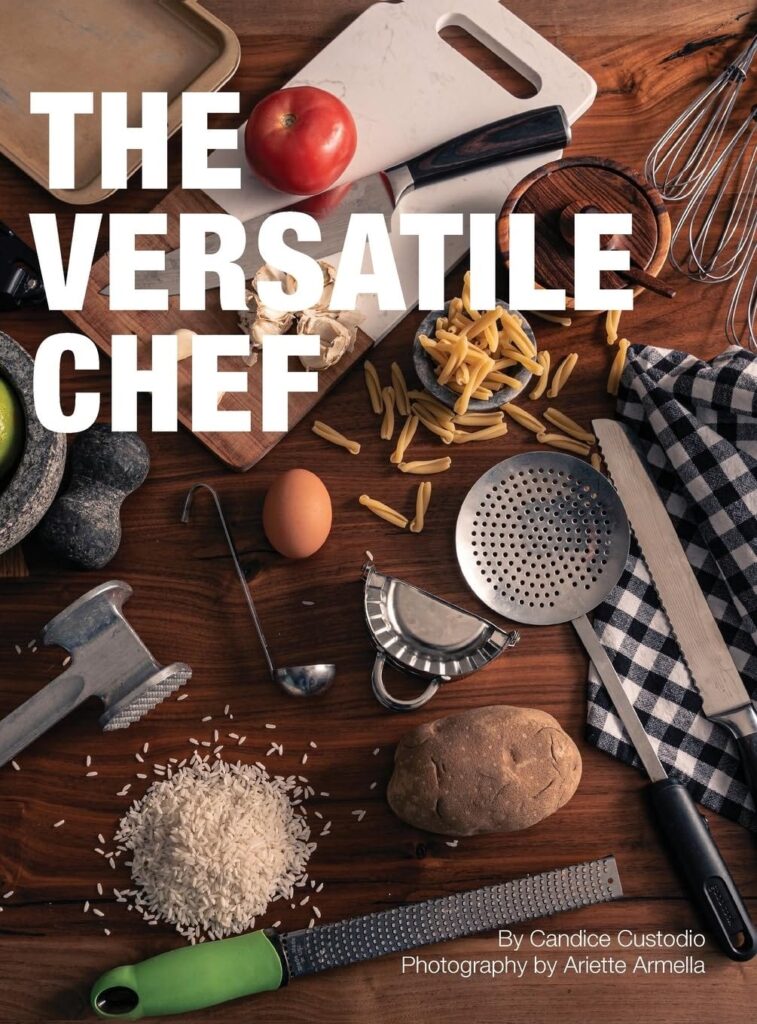
Small Bites: The Versatile Chef by Candice Custodio [Bookshop, Amazon]
🍽️ Summer on a Plate – fresh from Peas & Hoppiness
There’s something magic about seasonal eating — and Peas & Hoppiness knows how to bring it to your table. Each week’s menu highlights the season’s freshest produce (think juicy strawberries, bright greens, tender asparagus) and turns it into simple, delicious meals. Bonus? Seasonal ingredients are often more nutritious and more affordable, so it’s a win for your body and your grocery budget. Check it out here: Make Family Meal Time Easier with Peas & Hoppiness Meal Planning App from our friend registered dietitian Ann Kent. Use code ONEPOTATO30 for a 30-day trial.
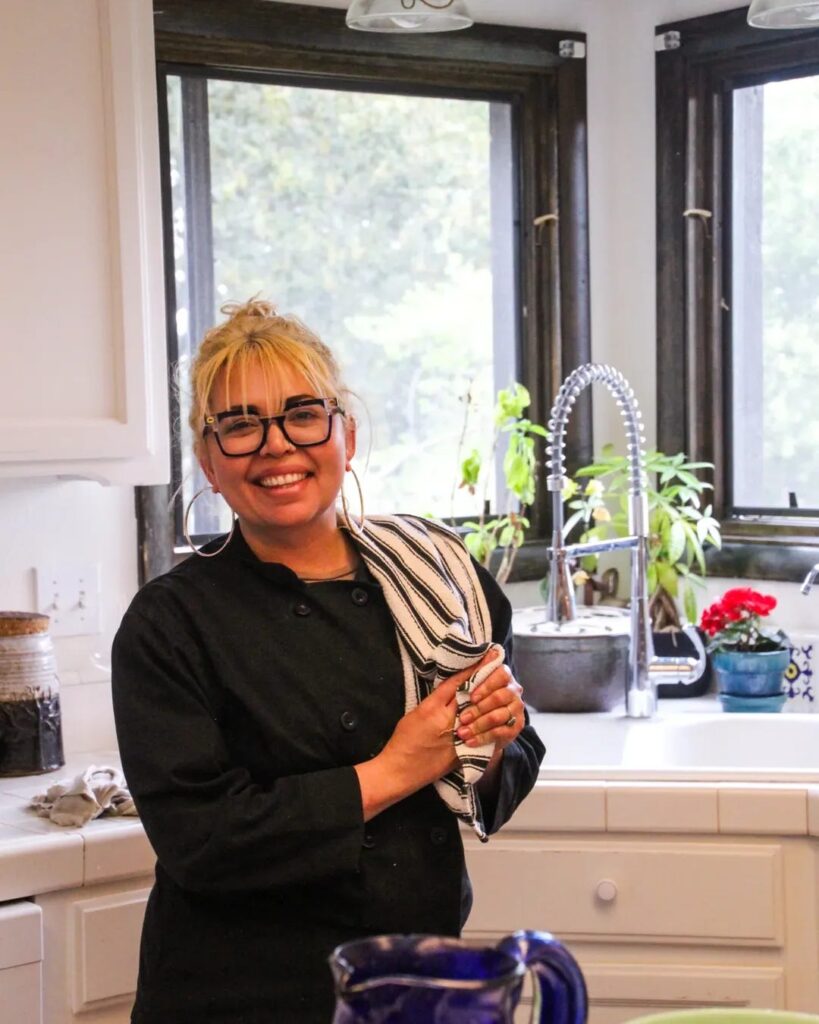
Candice Custodio on Feeding Her Family, Her Community, and Herself
Chef Candice Custodio is the kind of person who makes you believe anything is possible—as long as the deviled eggs are topped with huancaína sauce and there’s just the right amount of wine involved. A private chef, mother of two under three, homesteader, and executive director of At Her Table, Candice is deeply rooted in California’s Central Coast, where she’s building the kind of food community she once went looking for herself.
A proud Cal Poly alum and Food Network Chopped alumna, Candice’s journey started with a grandmother’s bootcamp, a few unforgettable meals at friends’ homes, and the realization that food could be a bridge to identity, memory, and belonging. Today, she’s the force behind Club Sup Sup, her Latin-inspired monthly supper club spotlighting Mexican, Puerto Rican, and Peruvian flavors (and yes, the post-Thanksgiving pozole is non-negotiable).
In our conversation, Candice opens up about learning to cook at 19, creating multicultural traditions with her Peruvian husband, and navigating motherhood with humor and humility (“my daughter tricked me—she used to eat everything!”). She also shares her hopes for raising kids who know where their food comes from—whether it’s from their family’s garden, the neighbor’s pasture, or a lovingly curated weekly meal plan built around not wasting a single beet.
Candice is the first to admit she doesn’t do it all alone—and she doesn’t want you to think she does. In this interview, she gets candid about community, burnout, postpartum chaos, and the myth of balance. And she leaves us with the reminder we all need: you only have 100% to give—so give it where it matters, and be gentle with yourself the rest of the time.
A message from our friends Katie Kimball & Kids Cook Real Food:
Want to Build Memories Together in the Kitchen – AND Raise a More Confident Cook? 🍳
We’ve heard it again and again from the chefs we’ve interviewed—some of the best food memories (and life lessons) start with kids helping in the kitchen. That’s why we’re big fans of Kids Cook Real Food, a self-paced course that makes it easy (and fun!) for your kids to learn real cooking skills, one safe step at a time.
Whether your kiddo is ready to crack eggs or just wants to stir the pancake batter, this course gives them the tools—and confidence—to help with dinner and feel proud of it.
👉 Explore the course here and bring more helping hands into the kitchen.
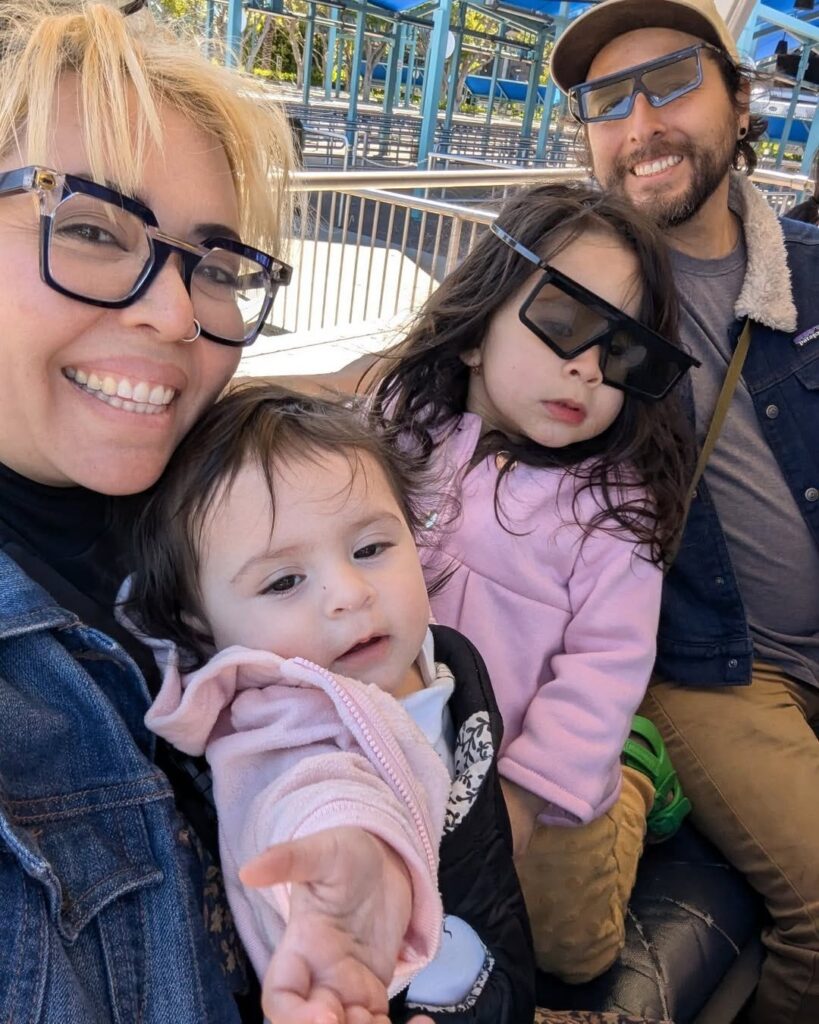
A Conversation with Chef Candice Custodio
Introduce Yourself: I’m Candice — I’m a private chef here on the Central Coast of California, and I work mostly with wineries and businesses. I have two daughters: one is just shy of three, and the other just turned 10 months. So I’m deep in the baby stage again.
I run a monthly supper club called Club Sup Sup, where I showcase my Latin-inspired cuisine. I’m also the executive director of a nonprofit called At Her Table, which supports and uplifts women in the food, wine, and hospitality world.
Did you grow up cooking? Or was that something you came to later?
Funny enough, my mom actually doesn’t love to cook—she’ll tell you that herself! But she made sure I was always well fed. A lot of my early food memories are of her go-to dishes, like spaghetti, her “green soup” (which I still make today), and these amazing green enchiladas that I’ve never been able to replicate. They were somehow crispy and soft at the same time.
I spent some time with my grandmother, who’s Puerto Rican and a very self-taught chef. I definitely got some homemade love in the kitchen that way. But honestly, it wasn’t until I was 19 that I really learned how to cook. I call it my “grandmother’s boot camp”—she yelled at me until I figured things out. Something clicked on that trip, and I haven’t stopped cooking since.

What really sparked your love for food?
It was honestly going to friends’ houses growing up—especially friends whose families were from places like Colombia. I’d see these layers of food, whole meals made from scratch, and the way people gathered around the table. It was beautiful. I realized I wanted to create that same feeling for others. That connection. That culture. That memory. It’s what still drives me today.
What do you remember most about the flavors you grew up with—and how do they show up in your cooking today?
The taste of cilantro. Lime. Sofrito. Those flavors transport me instantly. Growing up in Culver City, you had culture everywhere, but at the same time, it could feel easy to get lost in the mix. So those strong sensory memories grounded me—and they’ve become central to the way I cook.
Whether I’m cooking for clients or family, I always want to create a moment that freezes in time. Something they’ll remember. If someone tells me, “That reminded me of my mom’s cooking,” or “That took me back to a trip I took in Italy”—I mean, that’s the best compliment I could ever get.
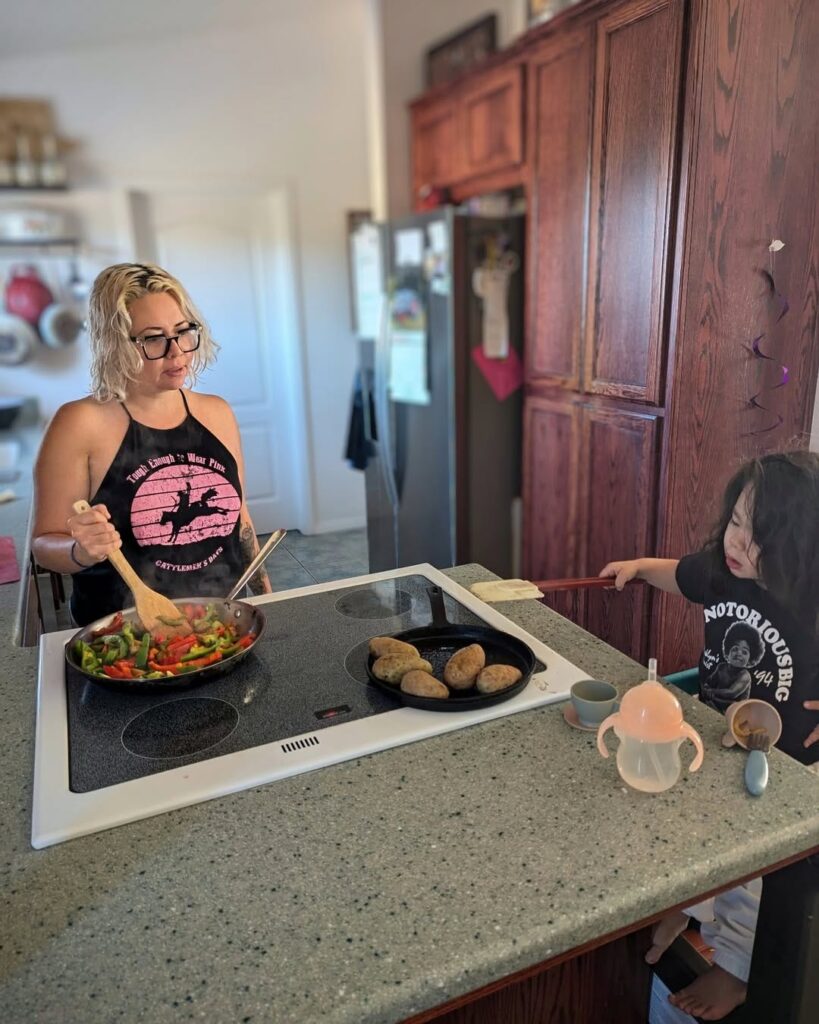
You’ve said your food is “seasonally inspired but rooted in tradition.” Is there a dish you love making that you hope becomes part of your kids’ memories too?
I think a lot about Thanksgiving, actually. My husband is Peruvian, I’m Mexican and Puerto Rican, and our holidays have become this cultural mash-up—in the best way. There’s Peruvian ceviche, Puerto Rican sides, Mexican pozole. One of our signature dishes is huancaína sauce (this cheesy yellow pepper sauce) that I now serve on deviled eggs instead of potatoes. That’s become our thing.
We also skip the traditional turkey. We make a prime rib on Thanksgiving, and the next day, I grab one of those discounted turkeys and turn it into pozole. That’s part of the tradition now, too. And I’m so curious to see what dishes my girls will latch onto and carry forward.
What about your blended cultural background—any tips for other parents navigating that in the kitchen?
Blending cultures isn’t always easy, especially when you’re a few generations removed. I’m first-generation American on my dad’s side, and my mom is a first-generation, English-speaking Puerto Rican. Sometimes you feel really disconnected—like, who do I ask? What did this dish look like? How did we make it?
For me, it’s about seeking out community. I ask my mom. I ask my mother-in-law. I spend time on blogs, YouTube, whatever I can find. I really want my kids to know where they come from, even if they don’t grow up speaking Spanish fluently or making everything from scratch. It’s about honoring the original traditions while adapting them in a way that feels personal and doable.
Has motherhood changed the way you cook—at home or professionally?
Oh, absolutely. My first daughter totally tricked me—her first year, she ate everything. I thought, I’ve got the golden child! And then she hit a picky phase hard. Now, if something’s the wrong color, or the texture is weird, or it just looks off, she won’t touch it—even if she’s had it before.
So I cook in two versions now. I make our grown-up dish, and then I tweak it for her. If it’s eggs with ham, I dice the ham super fine so she doesn’t notice. The other day I made lasagna, and she said, “I want pasta, not lasagna,” so I boiled her plain pasta. My husband was like, “You wouldn’t even do that for me!” But that’s parenting, right?
Let’s talk about Club Sup Sup. What inspired you to create it—and what does it mean to you?
Living on the Central Coast, we’re surrounded by incredible farms and wine country—but the local food scene is still very meat-and-potatoes. I wanted a space where I could cook the food I love: Mexican cuisine that’s not just tacos and burritos, Puerto Rican dishes that people here may have never tried.
So one night—after just the right amount of wine—my husband and I brainstormed the name, snagged the domain and Instagram handle, and ran with it. I host the supper club once a month on Wednesdays, which works great for folks in the hospitality industry who usually work weekends. It’s not about making a ton of money—it’s my living, breathing business card. I meet winemakers, small business owners, all kinds of people, and we get to connect through food. It’s become this beautiful community-building thing.
And now you’ve taken over At Her Table, too—what was that decision like?
At Her Table was created a few years ago by Michelle Barrera. I was a member and saw firsthand how much it did for women like me—connecting us, giving us visibility, bringing clients our way. When I found out she was stepping away, I knew I had to try and keep it alive.
It was one of those impulsive, wine-fueled decisions. I sent in an offer and thought, okay, if it works out, great. And then they said yes! It’s been intense—I had just had my second baby, and suddenly I was putting together a whole week of events with almost no lead time. But I don’t regret it. I’ve taken a little breather to protect my mental health, but I’m already planning for the next season. It’s about lifting each other up. We need that more than ever.
In your opinion, what kind of support do women—especially moms—in food need most right now?
We need to stop pretending anyone is doing it all alone. I get a lot of “Wow, you do everything!” and I always try to be honest: I cry. I rely on my husband and my mom. My house is not always clean. I don’t have it all together.
We only have 100% to give. Not 100% to parenting and 100% to our careers and 100% to everything else. Some days, something’s going to fall short—and that’s okay. Be gentle with yourself. It doesn’t make you less than. And remember, social media is curated. Even mine. You’re not seeing the crying in the bathroom, you’re seeing the highlight reel.
You’ve got a garden, chickens, goats—you call yourself a homesteader. What does that mean for you?
My goal is to not have to buy anything from the store. I grow seasonal ingredients, raise animals, and trade or buy from local farmers when I can’t raise it myself. I want to know exactly where my food comes from, how it was raised, and what went into it.
It shocks some people—they’ll say, “You raised this goat and now it’s in your freezer?” But I can tell you exactly how that goat lived. I know it was loved, well-fed, and humanely processed. Nothing is wasted. It either feeds us or the coyotes out back. That’s the cycle of life. There’s so much disconnection from our food systems. I want my kids to grow up seeing the whole picture.
Do you have any professional habits that help you as a home cook—or tips other parents could try?
One of the biggest things I do is keep a mental inventory of what I have. I was wasting so much food, and I know I’m not alone. Now, I take time each week to look through the fridge and pantry, see what’s on hand, and Google ideas: “What can I make with X, Y, Z?” I’ll sketch out a rough meal plan and prep what I can in advance. Even if it’s just chopping vegetables when the kids are asleep, that 20-minute head start makes a big difference.
Last thing—what’s one skill you think every home cook should practice?
Learn how to repurpose food. If you make tomato sauce, think of three different meals you can use it in—lasagna, pizza, stuffed peppers. Or cook double and freeze half for a rainy day. Get creative with leftovers and don’t be afraid of your freezer. It’s not boring to eat similar flavors a few days in a row if you’re switching up how it’s served. That’s the kind of thinking that saves time, money, and your sanity.