Small Bites:
This is our second interview during Black History Month, and we couldn’t think of a better time to feature Deb Freeman—because on February 18, her newest project, Finding Edna Lewis, premieres on PBS. Keep reading (or press play to listen!) to dig in to this delicious interview, learn about Deb and the incredible chef Edna Lewis!
📖 Buy The Taste of Country Cooking – the must-have cookbook by Edna Lewis, from Bookshop.org.
🍴 Shop delicious food from award-winning African-American Chefs for Black History Month from Goldbelly – ships Nationwide!
🚜 Donate to support the Clemmons Family Farm, a 501c3 Vermont non-profit organization. Only 0.4% of all farms in the U.S. are Black/African-American owned.
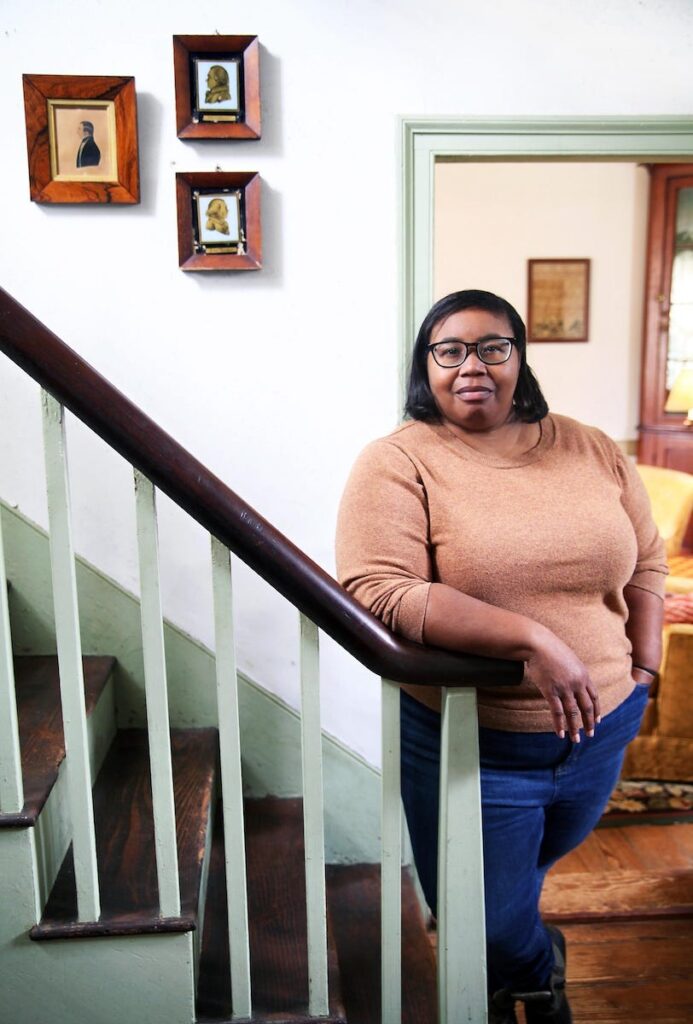
Some stories feel like they’ve been waiting for the right person to tell them. Deb Freeman is one of those storytellers. A culinary historian, award-winning writer, and podcaster, she has spent years unearthing the deep and often overlooked history of Black foodways in America, particularly in Virginia and the South. If you are into podcasts, we encourage you to listen to her award-winning podcast Setting the Table, where she has a way of bringing history to life—pulling up a chair and making sure we hear the voices that have shaped the way this country eats.
Be sure to tune in to PBS next week on Tuesday, February 18, to watch the Finding Edna Lewis documentary. Edna Lewis, often called the matriarch of Southern cuisine, helped change the way the world sees Southern food. But who was she beyond the recipes? That’s what Deb set out to uncover. And in doing so, she’s not just telling Edna’s story—she’s making sure we remember the people and traditions that built the foundation of American cuisine.

—>Behind the Paywall: Read our full interview with Deb Freeman, including more about Edna Lewis, how Black culinary traditions have shaped American cuisine, and Deb’s recommendation for which Edna Lewis recipe to cook with your kids…
In this conversation, Deb shared with us how her grandmother’s cooking shaped her love for food (and why she’s still chasing the secret to her cornbread), why a deep dive into Virginia’s crab-picking industry set her on her food-writing career path, and the most impactful and emotional moment she experienced while making the Edna Lewis documentary. If you love a good food story—the kind that makes you see your own meals a little differently—you’re in for a treat.
A yummy note from Goldbelly:
Honoring Black History Month: Celebrate Black Food Makers 👩🏾🍳
As a community of American food lovers & food makers, we have a deep gratitude for the influence African American culture has had on U.S. regional food. From icons like Chef Carla Hall in Washington, D.C. to small, independent bakers, like Nikki J’s Cakes down in Texas, Goldbelly delivers the most epic eats crafted by Black food makers right to your door.
These chefs are cooking up everything from BBQ to pasta to red velvet cake and ice cream – you’re sure to find something to satisfy any craving. Check out the options for a special family treat.
Order now and support Black chefs: Shop Black Food Makers on Goldbelly 🔪

Introduce Yourself: My name is Deb Freeman. I’m a food writer and culinary historian with a focus on African American culinary history. I’m also the executive producer and host of Finding Edna Lewis. I have a 25-year-old daughter named Taylor.
We interview a lot of chefs and cookbook authors, but you’re the first food writer we’ve had for our Order Up! Interview Series. When did you first realize that storytelling—especially through food—was what you wanted to do?
Storytelling has always been a huge part of my life, but I never expected to write about food. That changed when I wrote my first food article for Southern Grit Magazine about Black women who worked as crab pickers in the 1930s and ’40s—something I had never heard of, despite growing up in Hampton Roads, Virginia, where it was common. These women were paid based on how quickly they could pick crab, yet their stories had largely gone untold.
That article sent me down a rabbit hole. If I didn’t know this history, right in my own backyard, what else was I missing? That was the moment I realized how many incredible, overlooked food stories were out there waiting to be told.
While crab picking was most common in places like Virginia and Maryland’s Eastern Shore, I’ve since learned that women all along the coast did similar work. It made me think about all the food we eat without considering the hands that prepare it. I’d never really stopped to ask myself: How does that crab meat end up in a can? That curiosity is what drives my writing today.
Stories and food are so intertwined, especially when it comes to passing down memories. You’ve always been drawn to storytelling—did your family play a role in shaping you as a writer?
Absolutely. I was a really shy, introverted kid, and books were my world. They weren’t just a way to learn new things—they let me imagine places far beyond Norfolk, Virginia. It’s a city, sure, but it’s not New York or L.A., so reading made the world feel bigger.
My grandmother and my mother encouraged that love of books. I was that kid at the library asking, What’s the maximum number of books I can check out? Fifteen? Great, I’ll take fifteen. Reading gave me a way to explore, even when I wasn’t the most talkative kid. It was my way of engaging with the world, and in a lot of ways, it led me to writing.
Thinking about your mom and grandmother, do you have any special memories of being in the kitchen with them or with your larger family? Was cooking a big part of your childhood?
Absolutely. My grandmother was the cook in our family, and she was an incredible cook. I tell this story all the time—I’d get off the school bus and literally sprint down the block to our front porch, just to see what she had made that day. It could be meatloaf, chicken and dumplings, collard greens—anything. I never knew what to expect, and that made it exciting.
She cooked everything from scratch, from memory. I can still picture her making chicken and dumplings—she called it chicken and pastry—tearing a brown paper bag, making the dough, and rolling it out with an iced tea glass while casually chatting with me about school. It was all muscle memory for her, and I remember thinking, How many times has she done this to make it look so effortless?
She also had a real love for food beyond what she cooked at home. She lived in New York for a while, so she’d get excited talking about Jewish delis—she’d say, I need corned beef on rye with extra sauerkraut or rave about bagels and hot dogs with mustard and sauerkraut. That passion for food, for different flavors and experiences, totally shaped me. Looking back, it’s so clear—there’s a direct line from growing up with her to the work I do now.
Do you feel like you’ve passed that love of cooking down to your daughter? Do you have any special memories of cooking together when she was younger?
Oh, absolutely. After her dad and I divorced, it was just the two of us, and we spent a lot of time cooking together. One of my favorite memories is how obsessed she was with the Pioneer Woman. You could not tell Taylor that Ree Drummond wasn’t her actual friend.
She had to have the cookbook, and I remember us making this cowboy steak and cowboy potatoes—everything was cowboy something. And of course, the recipes were wild—two sticks of butter in everything. She was about 10 at the time, and she was so into it.
What’s funny is that recently she asked me for that same cookbook, and I was like, Taylor, you cannot eat like this every day—one bowl is 5,000 calories! But it’s special because it’s a connection we’ll always have. I can still picture her at 10, watching the show, so excited to cook. That memory really sticks with me.
Your daughter has that special memory tied to a cookbook, and so much of your writing explores the deep history of Black foodways in America. Is there a dish from your own childhood that carries the most meaning for you? Would it be chicken and dumplings that your grandmother made? Collard greens?
Oh, that’s a tough one! Chicken and pastry definitely comes to mind, but I’d have to say my grandmother’s cornbread. To this day, I have never had cornbread that even comes close to hers. And the funny thing is—she didn’t make it from scratch. It was Jiffy mix! But she completely changed the recipe. I don’t know what she did—tripled the wet ingredients, maybe? I’ve tried so many times to recreate it, and it’s never quite right. It’s close, but not her cornbread.
It wasn’t cake-like, but it was soft, savory, and just perfect. I’ve eaten cornbread at high-end restaurants and hole-in-the-wall spots, and nothing has ever matched it.
Let’s dive deeper into your work. You’ve written so much about how Black culinary traditions have shaped American cuisine. Are there any ingredients or everyday dishes that people might not realize have deep African American roots?
The first thing that comes to mind is macaroni and cheese, specifically because of James Hemings. He’s the reason we have baked mac and cheese instead of just stovetop. When he was in France with Jefferson, he brought that technique back, and that’s why we see such a distinction today between the baked version and the creamy stovetop one.
Barbecue is another big one. The original American pitmasters were enslaved men, and the work they did was incredibly skilled. They were chopping trees, making coals, butchering hogs, and then slow-cooking the meat for hours over fire—all without thermometers or timers. It was entirely based on intuition, knowing when the pork belly was ready at the same time as the shoulder. Today, you can grab barbecue anywhere, but those early pitmasters don’t get nearly enough credit for shaping what we now think of as classic American barbecue.
For those who might not be familiar, who was James Hemmings?
James Hemmings was the chef de cuisine for Thomas Jefferson—essentially, for America. He was also the brother of Sally Hemings. Jefferson sent him to France for three years to study under some of the greatest chefs of the time. He learned to speak French fluently and trained under a chef who worked for nobility.
When he returned, he brought back dishes we now consider American staples: ice cream, whipped cream, crème brûlée, and of course, macaroni and cheese. His cooking style blended French technique with Virginia ingredients, shaping what we now recognize as Southern cuisine. His influence is huge, even if most people don’t know his name.
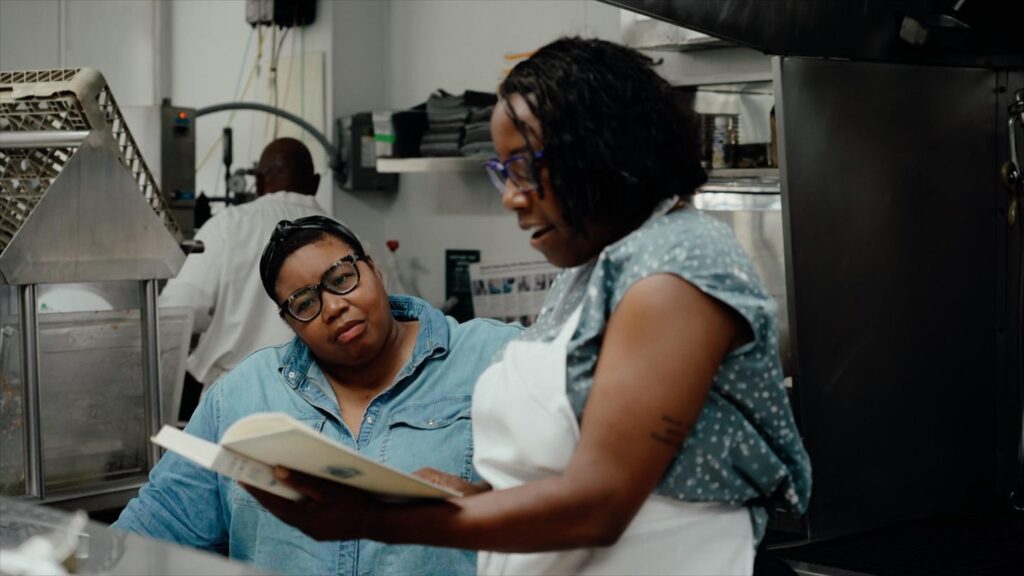
So interesting! On your podcast, Setting the Table, you highlighted how African American contributions to food are often overlooked—just like the examples you just shared, of mac & cheese and BBQ. What do you think is the biggest misconception about Black cuisine?
I think the biggest misconception is that Black food is just “the greatest hits”—fried chicken, mac and cheese, collard greens—like it’s limited to five dishes. But in reality, there’s so much variety and regional nuance. What Black communities are eating in Virginia is different from Alabama, Texas, Chicago, or California. Black food isn’t a monolith.
Another misconception is that it’s all fried or heavy. In reality, traditional Black cooking is deeply tied to the land and the seasons. Historically, people ate what was fresh and available, which meant a lot of vegetables, grains, and plant-based dishes. There’s a whole side of Black food culture—lighter, seasonal, and deeply rooted in sustainability—that often gets left out of the conversation.
Tell us about Finding Edna Lewis, your documentary.
Finding Edna Lewis is a journey through the eyes of chefs and culinary scholars to uncover who Edna Lewis was and what her legacy means. She was a groundbreaking Black woman chef who helmed Café Nicholson in the 1950s—an incredibly rare position at the time. Even in her 70s, she served as executive chef at Gage & Tollner, which is just incredible.
But what really cements her place in culinary history is her cookbook, Taste of Country Cooking. It introduced the idea of farm-to-table and seasonal eating long before those became buzzwords. Through her writing, she showed the world the true beauty of Southern cuisine.
What’s something about Edna Lewis that most people don’t know but should?
A lot, honestly! One of the most surprising things is that she started as a seamstress in New York, making copies of Christian Dior dresses for stars like Marilyn Monroe. She never set out to be a chef—it just happened. I think most people would never guess that about her.
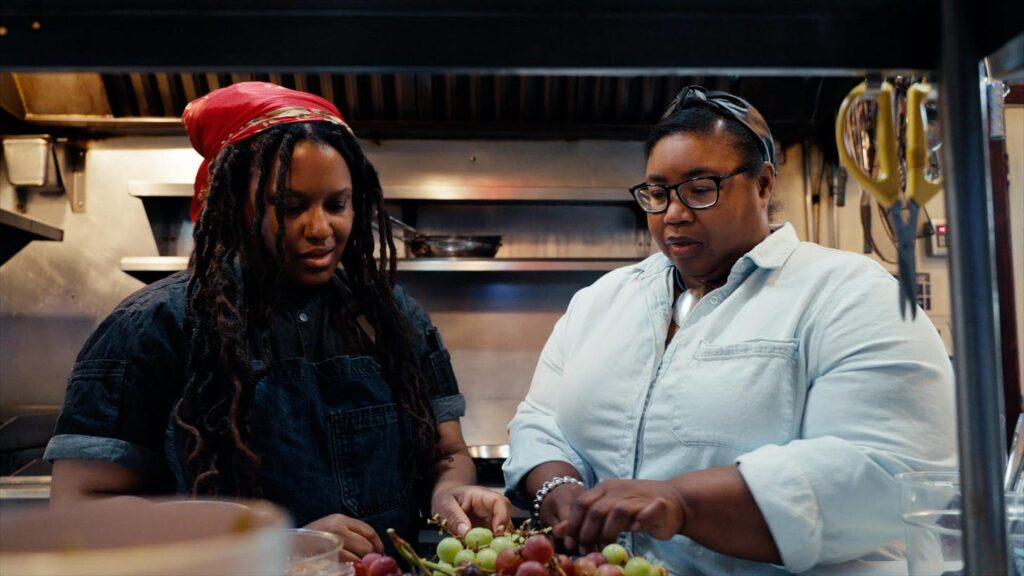
What was the most emotional or surprising moment while working on the documentary?
The most emotional moment was filming at Middleton Place, a plantation where Miss Lewis worked for about three years. She actually lived on the plantation grounds, in an apartment above the millhouse where enslaved women and children once milled rice.
Walking the same path she did every day, knowing she was the granddaughter of enslaved people—it was heavy. I’ve been to plantations before, but this was different. It really hit me, thinking about what it must have felt like for her to carry that history, while cooking food rooted in those same traditions. It was a powerful, emotional experience.
For parents who want to introduce their kids to Southern cooking, is there an Edna Lewis-inspired recipe they can make together?
Absolutely! Her Busy Day Cake from Taste of Country Cooking is perfect. It’s simple—just a few ingredients—so kids can easily help out. You can also make a fruit compote by simmering fruit with sugar, which adds a fun, hands-on step. In about an hour, you’ll have one of the most delicious cakes ever. It’s a great way to bring Edna Lewis’s legacy into your own kitchen. (One Potato: Here’s a recipe for Busy-Day Cake that’s been posted online.)
You’ve written about food as a form of activism. What’s one small but impactful way families can engage with food justice in their communities?
Volunteering at a food drive or pantry is a great way to start. And not just during the holidays—year-round. Serving meals in a community kitchen gives kids an opportunity to see and talk to people who might be struggling, to understand that they’re not “other” or “scary.” It helps build empathy and gratitude, which I think are so important. It really puts things in perspective and teaches life lessons in a way that sticks.
If you could have dinner with any historical Black chef, who would it be?
That’s so hard! But yes, Edna Lewis is absolutely at the table. And I’d have to invite James Hemmings, too. My biggest question for him would be about baked mac and cheese—did he bring the idea of baking it in ashes from France, or was that something he came up with as a riff on the recipe? I need to know.

You mentioned Edna Lewis’ cookbook, Taste of Country Cooking. What’s a cookbook or food book that every home cook should own?
Of course, Taste of Country Cooking by Edna Lewis is a top recommendation. It’s so simple and straightforward—perfect for cooks like me who are good at a few dishes but average at others. The language is clear, the recipes are accessible, and it focuses on great ingredients prepared simply. You don’t need to sous-vide anything—it’s all about cooking with love and simplicity, which I think is key for home cooks. [Buy Now on Bookshop.org]
And finally, our favorite question. What’s a cooking skill that you think all home cooks should have under their belt?
Pasta! Just basic pasta-making skills, like cooking the noodles correctly. Salting the water is essential—when you think there’s enough salt, add a little more. Also, if you’re using a jarred sauce, don’t just pour it straight from the jar—elevate it by adding garlic, onions, and extra seasonings like Italian herbs, garlic powder, or pepper. It’ll wake up the sauce and make a world of difference without being too difficult. It’s an easy trick that can elevate a simple spaghetti meal.