Small Bites:
We’re loving Territory Foods: no-prep, real-ingredient meals made by local chefs and delivered fresh to your door.
👉 Check out the rotating menu
Want help meal planning? Back to school = back to “what’s for dinner?” The Peas & Hoppy meal planning app makes that question way easier with 11 flexible recipes, a smart grocery list, and tips for real-life families.
👉 Try it free for 30 days – use code ONEPOTATO30
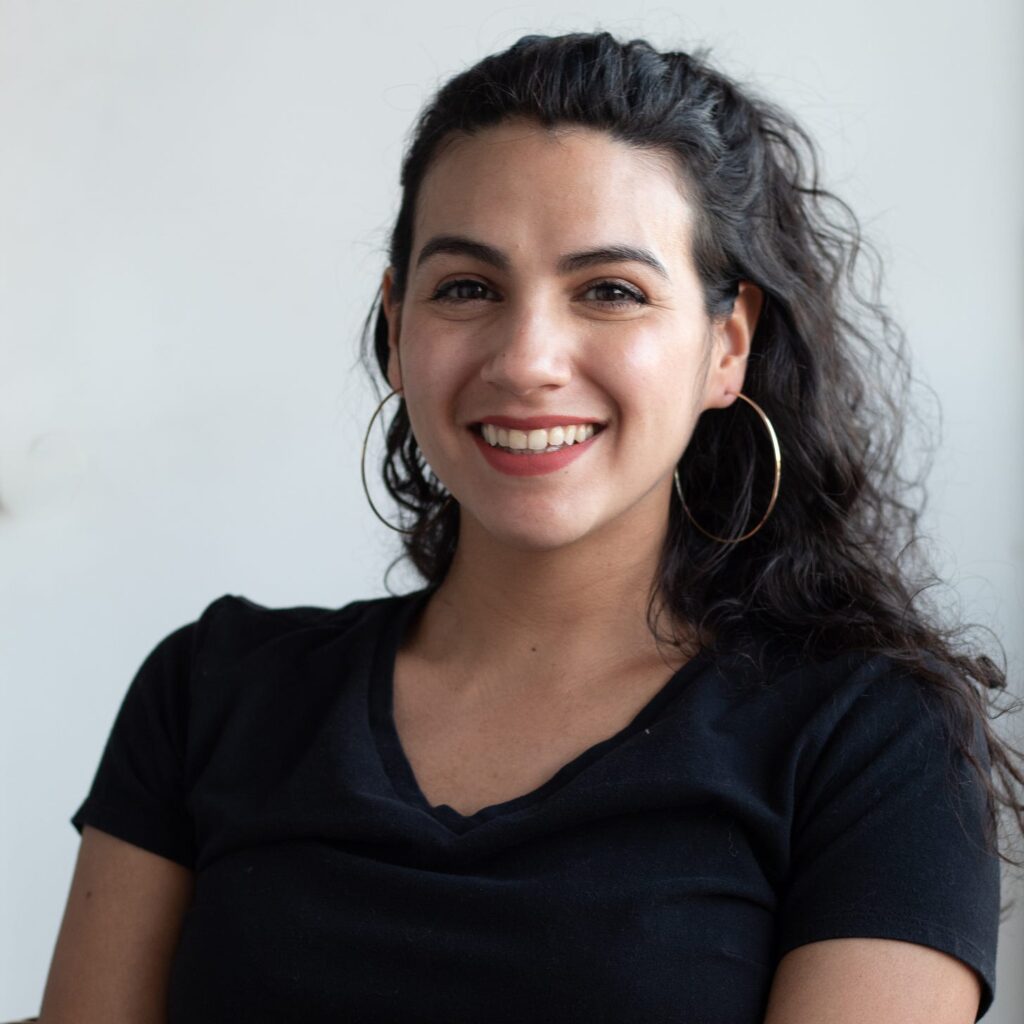
Krista Linares on Why Food Is Culture, Care, and Connection
As Hispanic Heritage Month winds down, we’re closing out with someone who embodies that connection every day: registered dietitian, recipe developer, and writer Krista Linares.
Through her platform Nutrition con Sabor, Krista has become a trusted voice for Latinas navigating nutrition, culture, and wellness. She’s Mexican and Cuban-American, Selena-obsessed, and passionate about helping people see that arroz con pollo and nourishing your body can absolutely go hand-in-hand. Her work is about reclaiming joy in cultural foods, while still caring for health — something she knows personally from her own diagnosis with PCOS, which ultimately led her to become a dietitian.
Practical, no-judgment advice shows up throughout the interview: start with the foods you already love, use sofrito to sneak more vegetables into family favorites, and make beans from scratch (Krista’s trick: flavor the cooking water with onion and dried herbs, no overnight soaking required). Her work with Nutrition con Sabor centers voices across Latin American cuisines and reminds us that our food traditions are sources of wisdom, not obstacles to health.
Read on for Krista’s full Order Up! interview — a gentle, useful primer for anyone who wants to feed their family well while honoring the flavors that shape them.
A message from our friend Ann Kent, dietitian & owner of Peas & Hoppiness:
You can plan a week of healthy meals in 2 min. – Here’s How!
-
Open the Peas & Hoppy Meal Guides app
-
Keep the recipes that sound good, delete the ones you don’t need
-
Let the app instantly build your grocery list
No hunting for recipes. No juggling multiple apps. No last-minute “what’s for dinner?” panic. (Watch Ann do it here!)
The Peas & Hoppy Meal Guides App takes the stress out of meal planning with 11 balanced recipes each week, a smart grocery list, and flexible tips that work for real families (yes, even picky eaters and sports-night chaos). Every recipe is written and tested by Ann Kent—a dietitian and mom of two—who knows that dinner only works if it actually works.
👉 Try it free for 30 days—no pressure, just support from one home cook to another.

A Conversation with Krista Linares
Introduce Yourself: I’m Krista Linares, a Registered Dietitian. My work focuses on nutrition education through a lens that celebrates Latin American food.
Our cultural foods aren’t something to “fix,” they’re something to honor. I’m based in Los Angeles, CA.
Let’s go back to your childhood. What food memories stand out most?
I grew up in Minnesota, where my family was one of the few Latino families in the area. With no grandparents or extended family nearby, food was the main way I stayed connected to my culture.
That said, my very first food memory isn’t tortillas—it’s actually baking chocolate chip cookies with my dad. He’s a big baker, and that was one of the first things he taught me. Soon after, my parents started giving me little jobs with our own foods. My first “assignment” was rolling balls of masa for tortillas while my sister flattened them and my mom cooked them on the stove. Over the years, I graduated to more responsibility—eventually making tortillas from start to finish, or helping with tostones when we’d cook together.
I also remember realizing that the way my family ate was unique. One night, my mom made sopes when we had guests over. She asked me to teach another child at the table how to fill his. He wanted nothing to do with the beans, and I just couldn’t wrap my head around it—because in my family, beans weren’t optional. They were everything. That was the first time it really clicked that not every household ate like ours.
Later in life, your own health journey shaped your career path. Can you share that story?
When I was diagnosed with PCOS, I was already navigating some food allergies and had been vegetarian for years. Suddenly, the way I’d always cooked and eaten didn’t feel possible anymore. I was living out of state from my family, trying to figure it all out on my own, and it became really restrictive and stressful.
One visit home, my parents made mushroom papas rellenas just for me, trying to adapt them to what I could eat. I burst into tears. I felt so exhausted from constantly wondering if I could “participate” at the table. That night was a turning point—I realized I needed to rethink how I was approaching nutrition.
I dug through my parents’ old recipe books that week, and it hit me: these classic Latin American recipes were already balanced and nourishing. The foods I grew up with weren’t the problem, but there was a serious missing connection in mainstream nutrition advice. That realization is what led me to become a dietitian and focus on this work.
A lot of parents are confused or overwhelmed, and feel pressured to make “healthy” meals that often strip away the foods they grew up with. What advice would you give families who want to honor tradition while feeding their kids well?
Honestly, healthy eating is more intuitive than we give ourselves credit for. A lot of the meals families are already cooking at home are closer to “balanced” than they realize. Instead of overthinking it, I encourage people to step back and ask: Am I missing a food group here? Do I need a little more protein, or fiber, or vegetables?
With my Latino clients, I do an exercise where we look at a vegetable list I created; this list is full of ingredients more common in Latin American cooking. Almost always, people discover they’re already eating more vegetables than they thought. Maybe it’s cucumber in a fruit cup, or calabaza in a stew. They just didn’t think of it as eating a vegetable. Sometimes we just need to reframe how we see the foods we already love.
This works beautifully with kids, too. If a child says, “I hate vegetables,” you can sit down with a list and say, “Okay, but which ones do you like?” And focus on those instead of eating vegetables being a fight.
What about your own food memories—what’s a dish that has really shaped how you see food today?
Cuban black beans, hands down. They’ve always been my favorite food, and to this day, if they’re in the house, I’ll eat them for practically every meal until they’re gone. For me, beans were never a “health food.” They were just the food I loved most; and oh, by the way, they happen to be incredibly nourishing. That mindset has influenced how I think about nutrition overall: flavor first, and then the health benefits follow.
It’s also shaped how I think about meals. In my family, in Latin American culture there isn’t a rigid line between breakfast, lunch, or dinner foods. Eating soup or beans in the morning is totally normal. That flexibility made me realize: there’s no one “right” way to eat, it’s important to do what feels good and works for you.

Alongside your client work, you also publish Nutrition con Sabor. How did your zine come about?
I love the older, personality-driven style writing format of a zine, and most importantly, it’s a way to feature other Latina voices. That’s my favorite part: creating space for other dietitians, writers, and food creators to share their experiences and recipes. It also helps expand representation for Central and South American foods, which many of my clients were asking about.
For families who want to enjoy favorites like arroz con pollo or picadillo while keeping meals balanced, what simple swaps or additions do you recommend?
One of the easiest and most impactful things you can do is increase the amount of vegetables in your cooking. Take picadillo, for example. In my family, we start with a sofrito—onions, green pepper, tomato sautéed in olive oil. Research shows that cooking this way actually enhances antioxidant capacity, beyond just eating those vegetables raw.
It’s also a great strategy for kids. They may not want to eat a pile of onions on their plate, but if those onions are cooked right into the ground beef, they’re getting those nutrients without even realizing it. Little changes like using more sofrito or salsa can go a long way without feeling like a sacrifice.
If you could leave our readers with one takeaway about celebrating heritage through food, what would it be?
I see my mission as shifting the question from “How do we make Latin American food healthier?” to “What can Latin American food teach us about nutrition?”
These foods already hold so much wisdom. Instead of trying to change them, we should be paying attention to what they show us about balance, nourishment, and joy.
Last question: what’s one cooking skill you think every home cook should master?
Making beans from scratch. It intimidates a lot of people, but it’s more about giving yourself time than it is about active work. If you’re home for the day, you can make a big pot, and suddenly you’ve got an affordable, versatile protein that can turn into all sorts of meals.
My biggest tip? Always flavor your cooking water. I add half an onion and a few dried herbs at minimum. That way, your beans come out delicious every time. And for the record…I never soak overnight. Some people do, but I’ve never noticed a difference.