“This Is Just Cooking”: Heena Patel on Mistakes, Mothering, and Gujarati Food
The night before Diwali, Heena Patel’s job as a girl in Gujarat was the rangoli. You draw a design on the ground in front of the house with rice flour, and it’s supposed to come out symmetrical. It took her years to get it right. Then she’d run out to the courtyard and set off fireworks. Her own kids, who grew up in California, later told her fireworks are bad for the environment; she didn’t know that back then. She still wants them to know how she celebrated growing up.
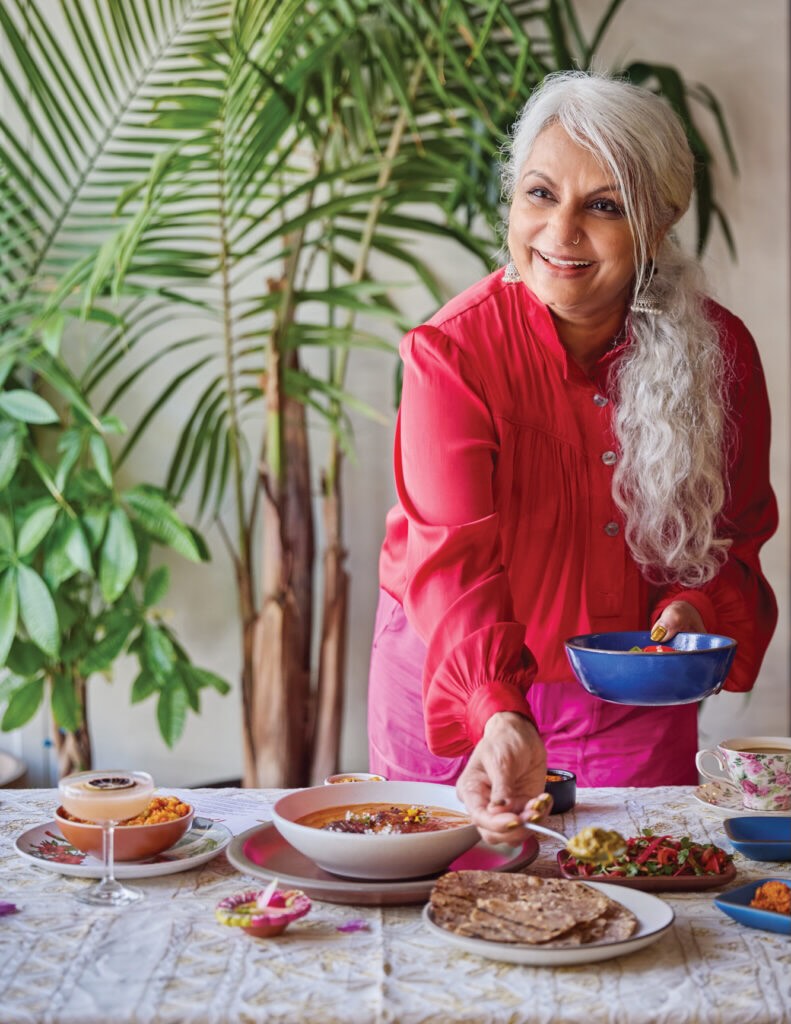
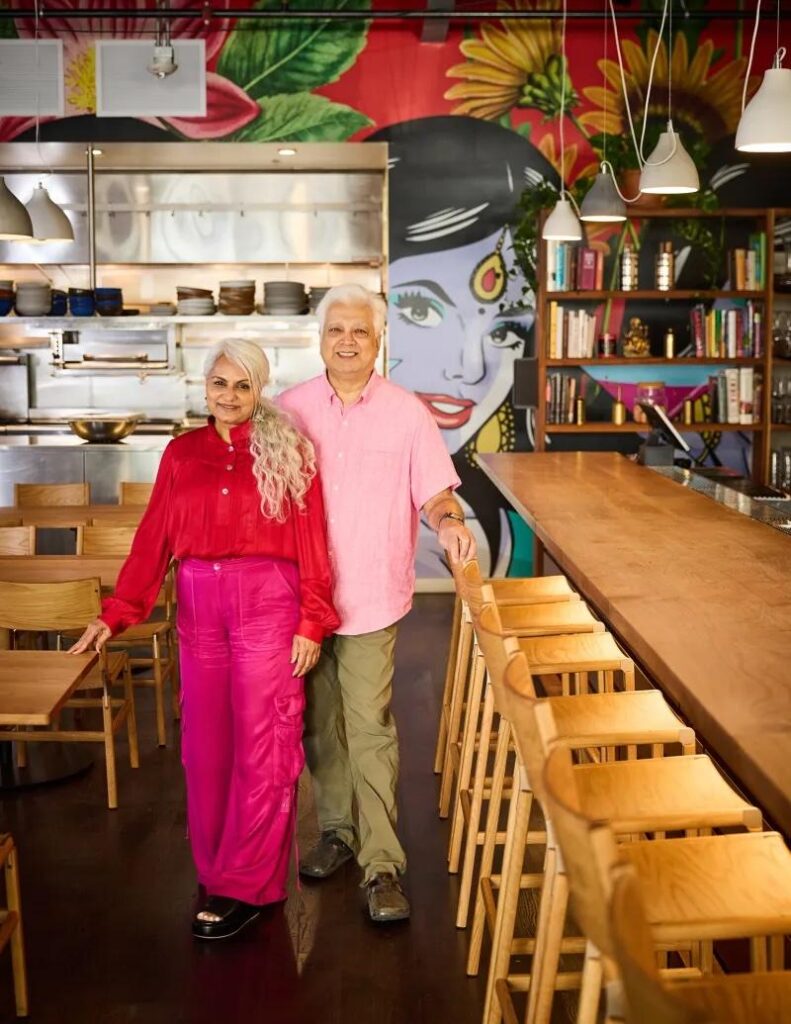
Heena left India at 20, got married, and moved to London. Five years later, she and her husband, Paresh, came to the Bay Area and never left. She was 25 and couldn’t speak English very well, which meant she couldn’t make friends either. They ran a liquor and flower shop for twenty years, and she raised their kids, Vishakha and Ankoor, partly in the back of it. In her 50s she opened Besharam, a Gujarati restaurant in San Francisco’s Dogpatch neighborhood. The name means “shameless”.
We’re sharing this interview the week of Diwali – the festival of lights – which falls on Sunday, November 8, 2026. Some of you will light diyas and fry snacks for days. Some of you will hear about Diwali for the first time from a kid in your child’s class.
We talked about growing up as one of five daughters in a family that wanted a son, and the promise she made herself because of it. She tells us how a cheap one-pot dinner her mother made on tired nights turned into her kids’ favorite meal, why she never asked them to be vegetarian even though they both are, and what she means when she calls herself the restaurant mother to a kitchen of cooks who never went to culinary school. Her daughter also has a complaint about round rotis that you’ll have to read on to understand.
Heena never gave her kids a lecture about being Indian. She fed them, dressed them for festivals, taught her daughter to pleat a sari, and let the rest happen. Her kids are grown and live close by, and they come for dinner Monday nights, when Besharam is closed. She says that’s the win.
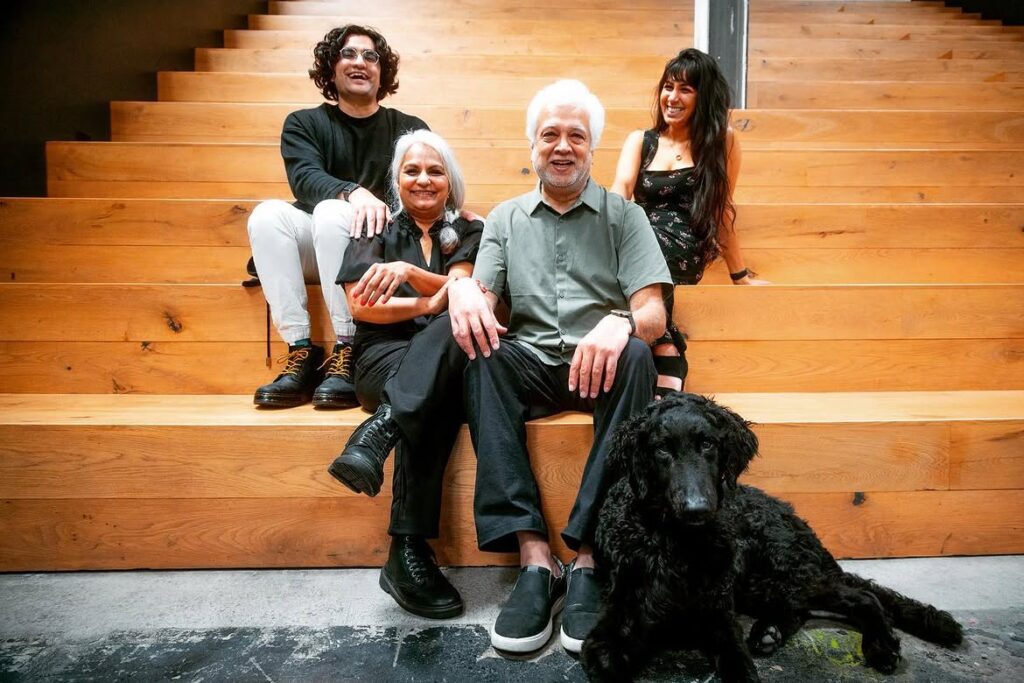
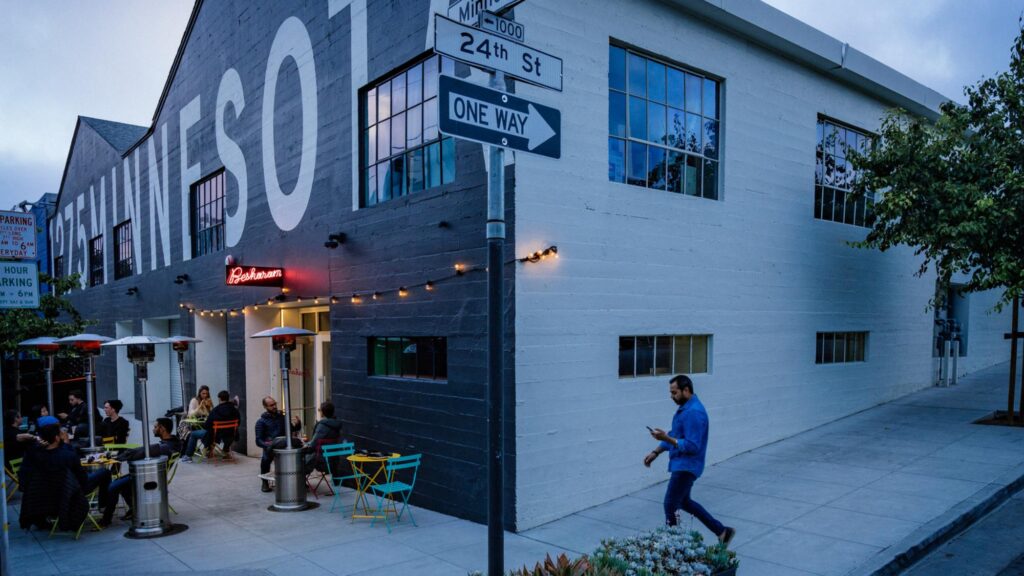
Introduce Yourself: I’m Heena Patel, chef of Besharam. We’re in the Dogpatch, at the Minnesota Street Project, which gives San Francisco artists a space to show their work. I count myself as one of them, so it feels like the right spot for my restaurant.
When my husband and I moved to California, I felt very lonely. I couldn’t make a single sentence in English, so I couldn’t make friends. This was the place I called home, but the food was different, the community was different, and the work I was forced to do was different. What grounded me was cooking the food I grew up with. It was the only place I found comfort, the only place I didn’t have to force myself to fit in. Those dishes remind me of milestones back home with my parents, my sisters, my aunt. Even today, that’s the force behind my entire menu. It’s very emotional. It’s very autobiographical.
Your family was born on four different continents. What did that teach you about raising kids?
It’s a family joke: my husband Paresh was born in Uganda, me in Gujarat, my daughter Vishakha in London, and my child Ankoor here in North America. It opened up the world for me, and it also made the world feel small. We all eat rice, we all eat bread, we all eat vegetables.
As a mother, I had to be strong about who I am and where I’m from so my children could be strong. Of course we want them to have their own identity. But if I didn’t get lost, they’d have a clear picture of where we come from. When I was a child, we all ate the same food at school. My kids took roti and shaak for lunch and faced something I never faced – being different. So I gave them a strong reason for what we eat. It’s nutritious, and at the same time, it’s fun.
You never sat your kids down to talk about being Indian. Where did that come from?
I come from a very patriarchal family. I’m the second daughter, and after me, my parents had three more. We are five daughters.
Growing up, I watched how family members treated my mom for not having a son. That sounds superficial, but that’s my culture. They celebrated the birth of a son, not a daughter. Even as a child, I saw the pain in my mom’s eyes. My parents never made us feel like less. But society treated us differently, and it left a sour taste in me. I promised myself not to follow that path.
So much was forced on me because I was female. What clothes to wear, how to speak, what language to use. My mom’s whole focus was raising us to marry into a better family. I didn’t know how to speak up, and it took time for that resistance to come through. I’ve been labeled not a good daughter-in-law. I took it, because I was so sure about what I didn’t want to do to my own children.
That’s why I never sat them down to talk about being Indian. I never asked them to be vegetarian. I never told them what to wear or what not to say. Say what you feel. Be a strong, independent human being. That was the whole idea, even for very young Heena.
Looking back, do you think it worked?
Parenting is constant. But my children live so close to me, and they still come over often for dinner. That’s the winning point. If they still want to spend time with me, we’ve done a good job.
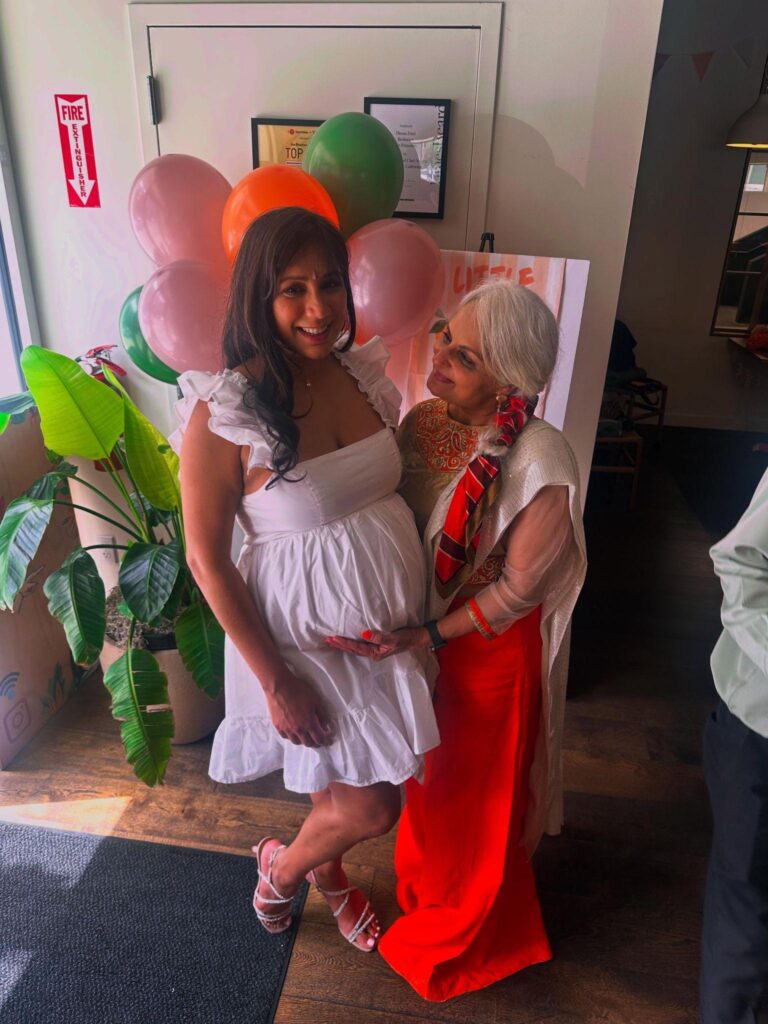
My daughter had her first baby at the end of August. She’s two months old now, and they want Paresh and me to be part of raising her. That feels like I did something right. She saw something in how I raised her, and now she says, Mom, I want you to help me raise this person. We’re so proud.
You’ve said you invented dishes for your kids. Is there one that bridged Gujarat and California?
The first thing that comes to mind is dal dhokli. It’s a traditional Gujarati dish. You take leftover rotis, or roll fresh ones, cut them into diamonds, and cook them in leftover dal. Gujaratis are known for not throwing anything away. That dish comes out of that.
My mom made it when she didn’t feel like cooking. One pot, not much time, five children and my dad to feed. I loved it and hated it at the same time, because she made it so boring. But I love the dal. Gujarati dal is tangy with tamarind and sweet with jaggery.
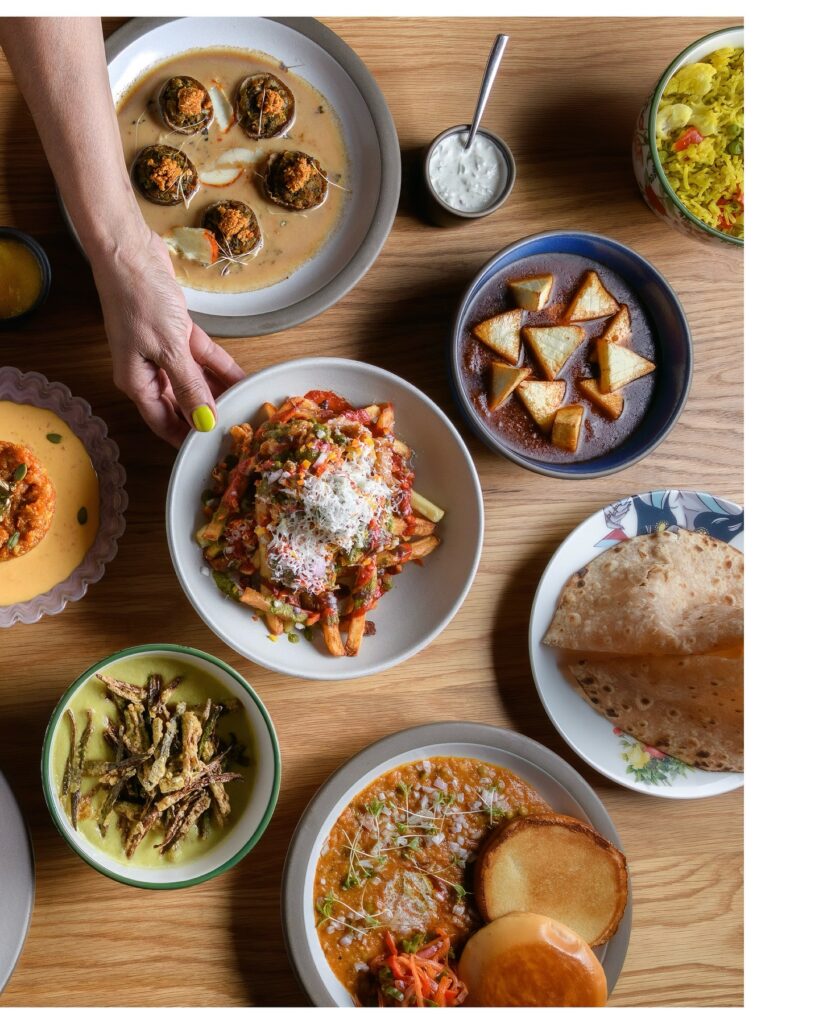
For my children, I made my own version. I added pickled onions. I sautéed cabbage for texture. I added potato chips, a little junk food to make it exciting, and whatever vegetables were in season. That was the dish my kids looked forward to. It’s been on Besharam’s menu since day one. Now it has salty peanuts, pickled onions, bok choy, sauteed kabocha squash with curry leaves, samosas, and idlis. It’s like our desi ramen. I change it with the seasons.
Your kids grew up watching you build a business. What did they see?
When I came here, I didn’t know I was an immigrant. I didn’t know how that would shape me. It was my first time outside India, and I felt racism, which you don’t see back home because everybody is like you. People said, how are you running a business? You can’t even speak English. Or they complained about the smell of garlic. It’s painful. I can’t forget it even if I want to. It can be worse now than it was 30 years ago.
My children faced that too. They saw me in the back of the flower shop, helping them with homework. When Ankoor was a baby, I breastfed them back there. Those memories are unsettling, because there’s so much guilt. But I didn’t have a choice. That was the only way to survive.
I think what they witnessed made them stronger. Now they’re proud of this business. It’s a journey, not overnight, and still a mom-and-pop restaurant. They’re grown and busy. Vishakha is a lawyer, and both of them work full-time. But they don’t want me taken advantage of, so they check my emails and they’ll help with proofreading my English. I never asked them for this, and they never ask for money. That’s how an immigrant family works. We work together, and we always will.
Besharam means shameless. Why that name?
I could have named it something beautiful. But I already lived the life of being beautiful and not speaking. It leads nowhere. You make yourself timid and show half of your personality. It took me a while to realize I could represent myself the way I am. Even not dyeing my hair is part of that.
Naming it Besharam lets me tell my story. It also gave me a green light with this traditional food. If I change the dhokli the way I like it, that’s because this is Besharam. This is bold. This is the way I cook.
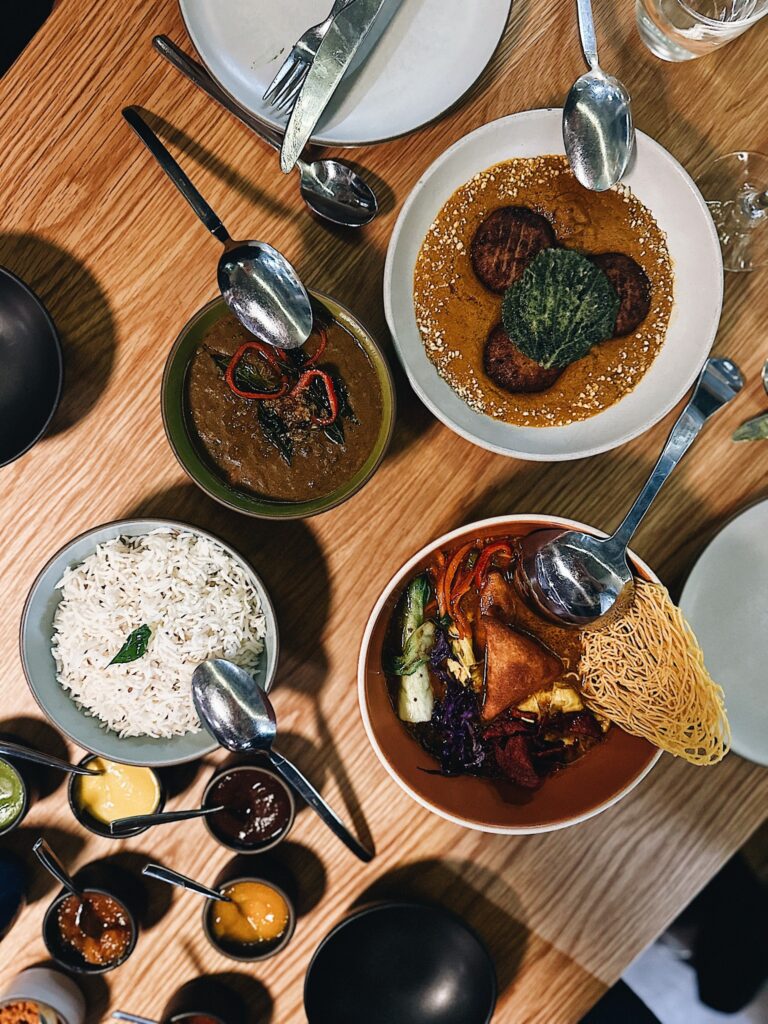
Besharam is fully vegetarian cuisine. For a parent who wants to cook more vegetarian meals their family will actually eat, where should they start?
My Gujarati cuisine is 5,000 years old, and my grandparents and their grandparents all ate vegetarian. We never introduced meat, so the food is balanced, in ingredients and in technique. Don’t overcook your vegetables. Steam them. If you fry, use enough oil that the food doesn’t soak it all up. All those techniques are about feeding ourselves good food.
I never say don’t eat meat. I say this food is beautiful. If you want to eat less meat, have a couple of nights a week rooted in Gujarati food. It’s the best way into vegetarian and vegan cooking. Both my children have been vegetarian their whole lives, and I never asked them to be. They say they don’t miss meat.
How does being a mother show up in the way you run your kitchen?
When I got to San Francisco, I couldn’t speak English. I didn’t know how to cut an onion. That doesn’t matter. This is a teachable art. When you don’t speak the language, who listens to you? No one. That’s the harsh reality I faced. So for all of my employees, I want to be their restaurant mother.
This kitchen is an extension of my home. I work with my children and with Paresh, and that goes to my staff too. Like me, none of them went to culinary school. They’re young and strong-hearted, and they remind me of young Heena. I want them to feel relaxed and respected. Respect is so important. I’m not afraid of them making mistakes, because we can do it again. This is just cooking and serving food. It’s not life-threatening.
You served on La Cocina’s board, and you do a lot of work around the city. What does that look like?
My business was founded at La Cocina, a nonprofit that helps women take home-cook recipes to a commercial level. If I had gone on my own, people would have said, who are you? La Cocina gave us chances to cook at the Ferry Building, at farmers markets, all over the city, at minimum cost. Even the space where Besharam is located came through them. They asked me to be a board member, and I served 2 years on their board; it feels like a full circle moment. We just hosted their gala at Besharam.
I also volunteer with FoodWise. They teach young children about ingredients, how food grows, how to use it, even just the names of the vegetables. Twice a year we go and do a little lab and show them a small recipe. I love that.
Now I want to think about the next generation of chefs. There are not enough female chefs. We need more of us. Age should not be a boundary. Not speaking the language should not be a boundary. And the more unfamiliar (to you? To others?) the food, the tastier it is. Let’s pay more attention to the food people serve than to what they wear and how they look.
View this post on Instagram
Diwali is coming. How does Besharam celebrate the season?
I change the menu four times a year, and fall is when Diwali comes. It’s such a big festival. We look ahead to the new year and celebrate it with food, so the fall menu is celebratory. It’s rooted in marking something good happening in your life.
Diwali has always been one of my favorite holidays — a time to gather, celebrate community, and share good food with the people we love. This year, it is an honor to welcome our Dogpatch neighbors at Breadbelly to our table and bring our kitchens together for a celebration rooted in creativity, generosity, and the joy of feeding others. For me, sharing food is an extension of celebrating Diwali itself: bringing people together, honoring the hands behind every dish, and making everyone feel at home. From our family to yours, Happy Diwali!
What do you hope your kids remember about growing up in your house?
Diwali, actually. I have so many wonderful Diwali memories. The night before, we make rangoli in front of the house with rice flour. I spent years learning that art. And as a child I loved fireworks, running around the courtyard. My kids found that wild; now they tell me, Mom, that’s not good for the environment! I didn’t know that back then.
I changed how we celebrate here, of course. But some things I won’t change. When they go back to see my parents, I want them to feel connected, not lost. Living outside India, sometimes you’re nowhere. When we go back, we feel so American. Here, we feel so Indian. How you balance that is my whole goal as a mother.
It’s in the clothes, too. When I wear a sari, that’s us, wrapped in all that length. Vishakha says, so many garments, they’re so heavy! I taught her how to pleat a sari, put a bindi on her forehead, and wear the long earrings. That matters as much as teaching them to make fluffy rice or round rotis.
The round rotis! I did a little class for teenagers at Besharam, and Vishakha told them, this is the anxiety my mom taught me. I said, I never realized! She said, Mom, you put so much importance on perfectly circle rotis. When they came out of shape, you’d say, do it again. I did that without realizing. It’s part of the culture. Now I have ten children in the back of the house, and I’m teaching them the same. A little standard is not bad. You don’t have to be perfect, but you can do better. I’m goal-oriented, and I’ll keep doing that.
Last but not least: is there a cooking skill you use all the time that every home cook should know?
It depends on the dish. But you should know your final dish first.
Say you love cauliflower and want to build a dish around it. After all these years, I say cauliflower should never be overcooked. It should be al dente, like pasta. That’s how you taste it best. Now decide what you want. A stir-fry? Mac and cheese with cauliflower? That tastes amazing. You could grate it raw into a paratha, like an aloo paratha but cauliflower.
So picture the dish first. How it tastes, what it’s called, how you’ll plate it. Then work backward to how you cook the cauliflower, whether that’s fire-roasted, steamed, or fresh. Final dish first, then you roll backward.
Follow Chef Heena and Besharam on Instagram @besharamheena and @besharamsf. Visit Besharam online or book a table.
& Don’t forget to follow US on IG @onepotatobox ❤️