Small Bites: 🥔 Brett DuPree, our Order Up! guest this summer, is back with something for the season: Holiday Kitchen Kickoff, a free one-day online cooking event on Friday, Nov 13, with 10 food pros covering everything from Thanksgiving through New Year’s. 👉 Save your free spot
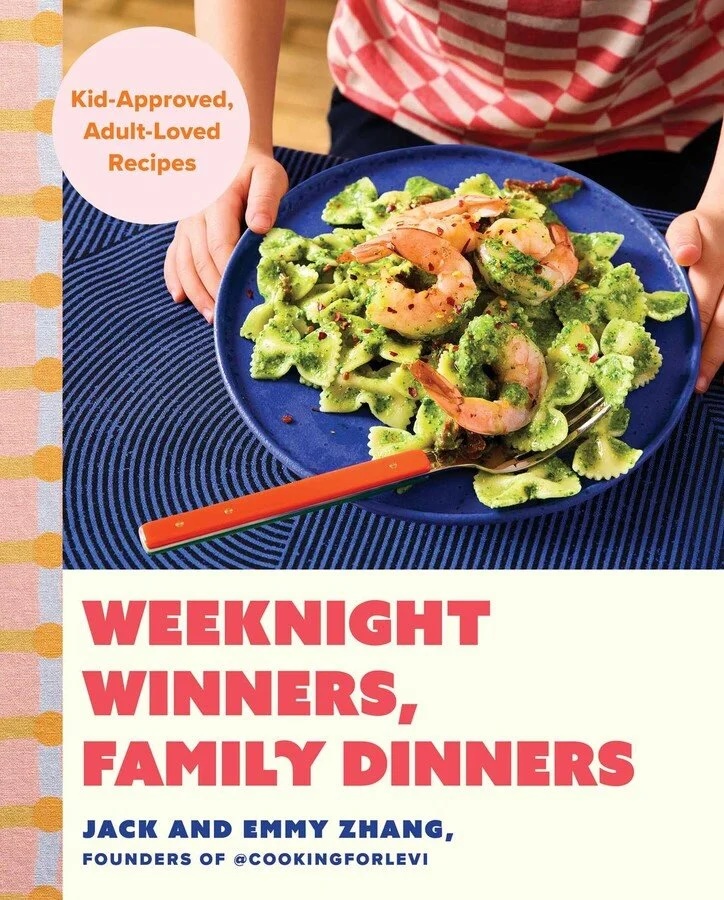
Get your copy of Jack and Emmy Zhang’s cookbook: Weeknight Winners, Family Dinners: Kid-Approved, Adult-Loved Recipes (A Cookbook) [Bookshop, Amazon]
You Can’t Surprise Them: Jack Zhang on Raising a Curious Eater, One Conversation at a Time
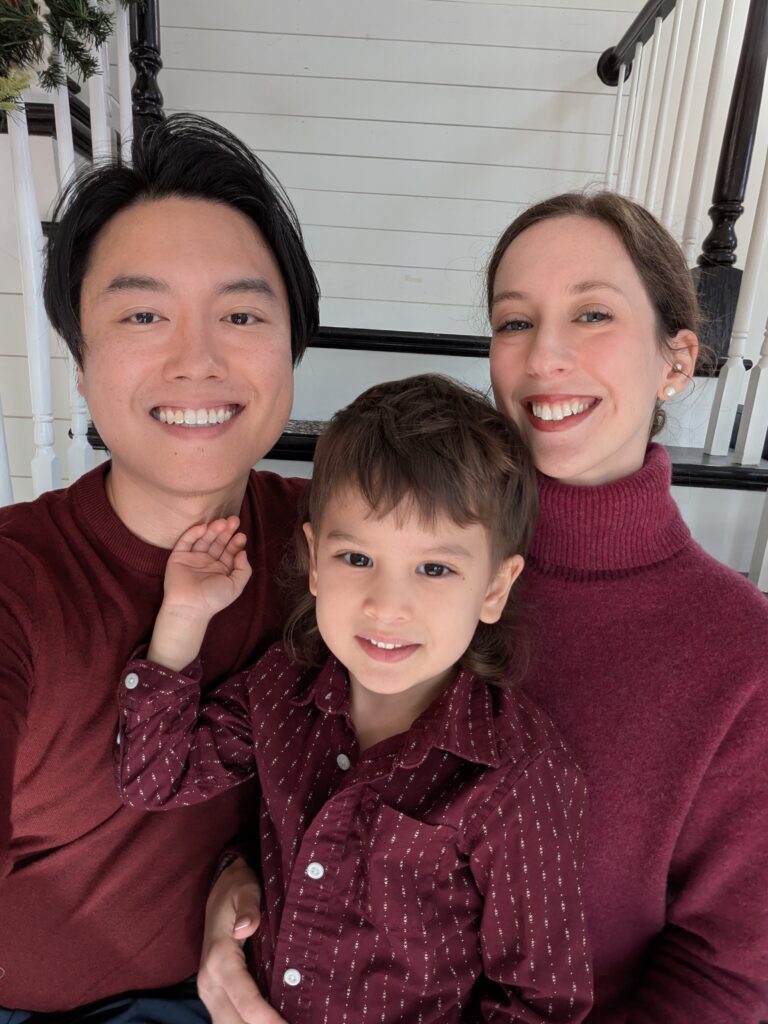
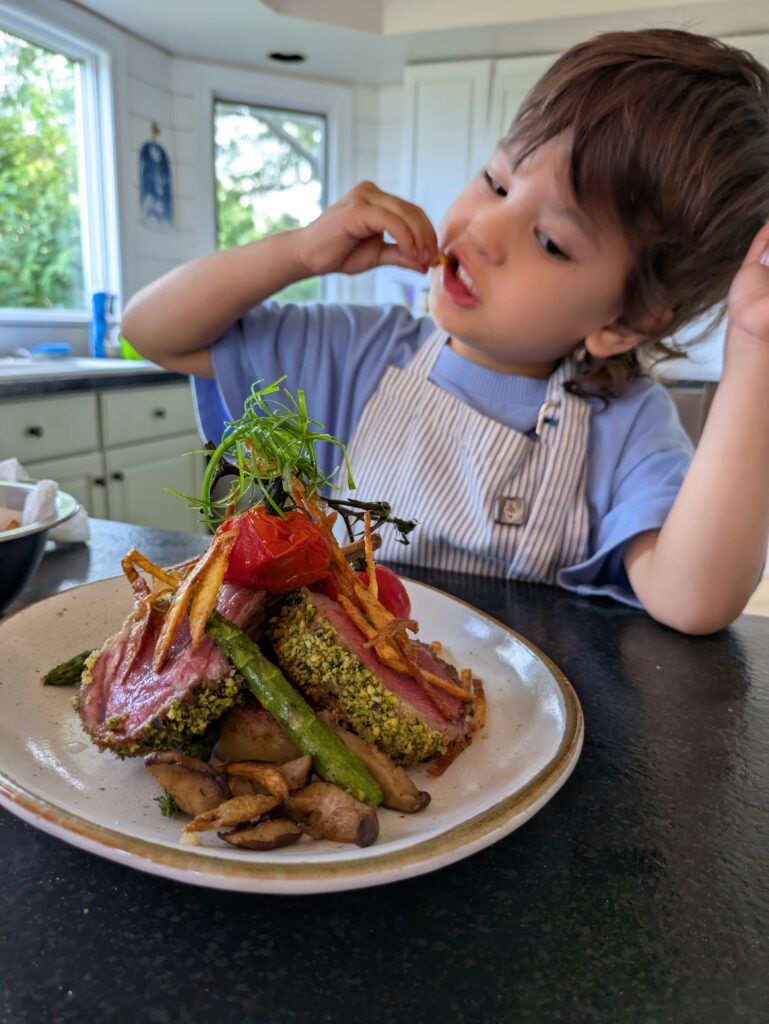
When Levi Zhang was two and a half, his dad started making him the same kind of plated food he cooked at work. Scallops. Beef Wellington. Levi would pick up a fork and knife and try to cut it himself, and Jack would ask him questions the whole time. Is that crunchy? Is it salty? Where do you think this came from?
Jack is a chef. He grew up in Brooklyn in a family from southern China, where his grandma shopped for fresh groceries almost every day and dinner could last two hours. He spent more than ten years in restaurant kitchens. His wife, Emmy, grew up in a family that ate quickly and moved on to other things. Together they run Cooking for Levi, where millions of people have watched Levi eat his dad’s cooking. Levi is five now, and he cooks with a real chef’s knife. [@cookingforlevi on IG and TikTok!]
Their new cookbook, Weeknight Winners, Family Dinners [Bookshop, Amazon], came out at the end of August. It has 80 recipes, most of them done in 30 to 40 minutes, written for parents who aren’t chefs.
We talked about the rice porridge Jack made for Levi as a baby instead of buying jars of baby food, and what the “influencer” videos don’t show (like a five-year-old who forgets to eat because something caught his eye). Jack explains why he never surprises a kid with a new food, using a glass of milk and a glass of orange juice to make his point. He also tells us what he does when Levi suddenly decides he can’t stand something.
His advice for a parent who feels behind is simple: kids go through phases, so try not to panic. Bring them to the store with you, let them pick out the tomato, and talk about it when it shows up on their plate.
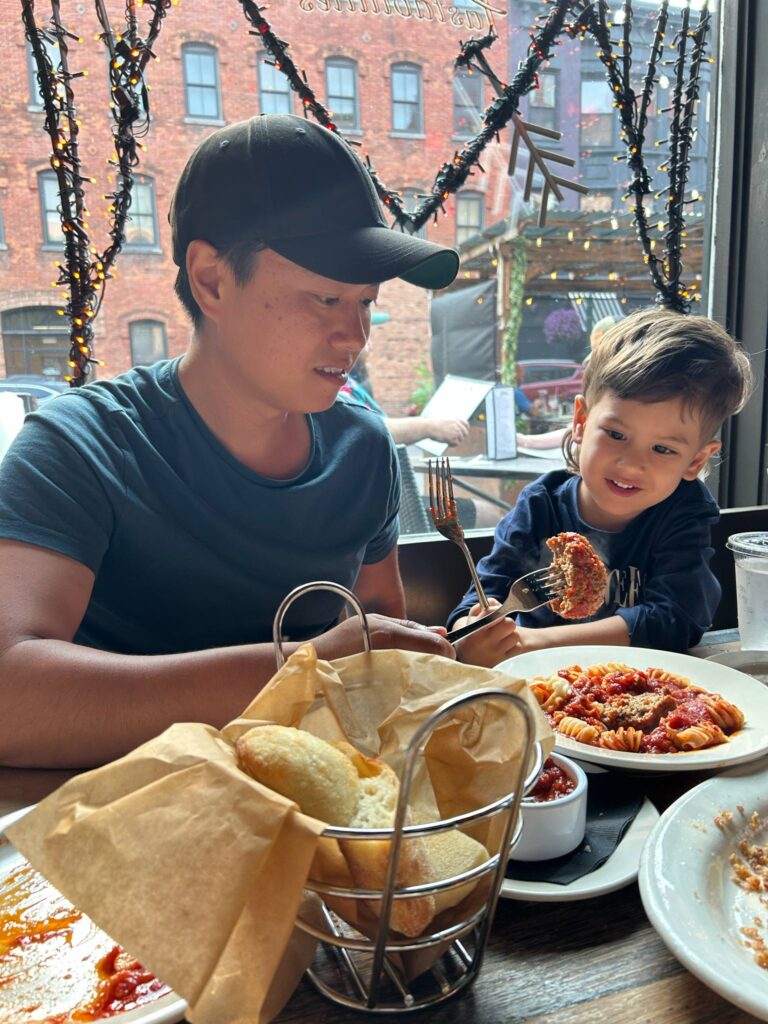
A Conversation with Jack Zhang, Chef and Dad behind Cooking for Levi
Introduce yourself.
My name is Jack, and I’m Levi’s dad. Levi is five now. I’m also a chef.
What was food and dinner like for you growing up?
My family is from southern China. They eat a lot of fresh seafood and fresh vegetables there. I grew up in Brooklyn, where there were supermarkets right down the street, so my grandma went grocery shopping pretty much every day. She’d pick up fresh produce and meat, and she’d make four or five home-cooked dishes for dinner. They were so delicious. We were a big family of foodies.
My wife was raised the complete opposite. We met in Beijing, on a study abroad trip. She grew up with more of a “let’s eat quick and get on with our lives” kind of family dinner. Maybe play some games at the table. My family would spend almost two hours eating dinner sometimes. That was our main way of bonding.
So in China I brought her along on this whole food journey, exploring different areas to try different things. She’s not a picky eater, so she was down to try everything. It rubbed off on her more and more, and now she’s a big foodie too.
How did Cooking for Levi start?
I’d been a chef for a little over ten years, and I was just starting my first head chef job when Levi was about to start solids. That’s when I started making purees for him. We didn’t buy any pre-made baby food at all. I really believe it’s simple to make baby food fresh.
I always started with a grain, like oatmeal or rice, and turned it into a kind of porridge. That was the vehicle. I’d cook meats and vegetables into it and blend it right in the pot with an immersion blender, which is so easy to clean. That’s how he started eating different kinds of fish, different meats, fruits, and all kinds of veggies.
What did making it yourself let you control?
Texture, for one. With the blender, you can make it a smooth puree or leave it a little chunkier, depending on where they are. When they’re little, the sensory side is really important for their development, so the more textures you can show them, the better. Store-bought baby food is all pureed.
You also control the ingredients, so you don’t have to worry about contamination or heavy metals. That was our philosophy: let’s introduce different textures, get him trying different flavors, and give him different kinds of nutrition through real ingredients.
You and Emmy bring different things to raising and feeding Levi. How do you split it up?
It’s kind of funny, because we’re new parents. Levi’s our only child. It’s not like we studied parenting; we’re learning along the way. Emmy’s expertise is early childhood development, and mine is food and cooking, so I stick with my strong points. The language stuff, I’m really bad at.
When Levi was just a few months old, Emmy would always tell me, you have to keep talking to him, even if he doesn’t respond. It’s so hard for me to talk to someone who doesn’t talk back! So she was the one always talking, and I think that really helped his vocabulary.
What made you start filming yourself cooking for him?
I wanted to share my passion as a chef with Levi. I thought, what if I made these fancy plated meals for him and saw what his reaction would be? Would he even try it? He did, and it was absolutely adorable. That made me want to make more and more dishes and see what he thought.
He was about two and a half, and he was already trying to use a fork and knife to cut the food. A two-year-old eating scallops. Eating beef Wellington. It was hilarious, and he was so curious.
I tried to really talk through it with him. What do you taste? Is that crunchy? Is that salty? Do you like that? We’d talk about the ingredients and where they come from. What do you think this meat came from? That was my way of building his vocabulary.
What doesn’t make it into the videos?
What you see on the internet isn’t real life. Levi’s a normal kid, and he has his moments. Little boys get distracted easily. I’m sure every parent has dealt with this. Sometimes, they just forget to eat! They zone out because they saw something out of the corner of their eye, and all of a sudden ten minutes pass and they haven’t taken a bite. So we have to remind him constantly. You don’t want mealtime to take forever, and sometimes it can.
You do what you can. You remind them, and you talk to them more about the food. Every kid is different, so you tailor it to your own child.
What’s the first thing you’d tell a parent to try?
Involve your kids in the whole process of mealtime. You don’t want it to feel like a chore. You want it to be a bonding experience, an activity you’re doing together.
It can be as small as bringing them grocery shopping. Then when you make dinner, even if they’re not helping, you can say, hey, remember this tomato you picked out? Or this cucumber? That gives them a connection to the food, instead of you putting down a plate they know nothing about and saying, you’ve got to eat this now.
If they help you peel potatoes, you can connect that back to what they’re eating. It gives them a sense of accomplishment and confidence. The more you do it, the better.
What if a kid’s picky eating is already pretty set?
Then you have to introduce things slowly. Especially if it’s already a habit, like, what do you mean? All I eat is chicken nuggets and french fries. What do you mean we’re having salmon?
One of the main ideas in our book is that you can’t surprise them. Parents might feel like a surprise is nice, and sometimes it can be. But with new foods, it’s better for them not to be surprised.
Food is very mental. Unless you’re starving, a lot of how you taste things and decide what’s good happens in your head. So imagine I blindfolded you and handed you a glass of milk, but told you it was orange juice. You take a sip expecting orange juice, and it’s milk. Even if the milk is good, you’re going to be taken aback. What is that? I wasn’t expecting that.
So talk to them about what to expect. If it’s something you haven’t tried either, try it together. If it’s something you love, tell them why you love it, or talk about the first time you had it. They need something to connect to.
Every recipe in your new book has conversation starters. Where did those come from?
The book was such a joint effort. I handled all the recipes, and Emmy handled the early childhood development side. We came together as parents. Everything we’re talking about, we experience every day with Levi.
Emmy has a more academic background, but the book isn’t technical. She translates it in a way parents can understand and practice. And when you’re cooking with your child, it’s nice to have something to chat about. So each recipe has a few topics you might bring up.
Your new book is weeknight dinners. What did you have to change as a chef?
I had to shift gears a little. I’m a chef by profession, so I like more advanced techniques, and sometimes those take more time. That’s not the goal of this book.
So I had to really think, okay, if I were a regular parent without all these skills, just trying to make dinner, what’s the best way to make this recipe? Most of these meals take 30 to 40 minutes, and they don’t have a long list of ingredients. They still have techniques you can get better at as a home cook. But they’re doable on a weeknight.
I also didn’t want the same ingredients over and over. You want to explore new ingredients and techniques that don’t take forever.
How did you pick recipes that kids and parents would both like?
Kids really like colorful things, so I tried to put a lot of bright colors in the dishes. We eat with our eyes first. Think about the cereal aisle at the grocery store. It’s all bright, popping colors.
When I go shopping with Levi, I’m like, I bet you’re looking at that cereal and you want it, don’t you? They make it bright and colorful so kids will want it.
Kids are little beings trying to understand the world. If you know something like that, just let them know. Don’t assume they won’t get it. Treat them like your little buddy and have a conversation with them.
Which recipe is closest to how you cook on a busy night?
My favorite section of the book is the noodles. Noodles are such an easy way to get a whole meal together, and they’re easy to customize.
I really like the eggplant pasta puttanesca. Puttanesca is a bolder red sauce, a tomato sauce with garlic, anchovies, and capers, so the flavors are really punchy. Kids already like pasta and red sauce, so it’s a good way to introduce flavors they wouldn’t get anywhere else.
Eggplant is underused, too. Most people probably only have it in eggplant Parm. Here you cut it up and saute it into the sauce, and it soaks up all that sauce and gets this meaty texture. We love it with spiral noodles, but you can use any pasta.

Levi is five now. What can he do in the kitchen?
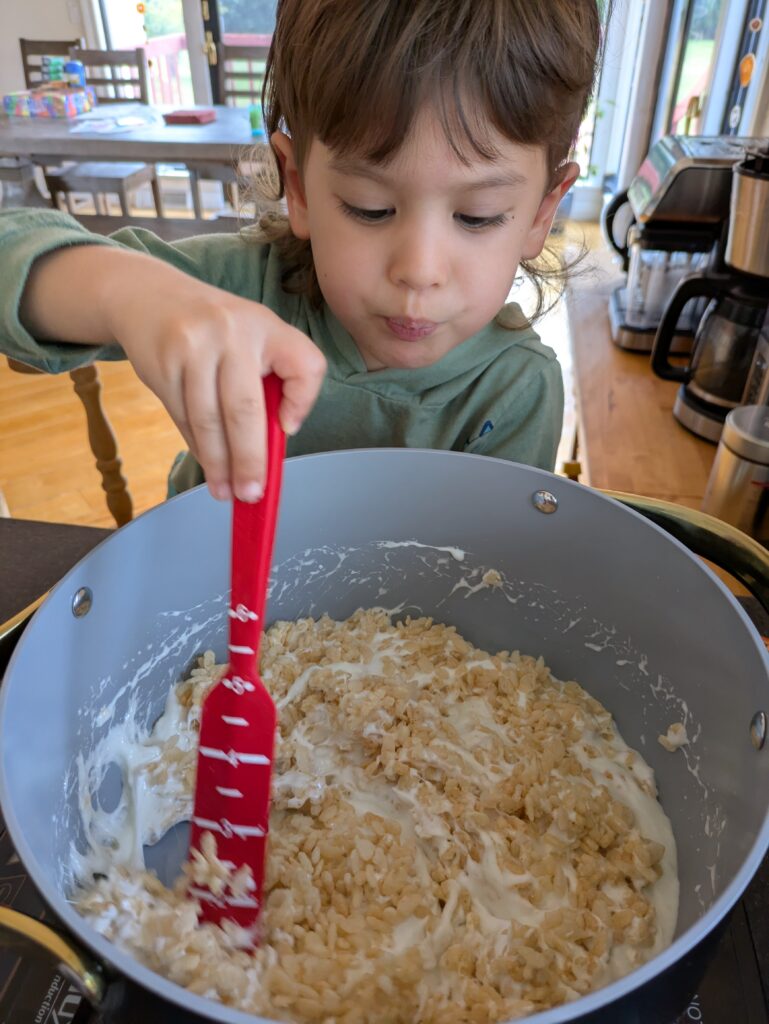
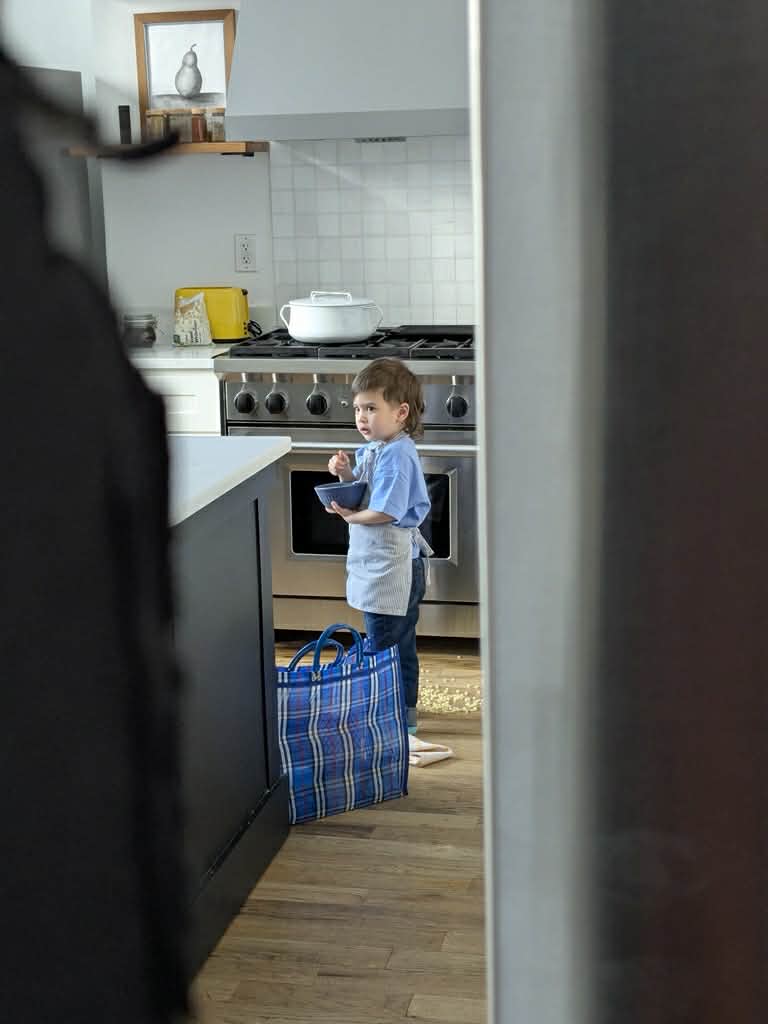
He’s a quick learner, so he picks up the techniques I teach him really fast. He started with little plastic knives, cutting soft things like strawberries and bananas. That’s a great way for very young kids to start. It develops their fine motor skills, and you can teach them safe cutting before they move on to something sharper. He’s had a real little chef’s knife for over a year now. He can peel, cut, saute, roll out dough, and make pasta.
But this is something parents don’t have to worry about. Whatever level your child is at in the kitchen, that’s completely fine. You’re not trying to make your kid the best cook. It’s about them spending time with you. A lot of parents are cooking while the kids are off doing something else, so why not involve them a little?
What’s a good job for a kid who isn’t using a knife yet?
Measuring out the ingredients. Anyone can do that, and it brings in a little math, like counting, or weighing if you’re weighing things. They can also wash the produce, or peel or pick things.
And taste testing. Ask them, hey, can you taste this for me? What do you think? If it’s just one taste, kids don’t usually complain. It’s just a little taste. And it gets their palate going.
What do you hope Levi remembers about dinner growing up?
I just hope he has these memories of food being a bonding moment.
With food, we hope he has a healthy relationship with it, and that he can use it to provide for the people he loves. Even to provide for himself. It’s really crazy to meet a grown adult who can’t cook for themselves, even basic things. I feel like that’s one of the most core survival skills you can have.
What would you tell a parent whose kid only eats beige food, and who watches your videos and feels behind?
Kids go through phases. We’ve been in that same position with Levi. Sometimes we think, this is it, this is the next however many years. But we keep at it, and a couple of weeks later he’s out of the phase.
That’s the number one thing we’ve learned as parents. Our job, in my opinion, is to not freak out during these phases, because it is very, very hard. I’ve had times where I’m like, this is crazy. He was fine just the other day. What’s going on?
With picky eaters, one day they might develop an aversion to an ingredient, and another day they might start loving a different one. In our book we have a section with substitutions you can try if there’s one ingredient they can’t stand. Levi has one. He can’t stand the flavor of coconut, for whatever reason. If your kid has a couple of aversions here and there, it’s fine. Adults have them too. But if they’re set on eating only one thing, maybe try to encourage them to branch out.
What’s one cooking skill every home cook should practice?
Getting all your ingredients ready. I think everyone says this, but it helps so much. When you read a recipe, look at the ingredients first and get all of them ready, within grabbing distance. Then go through the steps.
That’s how a chef develops a recipe: ingredients first, then the steps. If you prep one thing, do a step, then prep the next thing, it’s so much slower, and you get confused. Wait, did I do this already? It’s called mise en place, and it really is very important.
And a bonus one: learn the claw technique for cutting.
Follow Jack, Emmy, and Levi on Instagram @cookingforlevi and on TikTok
& Don’t forget to follow US on IG @onepotatobox ❤️