This post contains affiliate links. If you buy through them, One Potato may earn a small commission at no extra cost to you.
Small Bites:
Jesse Lane Wellness Cookbooks: Healthy Fresh Salads — Healthy Dairy-Free Desserts — Healthy Homemade Soups & Sandwiches — Healthy Holistic Pregnancy
Trying to plan around food sensitivities without losing your mind? Peas & Hoppiness helps you map out meals in about two minutes, filter recipes by dietary need, and Ann’s recipe library makes it easy to find dishes that actually work for your family 👉 Try it free for 30 days – use code ONEPOTATO
Looking for a new grocery delivery service? This new year, we’re looking forward to reset, not overwhelm; so we’re looking to Hungryroot to start off on the right foot. Check it out here, and get 30% Off Orders of $99 →
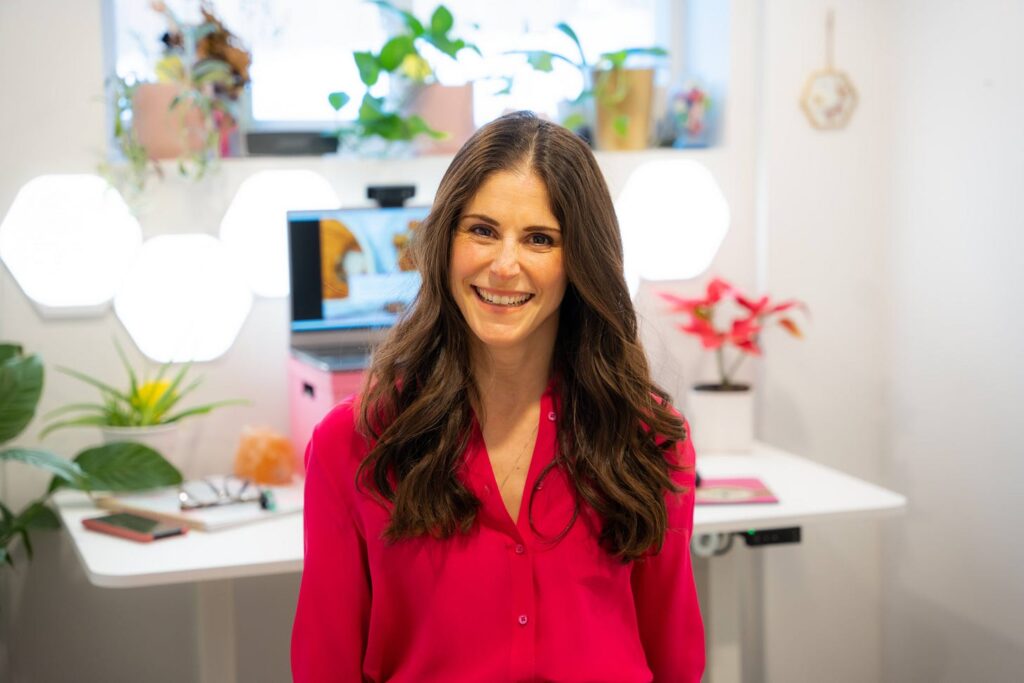
Jesse Lane Lee talks to One Potato about protein, picky eaters, allergen-friendly swaps, and letting go of perfection in the kitchen.
If you’re starting the year craving a healthier rhythm but don’t have the bandwidth for a total life overhaul, Jesse Lane Lee is exactly who you want in your corner. Jesse is a holistic nutritionist, cookbook author, and corporate wellness educator based in Toronto. Before she ever stepped into nutrition, Jesse spent seven years working as an engineer, so she understands the nine-to-five grind and the reality of rushing home to kids who need dinner now, not an hour from now.
Her own lifelong experience with IBS and food sensitivities transformed the way she cooks and ultimately led her to this career. What started as a restricted diet became a source of creativity when she began swapping ingredients, reinventing recipes, and building meals that made her feel good instead of depleted. Four cookbooks later, she’s still teaching that same philosophy: healthy eating isn’t about perfection; it’s about paying attention to how food makes you feel, and finding simple routines that work for real families.
In our conversation, Jesse talks about the weekly dinner assignment her mom gave her in high school (a brilliant parenting move she plans to repeat), the gentle ways she teaches her kids about fueling their bodies, and the low-pressure questions she asks them after a sugar-heavy holiday or a bag of movie-theater popcorn. She shares the allergen-friendly swaps she uses constantly and the “secret weapons” she sneaks into meals.
January often comes with pressure to fix everything at once, but Jesse reminds us that confidence in the kitchen grows one habit, one swap, and one kid-made batch of scrambled eggs at a time. For even more from Jesse, here are some resources she shared with us:
A message from Hungryroot:
Food Delivery That Works With Your Family
Navigating food sensitivities can make even the most ordinary grocery list feel complicated. Hungryroot takes some of that weight off by letting you spell out exactly what your household needs — allergies, preferred proteins and veggies, spice levels, even goals like eating more plant-forward. Their quiz becomes a kind of shorthand for your family’s real-life boundaries, and the groceries and meal ideas that follow are built around those details from the start.
The result is a weekly delivery that feels genuinely workable: flexible ingredients you can swap around, simple recipes that won’t set off anyone’s symptoms, and enough variety to keep things interesting.
👉 Learn more here, and get 30% Off Orders of $99 →
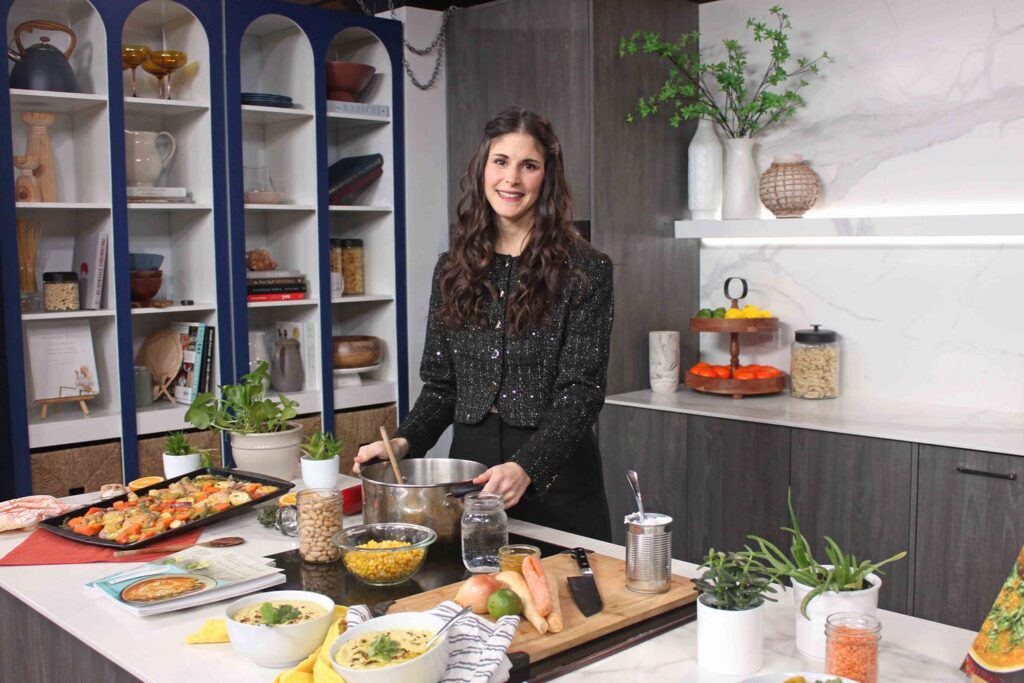
A Conversation with Jesse Lane Lee
Introduce Yourself: I’m Jesse Lane Lee, a holistic nutritionist and cookbook author. My mission is to help busy families fit healthy eating into real life. I have two kids, ages six and eight, and they couldn’t be more different as eaters.
My younger one happily eats chia pudding; my older one won’t touch it but can demolish eggs and chicken. They each have their own “healthy-ish” preferences — and we still send them to school with Goldfish sometimes. You truly can’t do it all. Between school events, kids’ activities, work, and the general chaos of parenting, it’s so easy for home-cooked meals to fall to the bottom of the list. I get it. Frozen pizza still happens in our house too. But I love teaching families the simple tools and strategies that make homemade meals realistic, not overwhelming.
What from your childhood kitchen influences how you cook for your family now?
Baking was a huge part of my childhood. With two sisters in the house, someone was always making cookies. Around the holidays, my grandmother kept tins of Christmas cookies in her freezer, and we’d sneak in and eat them straight from the tin whenever the adults weren’t looking.
In high school, my mom did something that shaped everything for me: during my senior year, I had to cook dinner for our family once a week. As a typical teenager, at the time, I thought it was so annoying, but it forced me to learn how to cook more than cookies. By the time I got to university, I already felt comfortable in the kitchen. I even had a roommate who paid me to cook for her because she was living on ramen (that’s an exaggeration but you get it!). Looking back, that weekly dinner assignment was one of the smartest things my mom ever did.
You’ve had your own journey with IBS, food sensitivities, and gut issues. How has that shaped the way you feed your family today?
My IBS and leaky gut problems started in university and completely transformed how I ate. I actually went to school for engineering and worked in the field for seven years, but during that time I was constantly modifying recipes, learning to swap ingredients, and figuring out how to make meals I could actually digest. That’s what eventually led me to study nutrition.
Because I grew up in a home where we always ate together and I know the impact that it has on kids, family meals are really important to me. We eat breakfast together every morning and dinner together every night, even if dinner has to be early to work around activities.
I’ve been lactose intolerant forever, so I naturally gravitated toward dairy-free cooking. My kids didn’t grow up drinking milk (I have always made homemade almond and oat milk) so when my mom gave them real milk one summer, they thought it was disgusting. They do eat other dairy, which is fine, because I don’t approach food with strict rules.
I try to keep our conversations about food positive and low-pressure. I’ll say things like, “Carrots help your eyes see better,” or “Chicken has protein that will help build your muscles, and you know what? Those muscles will help make you even faster when you play soccer.” It’s gentle and educational, and I can see it slowly sinking in, especially with my eight-year-old.
How did you shift your mindset from feeling restricted to feeling inspired when you were dealing with sensitivities?
The biggest shift came from noticing how much better I felt when I avoided the foods that triggered me. That mind–gut connection is everything. I ask myself (and my kids), “How did you feel after you ate that?” Did it energize you, or give you a stomachache?
When my digestion was at its worst, eating out was miserable. I’d get sick, hide in the bathroom, cry — it was awful. So once I started feeling better, it became easier to choose foods that loved me back.
Now, when I’m faced with something I know might bother me, I ask: Is it worth it?
If I’m in Italy eating incredible gelato, yes — totally worth the stomachache. But a mediocre ice cream at a random party? Not worth it.
I do this with my kids too. At Halloween or Christmas, I let them go for it. Twenty minutes later, when they’re complaining about their stomachs, we connect the dots together. That awareness helps them make their own choices without feeling restricted.
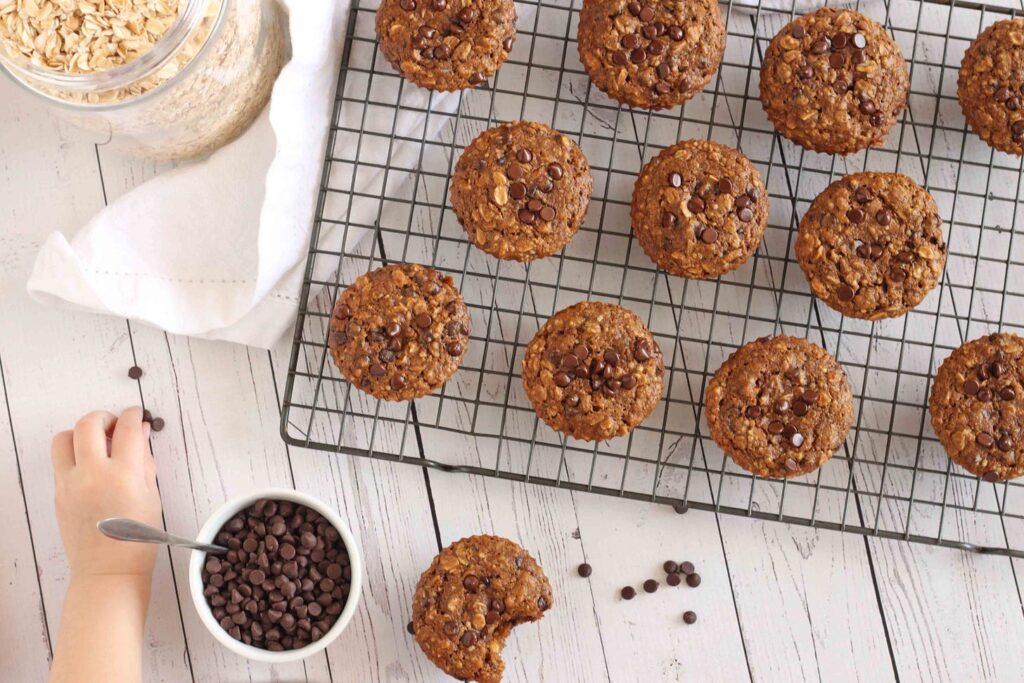
How did becoming a parent change the way you think about healthy eating?
Before kids, I was convinced I’d make everything from scratch forever. Listen, I even made homemade dog treats. Once I actually became a mom… that fantasy evaporated quickly.
Now it’s all about balance and practicality. If I’m buying hummus instead of making it, I scan the ingredient list and pick the cleanest option. I don’t make everything from scratch, but I try to choose well when I can.
Meal planning has also been a total game changer. Before kids, if dinner wasn’t planned, you could just go grab something or wait for takeout. With kids, “it’ll be an hour” is not an option — everyone’s hungry now.
Having a plan creates predictability. My son will ask, “What’s for dinner?” and I tell him to check the meal plan on the fridge. It prevents meltdowns, reduces snacking while we scramble to figure something out, and allows me to batch-cook or prep ahead when I can. It’s honestly the only way we avoid the “hanger” spiral.
What does “holistic” look like in your actual day-to-day life? Any simple habits parents can try?
For us, breakfast is the anchor. The school lunch environment is chaotic, and my kids often come home having barely touched their food. So I focus on getting a nutrient-dense breakfast into them every morning.
Eggs are our go-to — fast, protein-packed, and my eight-year-old can make them himself. If it’s not eggs, it’s plain Greek yogurt with a little maple syrup. My secret weapon is hemp seeds. I put them on everything. They add protein, fiber, and healthy fats without changing flavor or texture.
Planning breakfast ahead and knowing what your kids will actually eat sets the tone for the whole day.
You teach about boosting energy, mood, and digestion through food. What are some approachable ways families can do that?
For most families, the biggest gap is protein, especially for women and picky eaters. Carbs are never the issue; protein and vegetables usually are. As we get older, our protein needs actually increase to maintain muscle mass and support bone density.
Hemp seeds are my favorite solution. You can keep a shaker on the table and add them to everything. My kids think it’s fun, and the flavor is mild. I even hack my son’s favorite “everything but the bagel” seasoning by filling half the bottle with hemp and chia seeds. He has no idea.
At dinner, I aim to always include at least one thing I know everyone will eat — chicken, rice, something safe. That gives them a landing pad while we slowly expand their palates with new foods.
What are some underrated allergen-free swaps you rely on?
Coconut oil is my favorite butter substitute in baking. It has a lovely texture and acts as a great source of healthy fat. Most of my recipes are calibrated for it because I use it so often.
I also use nutritional yeast constantly. It adds a subtle cheesiness and is a great source of B vitamins. I toss it into dressings, stir-fries, pastas — pretty much anything. It boosts flavor and nutrition without much effort.
How can families stay creative when navigating food sensitivities without cooking the same three meals forever?
Start small: add just one new recipe to your meal plan each week. Trying seven new dinners is overwhelming; one is manageable and keeps you moving forward.
Theme nights help too — taco night, stir-fry night, soup night. Once you have themes, you can play around within them and find allergen-friendly variations without reinventing the wheel.
Also, don’t cook four separate meals. If one kid doesn’t have allergies, they still eat what the family eats. You can keep things like cheese on the side so each person can customize their plate, but you’re not running a restaurant. Cooking whole foods makes navigating sensitivities much easier than it used to be.

How do you balance knowing all the nutrition science with the reality of parenting — birthday parties, school snacks, Goldfish… all of it?
It’s definitely a balancing act. Our school has constant cookie and popcorn fundraisers, and when I read the ingredient lists, I cringe. But I also trust that our bodies are resilient. One artificial-coloring-loaded cookie isn’t going to destroy my kids’ health.
I save my energy for breakfast and dinner because these are the meals I can control. If lunch is chaotic or if they get handed a neon-colored treat, I let it go. I don’t want to give those foods so much power that they become forbidden or tempting.
There are things I still struggle with, like boxed cake mixes. I used one once, read the ingredients, and immediately regretted it. But I try not to make these foods feel like a moral issue. My kids eat really well overall, so I’ve learned to let some things slide.
Do your kids like cooking with you?
Yes, especially baking which feels full circle given my own childhood. I usually cook with them one-on-one because together it can be a bit too chaotic…they fight over who gets to stir or pour. If one is at a playdate, the other gets special kitchen time.
My son loves making eggs in the morning, and is probably ready for a real knife now. My daughter uses kid-safe knives to cut fruit for breakfast. They’ll sometimes help with dinner or prep their own lunch veggies. Some dishes or nights are not always kid-helper friendly, like if I’m making something for dinner that requires a lot of pots, heating, and time on the stovetop, but I love seeing them gain confidence.
What’s one cooking skill you think every home cook should practice?
Proper knife skills — specifically the claw grip, curling your fingers under when holding the item being chopped or sliced — and using sharp knives. People think dull knives are safer, but they actually slip more and cause more cuts. A sharp knife is safer and makes cooking so much easier. Consider this your reminder to sharpen yours. I need to do mine too.