Small Bites:
We’re loving Territory Foods: no-prep, real-ingredient meals made by local chefs and delivered fresh to your door.
👉 Check out the rotating menu

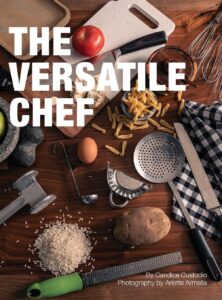
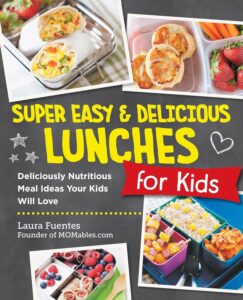
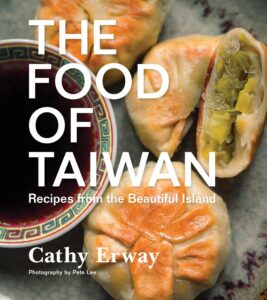
We love this history of food book series by Chef Arlena and the Children’s Culinary Institute: Chef Arlena Strode, Changing the World One Kitchen at a Time Series: The Emperor of Chefs: The Story of G. Auguste Escoffier | Six Star Chicken: The story of Eugenie Brazier | A Pinch of This and a Dash of That: The Story of Fannie Farmer | The Worst Cook in New York: The Story of Mary Mallon | Food Bridges: The Story of Leah Chase | Write My Own Cookbook: Cooking Skill Level 1 (Children’s Culinary Institute Learn From Home Workbook)
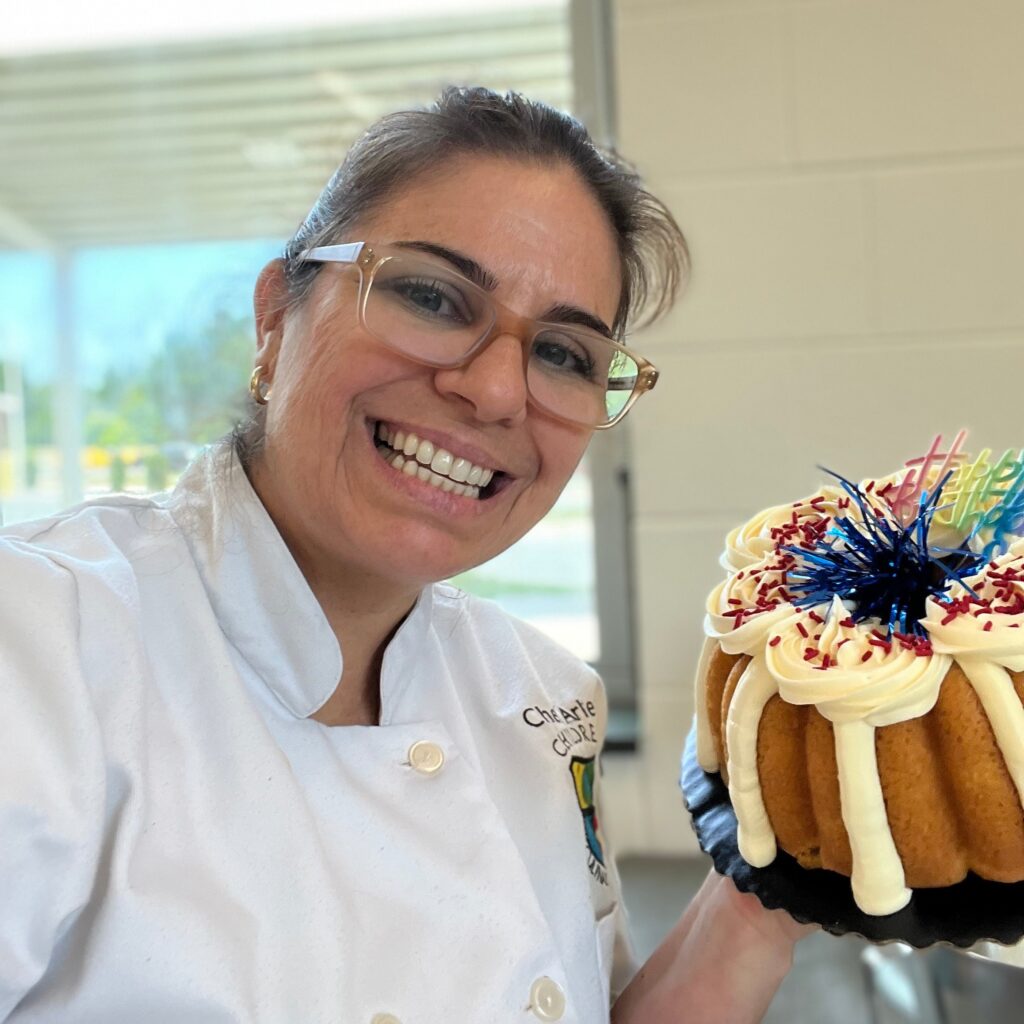
Chef Arlena Wants Your Kids to Make Dinner
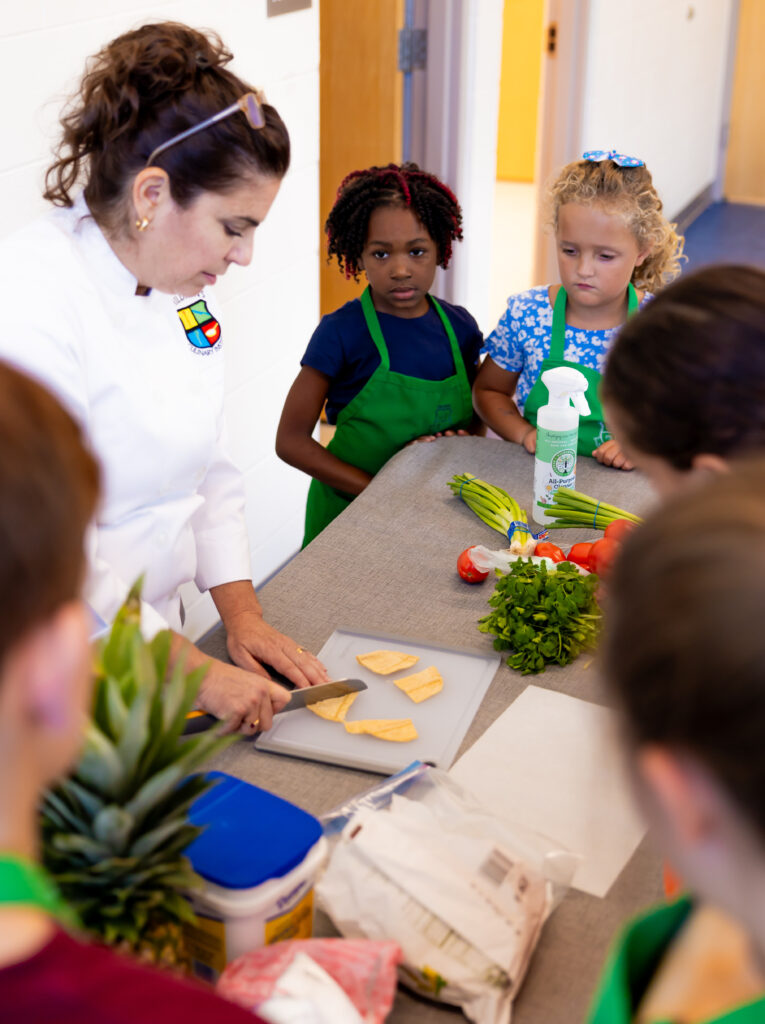
Chef Arlena Strode can’t tell you how many times she’s told the story of how she ended up creating a global kids’ cooking program, but what she will tell you is that it started with puff pastry—and a very determined eight-year-old.
Her daughter was making spanakopita one afternoon when a friend dropped by and did a double take: Wait, she made that herself? Can she teach my kid? That moment in Arlena’s kitchen—during yet another move for her husband’s military career—sparked something bigger than a shared snack. It lit the fuse for what would become the Children’s Culinary Institute, now taught in more than 20 locations across 3 countries, with students as young as 18 months and as old as 18 years old.
But Arlena didn’t build her curriculum to impress anyone. She built it because she needed a way to cook with her own kids. Because she wanted her children to feel confident in the kitchen (and in life). And because she believes cooking is one of the best ways to teach math, science, cultural history, resilience, and creativity all at once.
Now, after 32 years as a military spouse, Arlena is finally putting down roots—and building her very first brick-and-mortar school. In our conversation, she talks about how she got here, why she thinks every kid should learn to cook before they leave home, and the parenting mindset shift that changed everything in her kitchen. (Hint: It starts with letting go of the fear of mess.)
Also? You’ll never look at a bowl of cold baked ziti the same way again.
A message from our partner Territory Foods:
Real Meals, No Prep—From a Brand We Truly Believe In
Longtime readers may remember: One Potato started as a fresh meal kit company for busy families. So it means a lot to us to find a new partner who shares our values. Territory Foods delivers fully prepared, dietitian-approved meals made by local chefs and packed with nourishing, delicious ingredients.
Every dish is gluten-free (with dairy-free and plant-based options, too!), and there’s zero prep involved—just heat and eat. It’s the perfect solution for those weeks when life feels a little too full, but you still want to feed your family food that feels good.
👉 Get $25 off your first order with code TRY25 from us at One Potato!
A Conversation with Chef Arlena Strode
Introduce Yourself: I’m Chef Arlena Strode, the founder and owner of the Children’s Culinary Institute.
As of June 1st, I’m also officially a retired military spouse—my husband just completed 32 years of service. We’ve moved a lot over the years, lived all over the world, and raised four kids along the way. They’re all adults now, but this journey raising them and cooking with them has really shaped the work I do today.
What led you to start the Children’s Culinary Institute?
It started with my own kids. As a culinary school graduate, I always wanted to put my degree to good use—but moving every few years for my husband’s military career made that tricky. We were living abroad and my daughter, who was eight at the time, was making spanakopita from scratch. Friends came over and saw her working with puff pastry and said, “Wait, your kid can cook that?” Then they asked, “Can you teach my kid?” Suddenly I had ten kids in my kitchen, and I realized, okay… maybe this is a thing. That summer I wrote a curriculum and started testing it—bringing in registered dietitians, teachers, other chefs, and parents to refine it. I wanted it to be skill-based, not just recipe-driven. The recipe might say “30-minute dinner rolls,” but with a group of seven-year-olds, it’s more like 90. So I designed it to be adaptable: if it’s apple season, we make apple pies. If it’s peach season, peach pies. The goal is to teach real, foundational kitchen skills.
When we’d move again, I’d train someone local to continue the program using the curriculum. Eventually, it grew. Now, 16 years in, our curriculum is being taught in about 20 locations. We’ve won several awards—including the Parent and Teacher Choice Award—and we’re just getting started.

Now that your husband has retired, what’s next for you and CCI?
This is the first time I’ve been able to really put roots down. So we just bought a building in our local downtown—our very own cooking school! That’s a big leap for me. Up until now, I’ve always been the one helping others launch programs in community kitchens or church halls or on military bases. I’ve never had a brick-and-mortar space that was all ours.
I want this school to continue what I’ve always believed: use what’s already in your community, reach kids who wouldn’t have access otherwise, and teach skills that go far beyond just following a recipe. It’s not about flashy franchises—it’s about real kids gaining real confidence and real life skills.
So much of what you’re doing is about building community, not just in the kitchen, but in the way you set up your programs.
Exactly. It’s very much rooted in that chef ethos of “use what you have.” So if there’s a church kitchen that only gets used on Bible study nights, why can’t we use that space to teach kids cooking? A lot of community centers already have underutilized kitchens. It’s the same idea—reduce waste, maximize what you’ve got.

What made you decide to go to culinary school in the first place, and pursue cooking as a career?
I grew up in an Italian family, which basically means I grew up surrounded by food. I even studied in Italy for a couple years and spent time with relatives there. Italian mamas are fiercely protective of their kitchens—it was my mom’s space, and I wasn’t allowed to cook with her. I’d sit at the counter and watch her make lasagna, thinking it looked like a beautiful dance.
But I wasn’t allowed to get in there. I was told I’d make too much of a mess, and honestly, I didn’t learn to cook as a kid. By the time I got to college, I couldn’t even feed myself properly. That’s what finally pushed me to take a cooking class. At first, it was just about survival—but then I realized, I was actually good at it. I just needed some skills. That’s what lit the spark.
When I became a parent, I flipped the script. I taught my kids to cook everything. In our house, if one of them said, “Mom, I love your beef stroganoff—can you make it?” I’d say, “Sure… but only after I teach you how to make it yourself.” Now they’re all grown and completely capable in the kitchen. Some of them have even used their skills to barter or earn extra cash in college—one sold homemade chocolate ganache in the dorms!
Do you remember a favorite dish your mom made when you were little?
Oh, hands down—her baked ziti or lasagna. I would sneak into the fridge and eat it cold, by the handful. That was our comfort food.

You’ve helped set up cooking programs in 3 countries. What’s it been like adapting the curriculum globally?
When I taught on military bases, it was pretty seamless. American grocery stores, American ingredients, mostly American families. But when friends in other countries—like the UK, Australia, or India—wanted to teach the curriculum, that’s when I started getting questions like, “What’s Bisquick?” It was a learning curve. But it turned into a beautiful exchange. Now we have an international network of instructors, and they’re sharing recipes, ingredients, and ideas across borders. One teacher in another country even uses our program to teach kids English—through cooking.
It made me realize—there’s almost nothing we can’t teach in the kitchen. We’re doing math, science, language, even geology. Just last week at summer camp, we baked a volcano cake with layers that represented the earth’s crust, mantle, and core. We tunneled all the way down to magma—and then we ate it. Learning doesn’t get much better than that.
Speaking of learning: introducing new flavors to kids can be tough. What’s your approach to picky eaters?
It’s all about exposure and taking the pressure off. We actually start as young as 18 months, with food play—things like turmeric-infused Play-Doh or sensory bins with rice and grains. It helps kids get comfortable just touching unfamiliar textures.
We also gently educate parents during those classes. Sometimes our own food hangups get passed down unintentionally. We say things like “my kid won’t eat that,” but a lot of that comes from our own stories, not theirs.
One of my favorite phrases we use in class is: “Don’t tell your brain before your tongue gets a chance to taste it.” We don’t allow “yuck” or “gross” comments. And we always say—you don’t have to like it, but you do have to try it. Even just touching your tongue is part of how your palate develops.
I also remind them: there’s a big difference between saying “I don’t like this” and “I’m choosy about this.” You might not like raw avocado, but maybe you do like guacamole. That kind of nuance builds confidence, and confidence builds flavor intuition.

How did you decide to write children’s books?
I’m a little bit of a culinary history nerd. I’ve always admired five specific chefs from history who changed the culinary world in big ways—but most people have never heard of them. During COVID, when in-person classes paused, I used that time to write a children’s biography series about them.
The kids loved it. I’d bring the books to schools and do author events, and it was such a joy to see them light up learning about culinary history. That led to more books—like a journal for kids to track skills and recipes, and pictorial coloring books for preschoolers that teach everything from kitchen tools to trying new foods. One of them even has “I tried it!” icons kids can color when they taste something new.
It all comes back to building confidence and joy in the kitchen, no matter your age or experience level.
When parents are overwhelmed trying to just get dinner on the table what’s one small mindset shift you’d recommend?
Let your kids help. Even if it’s not “helpful” yet. Give them a kid-safe knife and a cucumber. Who cares if it’s cut perfectly? You’re not plating for a Michelin star, you’re feeding your family. And they’re learning.
Also: don’t fear the mess. Mess is where learning happens. Just teach them to clean up afterward. I do it with 12 kids in my kitchen at once—your house can survive it too.
Do you have a favorite foundational kitchen skill every kid—and adult—should practice?
Tasting as you go. We keep a bowl of popsicle sticks in the middle of the table so kids can sample as they cook. Ingredients vary—one jalapeño can be mild, the next super spicy. One apple can be tart, another sweet. The only way to know what you’re working with is to taste it.
When you taste and adjust as you go, you learn how to balance flavors, fix mistakes, and make a dish truly your own. That’s not just a skill—it’s intuition. And it’s what turns someone into a confident cook.
You can follow Chef Arlena on Instagram @childrensculinaryinstitute
& Don’t forget to follow US on IG @onepotatobox ❤️
Note: This newsletter may contain affiliate links from our friends & sponsors.