Countdown to #LifeSkillsNow Summer Camp! ⏳ 13 Days to Go
Free (and Actually Useful) Summer Fun: Katie Kimball — founder of Kids Cook Real Food and a longtime One Potato friend — created #LifeSkillsNow to give families meaningful summer learning without the stress. With early access workshops ready as soon as you sign up, it’s one of the most valuable free resources we’ve found this season.
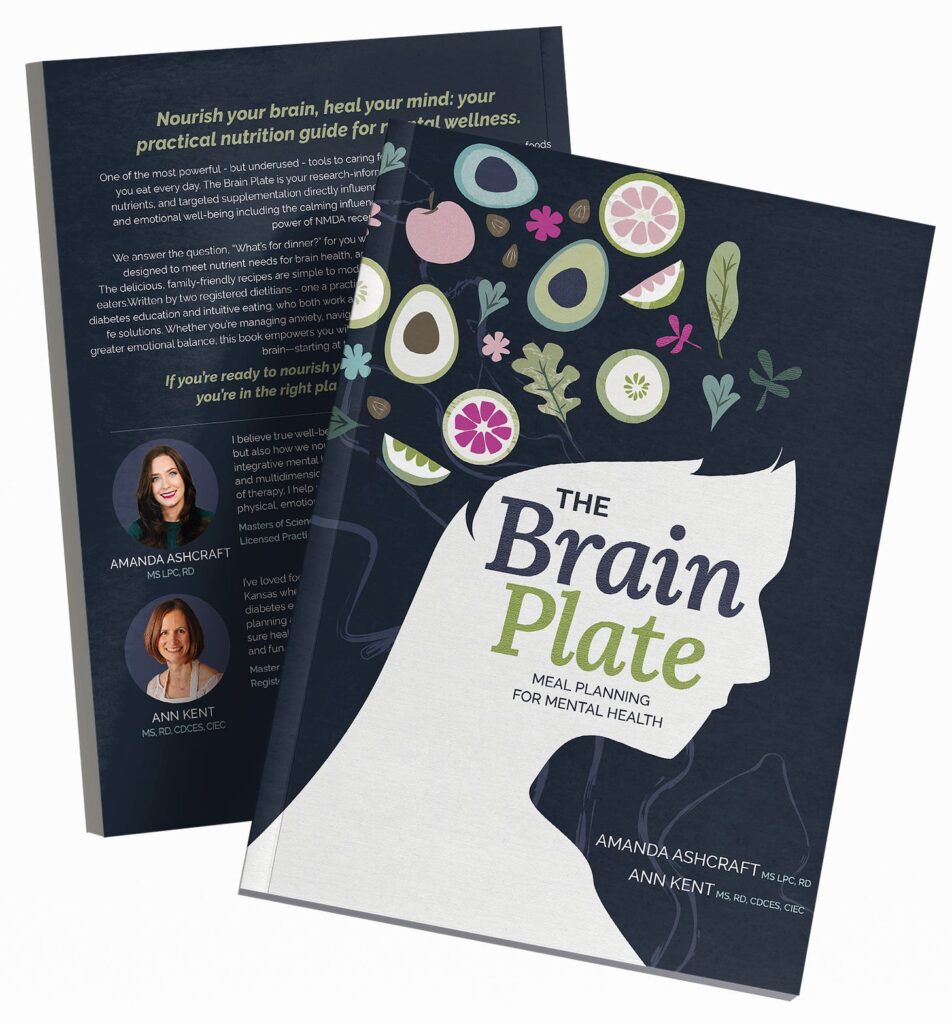
Introducing The Brain Plate: Meal Planning for Mental Health
There are cookbooks, and then there are guides for real life. Our friends Amanda Ashcraft and Ann Kent—both dietitians and moms, one a licensed counselor and the other the founder of Peas & Hoppiness—joined forces to create something we haven’t really seen before: a brain-focused cookbook-meets-meal-plan that gives practical, evidence-based support for mental health through food. The Brain Plate is part recipe book, part supplement guide, part troubleshooting coach for when life (and motivation) gets hard—and it’s designed to help families nourish their bodies and their minds.
We sat down with Amanda and Ann to talk about how the project came to be, what makes it different from other nutrition books, and the simple ways parents can support their kids’ mental and emotional health—starting with what’s on their plate.
✨ The Brain Plate is coming soon! Sign up for the waitlist and be the first to know when it’s available.
Learn more about our favorite meal planning app: Peas & Hoppiness, by Ann Kent! It features an easy-to-use customizable app and made-for-you grocery list to save time and money with meal planning. Swap recipe ingredients for dietary restrictions and picky eaters, all while saving time and stress! Recipes are seasonal and delicious. Learn more here & try it out for FREE for 30 days →
We love the whole concept of The Brain Plate. What made you decide to create this book?
Ann: Amanda and I were both seeing a major overlap in our work—nutrition, mental health, and the overwhelm families feel. And so we wanted to bring together both the food and supplement pieces that support emotional well-being, but also the strategy. You could have all the right ingredients, but still be stuck without the tools to pull a meal together or make the connection between what you eat and how you feel.
What made the collaboration work so well was that Amanda came in with this brilliant framework: she had identified the nutrients connected to neurotransmitter production—like serotonin—and laid out the foods that support that process. My brain immediately went, “Great! I can turn that list into real-life meals.”
So we combined our superpowers: Amanda with the clinical and counseling knowledge, and me with the recipes and practical implementation. It’s everything you need in one place, whether you’re looking for support around depression, anxiety, ADHD, or just trying to feel more stable and nourished.
Amanda: We kept hearing from people who felt really lost. Like, “I don’t feel like myself, I’m not nourishing myself, I don’t know how to feed my family well.” So we built a system: What can you add to your plate to support your brain and body today? The goal isn’t perfection. The goal is progress, grace, and better energy and mood.
We started small—just a guide you could download. But it kept growing. We’d say, “Well, we should probably add more on how supplements work,” or “Let’s help people understand what’s actually happening in their bodies.” It evolved into something much bigger—and more useful—than we originally imagined.
I love working one-on-one with clients and helping them connect the dots around food and brain health, but writing recipes is not my thing! So teaming up with Ann just made it all possible.
Give us a quick overview—What’s actually in the book?
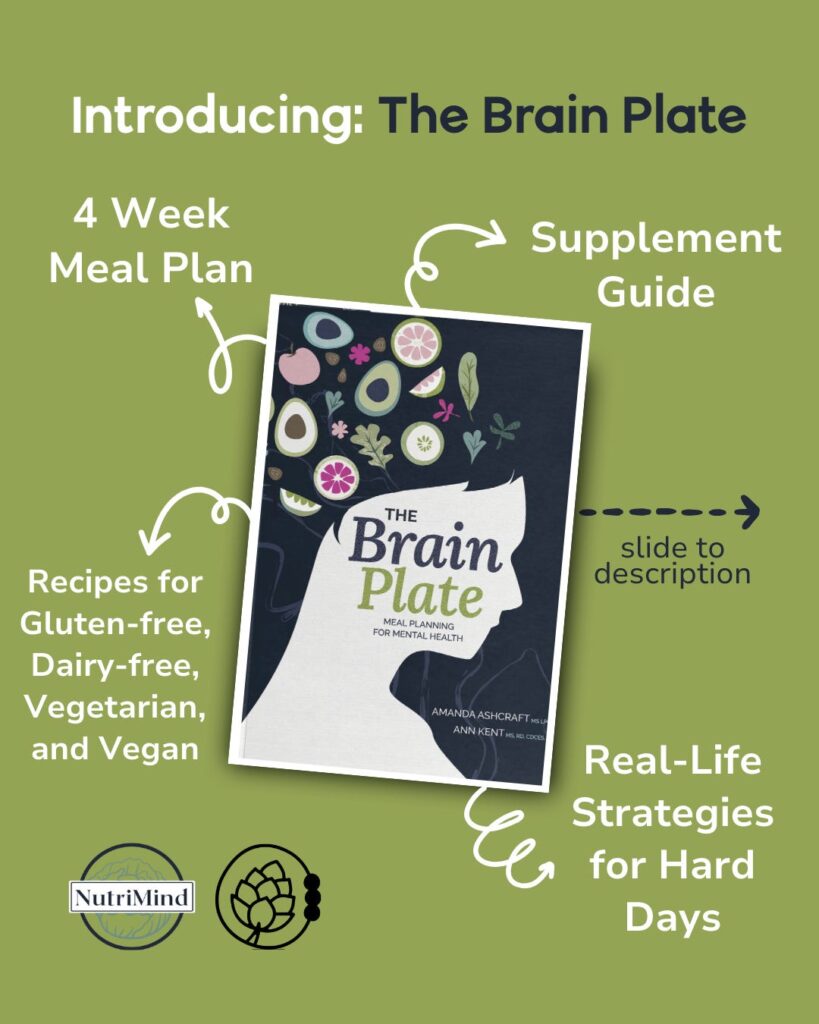
Ann: It’s organized into five sections:
-
Nutrition and Brain Health – Gain a basic understanding of how nutrition impacts the brain and body, to support mental health.
-
Meal Planning for Mental Health – Learn to make a non-diet meal plan, navigating busy schedules and mental health challenges, in a way designed for those new to meal planning. Get practical tips to make grocery shopping easier.
-
Your 4-Week Meal Plan and Recipes – Discover four weeks of seasonal meals and recipes that highlight nutrients to support mental health. These are designed to meet your nutrient needs over the course of a week, understanding there is normal variance from meal to meal. Each meal plan and recipe include adjustments for gluten-free, dairy-free, vegetarian, and vegan needs.
-
Nutrient & Supplement Guide for Mental Health – Learn how macronutrients, micronutrients, and dietary supplements function in the brain, and discover which may be helpful for your unique needs. Focus on food first, then use this information to decide where you may have nutritional gaps to fill. The dietary supplement fact sheets provide accurate information about the options on the market. Use these in conversation with your mental health team to determine which, if any, may be beneficial for you.
-
Troubleshooting Guide for Cooking and Mental Health Blocks – Education is only part of the equation; you also need the skills to implement this knowledge in a way that is realistic and sustainable for your life. This section walks you through the most common blocks for different mental health and lifestyle challenges. Choose the sections to read based on your specific needs.
There are over 100 recipes, and every single one has built-in substitutions. It’s truly designed to be flexible and usable for lots of different needs.
How is it different from the typical “eat better” advice?
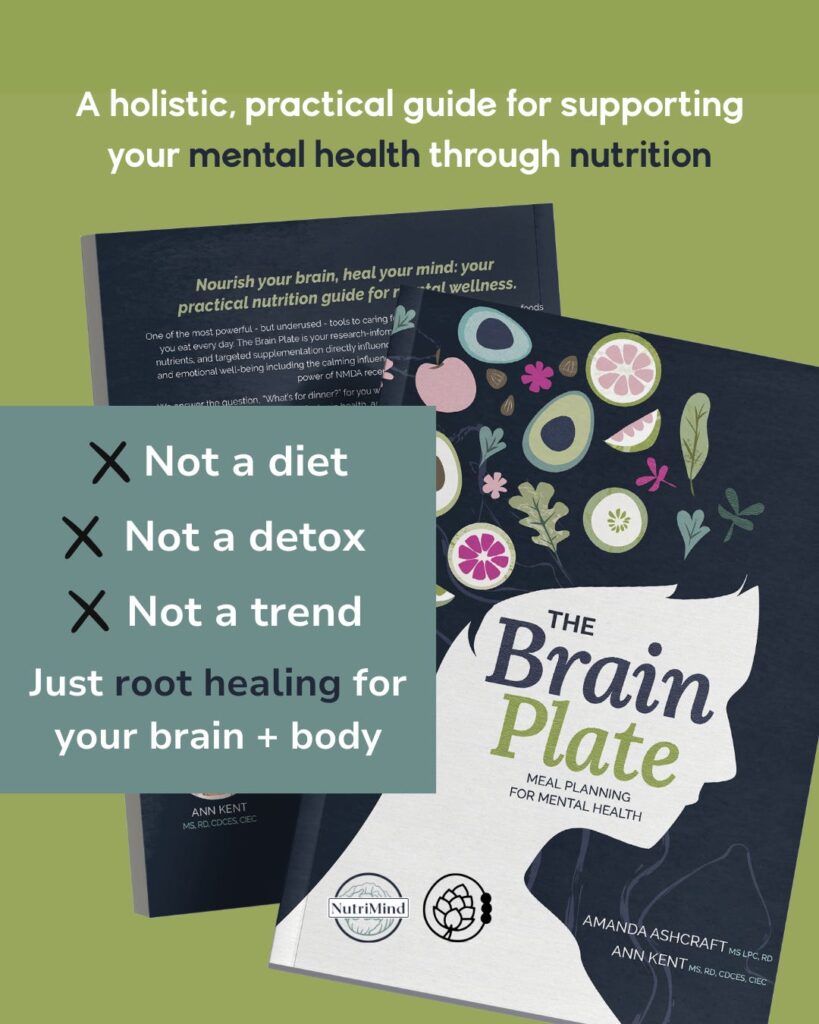
Ann: A lot of mental health nutrition advice focuses on cutting things out—sugar, dyes, processed foods—but that can backfire, especially with kids. We focus on what to add: more color, more variety, more nutrients.
Amanda: When you’re full and nourished, your body naturally wants less sugar. You don’t always have to say “no”—your body just doesn’t crave it as much. This applies to kids as well as adults, of course, so we all feel full and satisfied without labeling foods as good or bad.
Ann: And when it comes to families, we wanted to make it both doable and positive. The book and supplement guide is geared more towards adults, but when you are feeling your best, it makes it easier to show up as your best self for your kids.
Are there ways you talk about food at home that help create a healthier mental connection for your kids?
Ann: The language we use is huge. Sometimes how we talk about food matters even more than what we’re serving. Being overly restrictive or labeling things as “bad” can create food anxiety. We want to model a positive relationship with food.
Amanda: Definitely. Like, I’m not anti-weight loss for adults if they need it, but I don’t talk about calories or weight loss in front of my kids. I focus on how food feels in my body, and I encourage them to listen to their own cues. Like, “Are you still hungry?” or “Does your tummy feel okay?” Those kinds of questions help kids check in with themselves.
I’ll say, “Oh, I feel really satisfied,” or “That was a great meal,” and it helps them understand that food is about nourishment, not rules. I also try to create a calm, connected environment at the table. We’ll play conversation games like two truths and a lie to get everyone talking about their day. That kind of positive atmosphere really makes a difference.
And when they ask about foods, even sweets, I might say, “Yeah, that gives us energy,” or “That helps our tummy work better.” We try to talk about the function of food instead of labeling it. You can say to young ones that fiber helps you poop and fruit has vitamins that help you stay well.
I’m a big fan of visual encouragement too. We did a rainbow sticker chart—every time they ate a fruit or veggie in that color group, they got to put a dot on their chart. It wasn’t about rewards; it was about making it fun and letting them see all the variety they’d tried.
My kid recently got super into making zoodles because the spiralizer made cool ribbons. It was more about the activity than the food, but it got them excited to try something new. Cooking together really helps.
Amanda and Ann will be back to share their top strategies for feeding yourself when motivation is low, how ADHD or anxiety can affect eating patterns, and how to make meal planning easier—even on hard days.
👉 Join the waitlist for The Brain Plate here