Small Bites:
Back-to-School is super busy, so that’s why we’re loving Territory Foods: no-prep, real-ingredient meals made by local chefs and delivered fresh to your door.
👉 Check out the rotating menu
Want help meal planning? Back to school = back to “what’s for dinner?” The Peas & Hoppy meal planning app makes that question way easier with 11 flexible recipes, a smart grocery list, and tips for real-life families.
👉 Try it free for 30 days – use code ONEPOTATO30
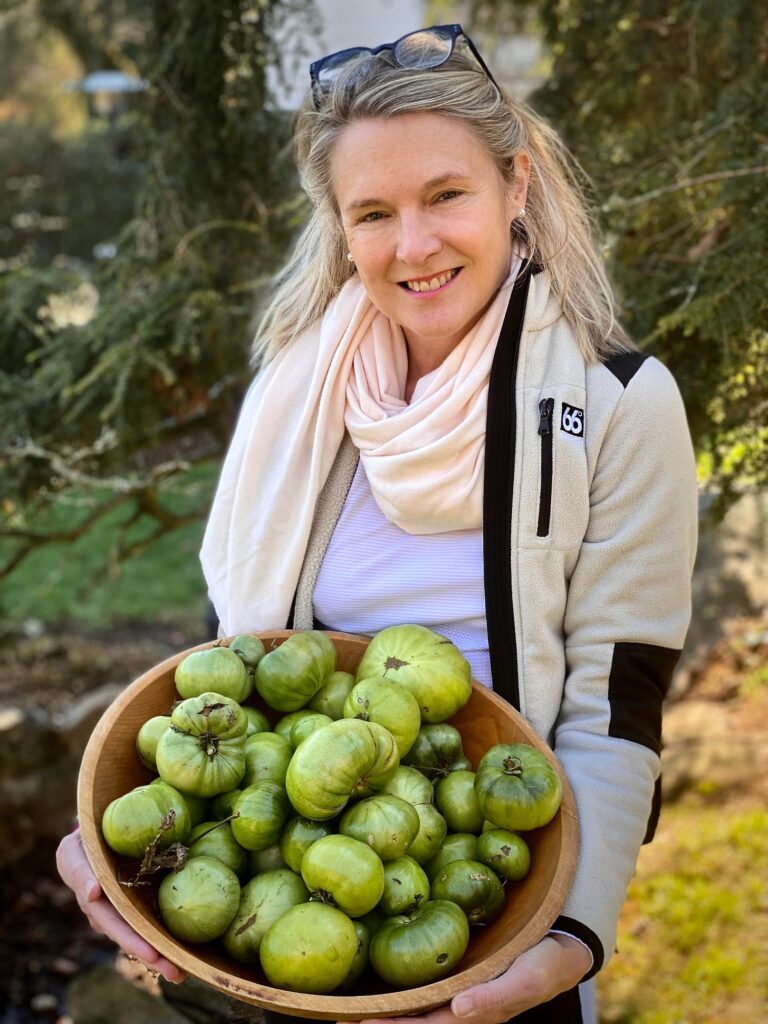
Nourishing Families, Transforming Care: Lauren Driscoll and NourishedRx are closing care gaps and redefining what it means to nourish families with dignity.
When Lauren Driscoll talks about food, she’s not just thinking about what’s for dinner—she’s thinking about how nutrition can change lives. As the founder of NourishedRx and a mom, she’s made it her mission to make nutrition accessible to everyone, especially those navigating health challenges or limited resources. Her company partners with health plans and communities across the country to help families get the food and support they need to thrive. It’s work that blends heart, health, and real-world impact—and it all starts with one shared value: food should be a source of care.
For Lauren, food and food systems are directly related to health outcomes. In our conversation, she reflects on the moments that shaped her understanding of nourishment, from family dinners to her work building systems that help people eat well no matter their circumstances. Her approach combines empathy with action, transforming something as personal as mealtime into a foundation for better health and stronger communities.
At One Potato, we’ve always believed that feeding our families is about more than the food itself; it’s about care, culture, and the quiet rituals that hold us together. Lauren’s work takes that same philosophy and expands it outward, reminding us that every act of nourishment, whether at home or on a community scale, is a way of saying: we see you, and you matter.
A message from our friend Ann Kent, dietitian & owner of Peas & Hoppiness:
Back-to-School, Back to Real Life—Dinner Help Included
When backpacks get packed and schedules fill up, the last thing you want is to be staring at your fridge at 5pm, wondering what’s for dinner.
The Peas & Hoppy Meal Guides App takes the stress out of meal planning with 11 balanced recipes each week, a smart grocery list, and flexible tips that work for real families (yes, even picky eaters and sports-night chaos). Every recipe is written and tested by Ann Kent—a dietitian and mom of two—who knows that dinner only works if it actually works.
👉 Try it free for 30 days—no pressure, just support from one home cook to another.
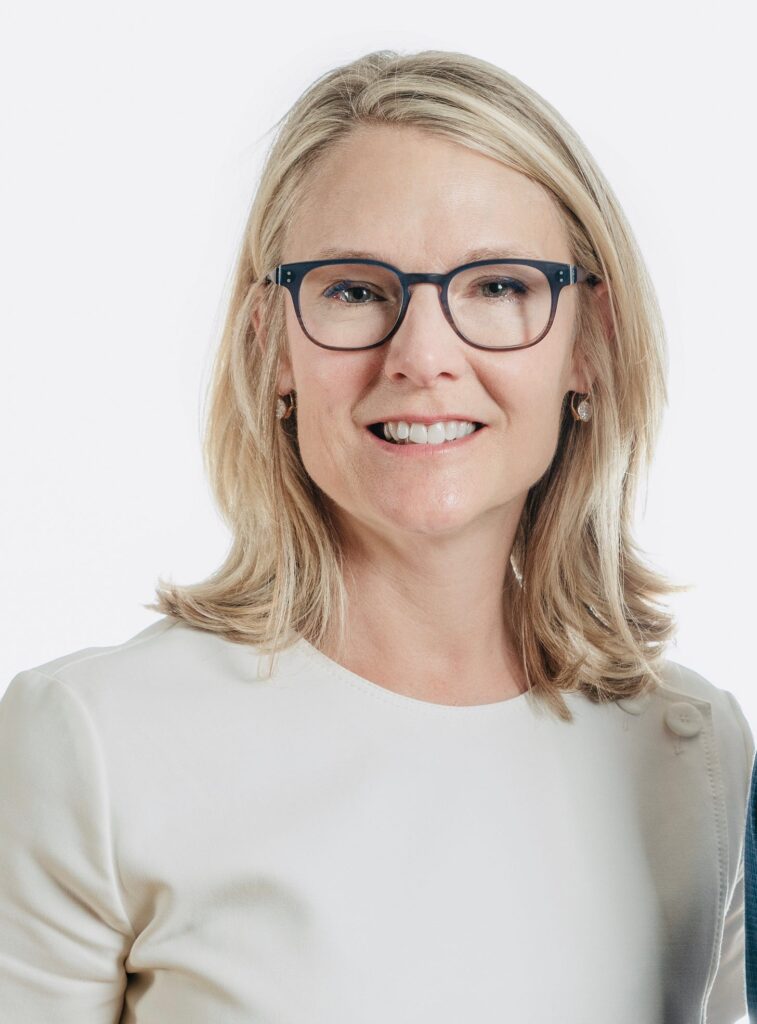
A Conversation with Lauren Driscoll
Introduce Yourself: I’m Lauren Driscoll, the founder and CEO of NourishedRx. With a background in healthcare, I come at food and nutrition from that lens—how we can use food to drive better health outcomes. I have two sons, and they are all grown up now, living in New York City!
I’ve worked in policy, managed care, and consulting, mostly focused on vulnerable populations. Over the years, I became convinced that of all the social drivers of health—like housing, transportation, or income—nutrition is the most actionable and impactful. I saw so much unnecessary suffering from diet-related disease, especially diabetes, and it really stayed with me.
On a personal level, I also experienced the power of food early on when my oldest son was a toddler. We discovered that things like corn syrup and red dye were triggering behavioral issues for him, so I had to get creative. This was the late ’90s, before nutrition was a major focus in parenting conversations, but I’d send him to birthday parties with his own cupcakes. I didn’t realize it then, but that experience shaped so much of how I see the link between food and health today.
How have your experiences as both a parent and a professional shaped the way you think about nourishing healthy families?
It was the juxtaposition of how much impact I was able to have at home versus how little I was able to do for our very vulnerable health plan members that pushed me to keep trying to figure out a better way.
Back in 1999, I was working for Oxford Health Plans in New Jersey and saw entire pockets of the population suffering from food insecurity and diabetes. I wanted to help, but there was no structure in place for it—no reimbursement, no policy support. Meanwhile, at home, I was completely transforming my son’s health just by changing his diet. That gap stayed with me.
Then, in 2018, the Bipartisan Budget Act included the Chronic Care Act, which gave Medicare Advantage plans permission to address social drivers of health like nutrition. That was my “aha” moment—finally, a chance to scale an intervention that could make a real impact. That’s where NourishedRx began.
Many of our readers are in the thick of feeding younger kids right now. What’s one thing you wish more parents knew about nutrition in those early years?
The biggest thing to understand is that the food environment has changed dramatically. The rates of diabetes and obesity are about ten times higher than they were 60 years ago, and that’s largely due to ultra-processed foods. Sugar, corn syrup, and additives are everywhere.
Parents need to realize that the food supply is stacked against us. The grocery store shelves make it hard to choose well, so you really do have to go out of your way to find whole, nourishing foods—even if that means frozen vegetables. But I’m hopeful—there’s growing awareness and talk of front-of-package labels, like the ones on cigarette boxes, to warn about health risks. That could help empower families to make informed choices.

Beyond the food itself, how do you see shared meals impacting kids’ emotional and physical health?
For me, food has always been about connection. My grandmother set that example—she always had another seat at the table, always made room for more. She’d get the pot boiling, run outside to pick and shuck the corn, and have it on the table minutes later. It was about love and togetherness as much as nourishment.
When I look at how disconnected food has become—families spread across the country, everyone eating on the go—it’s heartbreaking. At NourishedRx, we actually measure emotional well-being alongside physical health using validated tools like the UCLA Loneliness Scale. We see that when people receive nourishing food and begin to feel better, that energy and positivity ripple out into all areas of life.

You’ve also talked about making sure meals are culturally meaningful. How does NourishedRx approach that?
That’s a big one. When I started NourishedRx, most of the existing healthcare food programs were shipping mass-produced, medically tailored meals from a few commercial kitchens across the country. I tried some myself, and I thought, “I wouldn’t serve this to my grandmother—why would anyone else want this?”
So we flipped the model. We source food locally and make it culturally responsive. One of our first programs was with Blue Cross Blue Shield of Minnesota, focused on maternal health for BIPOC Medicaid members. Many participants were Somali mothers, but they were dropping out because the meals weren’t culturally appropriate.
So my team and I went to Minnesota, met with Somali community members, and learned what foods mattered to them. We partnered with a halal grocer and Somali kitchen to create meals that reflected their traditions. Engagement skyrocketed—not just because the food was better, but because they felt respected. That sense of dignity built trust and connection, and even led friends and family to enroll in the health plan.
Wherever we can, we work with local kitchens and CSAs—often minority- or women-owned—so the community itself benefits. It becomes this beautiful, self-sustaining circle: local businesses supporting local health.
A lot of parents carry guilt about how or what they feed their families. What would you say to them?
We all do the best we can in any given moment. Sometimes the priority is just getting your kid to swim practice with something in their belly—and that’s okay! If you can make it easier on yourself by keeping healthy options on hand, great. But don’t strive for perfection. Food should support your life, not add more stress to it.

What results are you seeing from your programs—and what’s your hope for the next generation of families?
On a macro level, we need change on both the supply and demand sides. Grocery stores are full of unhealthy options, and at the same time, for many people, nutrition science feels distant or irrelevant. We need better food options and better education.
We’re already seeing measurable results. In our maternal health programs, for example, we saw a 31% reduction in NICU admissions compared to control groups, along with lower postpartum depression rates and reduced overall healthcare costs. For adults with diabetes, heart failure, or kidney disease, we’re seeing slower disease progression and even reversal in some cases.
My hope is that as parents and consumers become more aware and empowered, the industry will meet them halfway with real, healthy choices that are accessible to all.
You mentioned maternal health—tell us more about how those programs support whole families.
We learned early on that if we provided food only for the birthing parent, it often got shared with the rest of the family—especially the kids. So now we provide groceries for the entire household, plus prepared meals for the mother when possible. It’s about acknowledging the reality of family life: parents will always put their kids first. Supporting the whole household is what makes the program effective.
What’s next for NourishedRx?
Right now, we’re working with early adopter health plans—people who really understand how foundational nutrition is to health. But there’s still no easy reimbursement structure for what we do. My hope is to see a bundled payment model, where Medicare could test a “personalized dietary behavior change intervention,” similar to how they pay for physical therapy or hip replacements.
That would be a real breakthrough. Food is medicine—or, as I prefer to say, food is health. The movement is growing, but we need better systems to make it accessible to everyone.
What’s one cooking skill or tool you think every home cook should have?
I recently rediscovered the mandoline slicer, and I’m obsessed. It’s such an easy way to make a salad feel special—paper-thin radishes, cucumbers, whatever you’ve got. Just don’t slice your fingers! It’s simple, but it makes healthy eating feel a little more joyful.