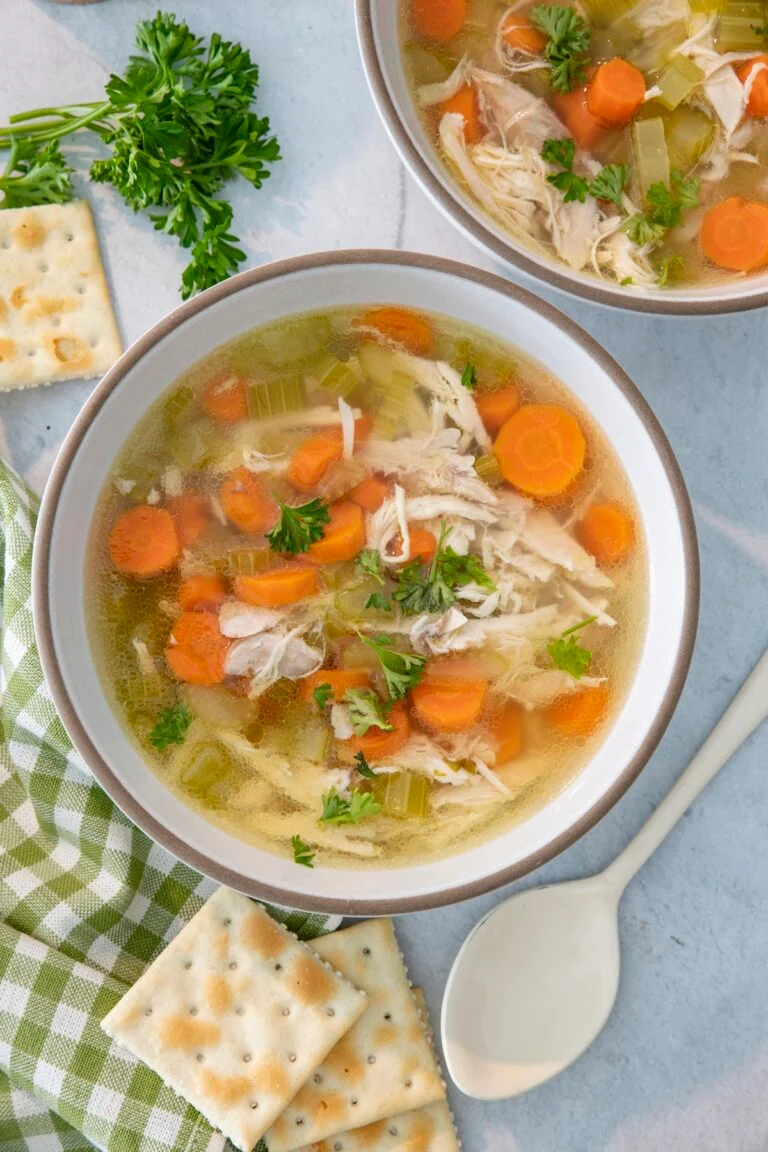
Ingredients
Scale
- 1 medium onion, cut into large chunks
- 6 carrots, peeled and diced
- 6 celery stalks, diced
- 3 cloves garlic, minced
- 1 whole chicken (3½–4 pounds)
- 1 tablespoon kosher salt, plus more to taste
- 2 bay leaves
- 4 sprigs fresh thyme
- 4 sprigs fresh parsley, plus more for garnish if desired
- Freshly ground black pepper, to taste
- Optional: Cooked noodles, pasta, or rice for serving
Instructions
- Add the onion, 3 diced carrots, 3 diced celery stalks, garlic, whole chicken, 1 teaspoon of the salt, bay leaves, thyme, and parsley to the pressure cooker.
- Add enough water to reach the maximum fill line, making sure the chicken is mostly submerged.
- Seal the lid and cook on High Pressure for 45 minutes.
- Allow the pressure to naturally release for 10 minutes, then carefully release any remaining pressure.
- Transfer the chicken to a bowl and let it cool enough to handle.
- Add the remaining carrots and celery to a large pot with a pinch of salt.
- Strain the broth and cooked vegetables from the pressure cooker into the pot, pressing the vegetables with the back of a spoon to extract as much flavorful broth as possible.
- Simmer for about 15 minutes, or until the vegetables are tender.
- Remove the skin and bones from the chicken and shred the meat into bite-sized pieces.
- Add the shredded chicken to the soup and season with freshly ground black pepper and additional salt to taste.
- Garnish with fresh parsley and serve as is, or add cooked noodles, pasta, or rice.
Notes
- Using frozen chicken: Increase the High Pressure cooking time to 60 minutes.
- Chicken pieces: About 3–4 pounds of bone-in chicken thighs or drumsticks can be used instead of a whole chicken.
- Electric pressure cookers: This recipe works well in an Instant Pot or similar multicooker using the High Pressure setting.
- For babies and toddlers: Shred the chicken finely and skip the added salt. Vegetables can be mashed into the broth for an easier texture.
- Save the broth: Straining the cooked vegetables before simmering the fresh ones creates a clearer, flavorful broth while allowing the second batch of vegetables to retain their texture.
- Prep Time: 15 minutes
- Cook Time: 1 hour 30 minutes
- Category: Soup
- Cuisine: American
