This Black History Month, we’re bringing you interviews with African American chefs and food experts at the intersection of food, sustainability, and social justice – and they’re sharing their insights & tips for nourishing healthy kids & communities. Read on!
Small Bites:
📺 Tonight! Watch Finding Edna Lewis streaming on PBS. Read our interview with host and food historian Deb Freeman.
🍴 Shop delicious food from award-winning African-American Chefs for Black History Month from Goldbelly – ships Nationwide!
👨🍳 Purchase the Kids Cook Real Food eCourse so your kids can learn how to cook and not simply follow a recipe – give them the life skills to not only survive, but thrive!
🛒 Learn more about Healthy Communities Augusta and Goodness Gracious Grocery
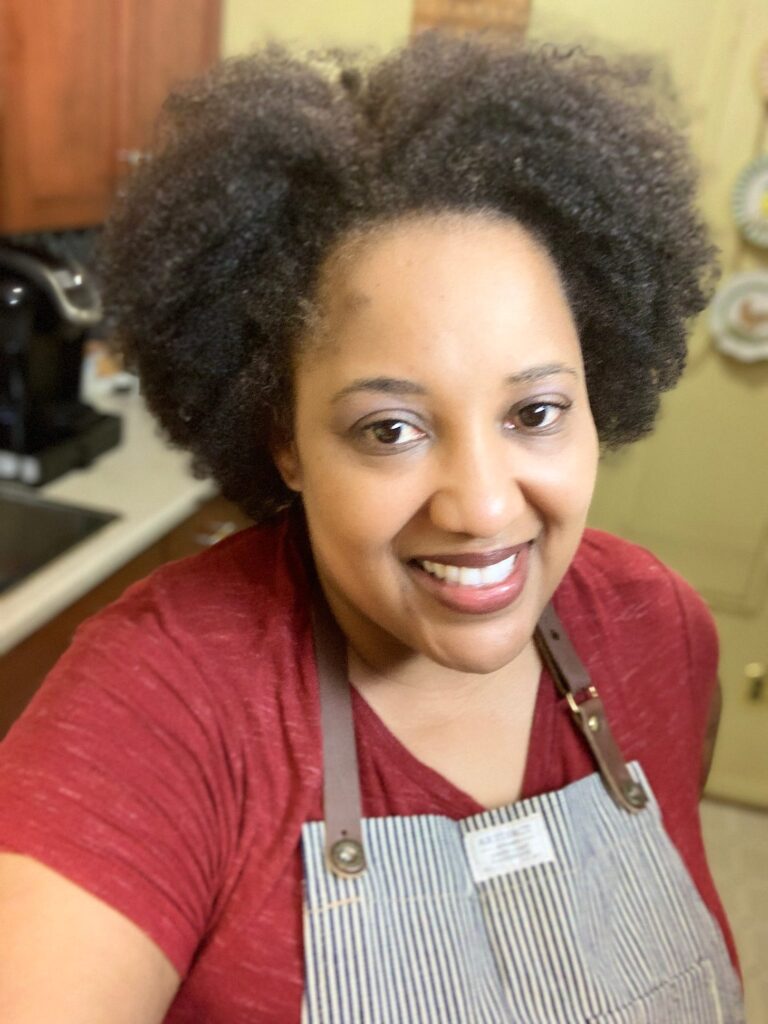
As a former chef turned Community Health and Environmental Justice Advocate, Cassandra Loftlin is on a mission to make sure every child—no matter where they live—has access to fresh, nourishing food.
But Cassandra’s journey to food advocacy didn’t start in a boardroom. It started in the kitchen. First, in her childhood home, where she was always her mom’s little helper, and later, as a professional chef and recipe tester for America’s Test Kitchen. Along the way, she realized that what kids eat isn’t just about taste—it’s about access. She saw firsthand that sometimes, kids weren’t turning down vegetables because they were picky, but because they were simply hungry. Like the time she brought turnips to a school, expecting resistance, only to find kids eagerly reaching for more. That moment changed everything.
Now, Cassandra is working with Healthy Communities Augusta and Goodness Gracious Grocery to help families build sustainable food networks, reduce food waste, and rethink the way they cook at home. In our conversation, she shares how we can all make small, meaningful changes in our kitchens—whether it’s cooking more intuitively, making the most of leftovers, or embracing the magic of roasting (trust us, she makes a strong case!).
—>Behind the Paywall: Read our full interview with Chef Cassandra, including her journey to becoming a chef and how she approaches recipe creation for kids and parents alike…plus so much more…
A yummy note from Goldbelly:
Honoring Black History Month: Celebrate Black Food Makers 👩🏾🍳
As a community of American food lovers & food makers, we have a deep gratitude for the influence African American culture has had on U.S. regional food. From icons like Chef Carla Hall in Washington, D.C. to small, independent bakers, like Nikki J’s Cakes down in Texas, Goldbelly delivers the most epic eats crafted by Black food makers right to your door.
These chefs are cooking up everything from BBQ to pasta to red velvet cake and ice cream – you’re sure to find something to satisfy any craving. Check out the options for a special family treat.
Order now and support Black chefs: Shop Black Food Makers on Goldbelly 🔪

Introduce Yourself: My name is Cassandra Loftlin, a.k.a. Chef Cassandra. I’m a Community Health and Environmental Justice Advocate with a focus on food sovereignty, sustainability, and equitable food access.
What inspired you to do the work you do? Can you share your journey from becoming a professional chef to your advocacy in community health and environmental justice?
My journey into food and advocacy started with a realization: so many of the health challenges people face are directly tied to what they eat. While working in student housing at Clark Atlanta University, I researched the top health concerns among students and discovered that eight out of ten were food-related—things like diabetes and high blood pressure. Many students were struggling with nutrition, and for some, it was a matter of life and death. That insight changed everything for me.
I had always loved cooking, and after leaving a job that didn’t fulfill me, I decided to attend culinary school. At first, I wanted to be a private chef for families who needed nutritional support. But I quickly saw a deeper issue—the people who needed healthy food the most often couldn’t afford it. One moment that really stuck with me was when I brought turnips to a school, expecting kids to refuse them—but instead, they eagerly ate them and begged for more. It hit me then: these kids weren’t picky eaters, they were just hungry, and fresh vegetables were often the only real food they had access to. That realization led me to community-based work, including chef education in school gardens. I worked with kids, helping them grow and taste fresh vegetables, and saw firsthand how exposure and involvement changed their willingness to try new foods, and worked with the schools so the kids could bring these fresh ingredients from the gardens home with them.
One of the biggest ‘aha’ moments came at a preschool where I cooked daily meals. The kids were eating high-quality, locally sourced meals, and parents started noticing their children wouldn’t eat processed foods at home anymore. It was a powerful reminder that kids develop their food preferences early—and that when given access to real, nourishing food, they respond positively.
My work today is about making sure all children, no matter their background, have access to fresh, healthy food. I’ve seen how transformative it can be, and I believe that with the right exposure and education, we can shape lifelong habits that support both individual health and community well-being.
You mentioned that cooking was a big part of your childhood. Did you cook with your parents growing up?
I was always my mom’s little helper in the kitchen. More than anything, I just wanted to spend time with her—whether we were running errands, paying bills, or cooking together. Every Saturday, we’d go to the market, come home, put the groceries away, and plan what we were going to cook.
That experience really shaped my belief that cooking should be a shared responsibility in a household. It’s not just one parent’s job. If one person loves cooking, great—maybe the other sets the table, helps with planning, or takes on the budgeting. The kitchen can be a place where the whole family works together.
Do you have a favorite recipe from your childhood or one you make often now?
One of my all-time favorite dishes growing up was short ribs of beef. They’d cook all day, filling the house with the best smell. We also ate a lot of black-eyed peas, rice, potatoes, biscuits, cornbread, and pound cake.
It’s funny—back then, short ribs and oxtails were inexpensive cuts of meat. Now, they’ve become trendy in restaurants, and the prices have skyrocketed. It just goes to show how food has become a commodity, often dictated by trends instead of tradition.
With your background in nutrition and food access, how do you approach dietary restrictions in recipes for kids while still keeping them flavorful and nutritious?
My philosophy is simple: let the food be what it is. If a child can’t eat fish sticks, I’m not going to try to create some ultra-processed, fish-stick-like substitute out of avocado or another random ingredient. Instead, I’d rather serve the avocado as it is and help kids learn to appreciate real food in its natural form.
I’m also not a fan of highly processed vegetarian or vegan products that try too hard to mimic meat. I remember serving a plant-based chicken substitute to a group of kids, and one of them said, ‘This tastes better than real chicken!’ That was a red flag for me. I looked at the ingredients and realized it was full of additives and fillers—not necessarily a healthier choice. If we’re eating mushrooms, let’s enjoy mushrooms. If we’re making a veggie burger, let’s celebrate the vegetables in it rather than trying to disguise them as something else.
When developing recipes—whether as a personal chef or a recipe tester for America’s Test Kitchen—what factors do you consider to make dishes both child-friendly and appealing to adults?
When creating recipes for kids, I think a lot about presentation and how they’ll interact with the food. Colors matter—bright, vibrant foods naturally draw kids in. I also consider how they’ll eat it. If they’re younger and using their hands, smaller, bite-sized pieces work best. If it’s a soup, maybe it’s better served in a fun little cup they can sip from instead of a big bowl.
Another trick is building in flexibility. I love recipes where you can adjust spice levels—keeping the base mild for kids but letting adults add heat to their own portions.
One of the biggest things I’ve noticed, especially in group settings, is the power of peer pressure—in a good way! When kids see their siblings or classmates enjoying something, they’re much more likely to try it too. That’s why family meals matter so much—when everyone is eating the same food together, kids naturally follow along and expand their palates.
You spoke about how modern eating habits—jumping from one cuisine to another—can lead to food waste. How can families adopt a more sustainable approach to home cooking?
It’s all about thinking ahead. Instead of planning meals dish by dish, think about what your main proteins and vegetables will be for the week.
If you roast a chicken with vegetables one night, you can turn the leftovers into a roasted vegetable and chicken soup, a chicken salad, or even enchiladas later in the week. Use the bones to make broth and freeze it for future meals.
You can also get creative with leftovers. If you have butter beans one night, turn them into butter bean hummus the next day. Cooking isn’t about perfection—it’s about using what you have, experimenting, and having fun.

So much of this is about learning to cook rather than just following a recipe. Can you talk more about that? This is how we encourage parents to teach their kids to cook with the Kids Cook Real Food eCourse.
Yes! People often cook backwards. They decide, ‘I want chicken salad,’ and then go through the whole process of cooking a chicken just for that. But in reality, chicken salad is something you make because you have leftover chicken.
The same goes for soups and salads—they’re great ways to use up scraps and avoid waste. If you’re chopping carrots for dinner, save the ends and peels for a future soup stock or shred them into a salad. Thinking about food this way makes cooking more intuitive and less exhausting.
What’s a chef-approved cooking skill that home cooks should master?
Roasting! Roasting brings out the depth of flavor in everything—vegetables, beans, meats. It’s an easy way to make food taste amazing without much effort.
What’s the key to roasting well?
First, know your oven. Does it run hot? Does it have cold spots? Roasting is all about temperature control.
Second, use a good baking sheet. It doesn’t need to be expensive—just level and not warped. In fact, darker baking sheets that seem past their prime are actually great for roasting.
Next, pick the right oil. You need something that can handle high heat, like avocado oil. And don’t forget seasoning! Think about balance—salt and pepper are a must, but consider adding something spicy, sweet, or acidic to round out the flavor.
Also, don’t worry if you don’t have fancy tools. You don’t need a garlic press, 25 knives, or every gadget out there. A solid cutting board, a sharp knife, and a few good pots and pans—a sauté pan, a small saucepan, and a roasting pan—are really all you need to cook great meals at home.
What are you currently working on?
I’m working with Healthy Communities Augusta and helping to launch a grocery co-op called Goodness Gracious Grocery. Instead of waiting years for a brick-and-mortar store, we’re hosting pop-ups to bring fresh, affordable food directly to the community.
We’re also moving toward a model where we grow more food ourselves. Even local farmers are under a lot of pressure from the food system, so we’re creating a network where people grow different things in their own backyards—someone growing arugula, another person growing collard greens—and we share what we produce. It’s a way to build resilience and ensure access to good food when we need it.
Any final tips for parents when it comes to feeding their kids?
If your kid wants to eat the same thing every day for a while—let them. It’s okay. They’ll grow out of it.
A lot of times, kids fixate on certain foods because of their consistency. Blueberries might be sweet one day and tart the next, but crackers taste the same every time. If your child loves crackers, think about what they like about them. Is it the size? The crunch? The ease of eating? If so, try introducing similar foods—maybe baby carrots, apple wedges, or cucumber slices. Understanding why they like certain foods can help expand their options naturally.