This post contains affiliate links. If you buy through them, One Potato may earn a small commission at no extra cost to you.
Food People, Parent Picks: we ask our favorite chefs, food writers, and industry insiders who we interview in our Order Up! Series to share the products, books, and bites they can’t live without.
Small Bites:
Want help meal planning? Back to school = back to “what’s for dinner?” The Peas & Hoppy meal planning app makes that question way easier with 11 flexible recipes, a smart grocery list, and tips for real-life families.
👉 Try it free for 30 days – use code ONEPOTATO30
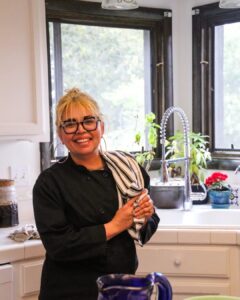
If you joined us on Tuesday for Krista Linares’s Order Up! interview, you know how beautifully she weaves together culture, care, and connection at the table. Krista, a Mexican and Cuban-American registered dietitian and the voice behind Nutrition con Sabor, reminded us that our food traditions aren’t something to “fix” — they’re something to honor. She shared how Cuban black beans shaped her love of food, how her own PCOS diagnosis inspired her career path, and why making beans from scratch (with onion and herbs in the pot, never just plain water!) is the skill every home cook should master. If you missed that conversation, you can always head back and revisit it here.
Today, we checked in with Krista for our Food People, Parent Picks series. From the fridge staple she always keeps stocked to the frozen veggie mix she turns to for adding quick veg to dinner, plus the cookbook she gifts to fellow “masa nerds,” Krista’s tips are both practical and full of heart. Read on for the everyday go-to’s that keep her kitchen (and her family table) rooted in both nourishment and joy.
What’s a favorite meal from your childhood that still feels like pure comfort?
Cuban black beans, hands down. But another one that means a lot to me is Papas Rellenas—they’re so nostalgic they’ve brought me to tears before.

A favorite cookbook—either for yourself or to gift?
Masa by Jorge Gaviria [Bookshop, Amazon]. It’s not an everyday cookbook—it’s for people who love going deep. It taught me how to make tortillas starting from dried corn kernels, instead of masa harina. If you’re a food nerd or hobbyist, it’s a dream.

If we peeked in your fridge right now, what’s the one staple we’d always find?
Corn tortillas.
You’ve shared that when you were first diagnosed with PCOS, you were vegetarian. Do you still eat that way now?
I don’t. It became too restrictive, especially after I was diagnosed with multiple food allergies around the same time. Technically, I could have managed it, but it would have taken up all my mental energy. Now I focus on eating in a way that nourishes me without making food feel like a stressor.

What are your pantry MVPs for building quick, balanced Latin meals?
Canned black beans (I know, controversial, but I season them up really well!). I also keep blends like Sazón and adobo, plus Tajín—it’s my go-to for snacking. Watermelon with Tajín in the summer? The best.

Is there a kitchen tool you can’t live without?
My comal, the flat griddle. I use it for everything, and it basically lives on my stovetop.

Favorite Latin-owned small food brand?
Little Waves Coffee from North Carolina. They also run cafés called Cocoa Cinnamon, and they make this incredible drinking cacao. I’ve lived in Los Angeles for five years now, but I still get their coffee shipped to me.
Sweet or savory?
Sweet—I have a huge sweet tooth.
As a dietitian, what’s your take on dessert?
I believe if you’re going to eat dessert, eat dessert. Lately I’ve been into cake decorating, so there’s been a lot of cake (and frosting!) in my house. But my forever favorite is ice cream.

Grocery shortcut you swear by?
Frozen veggies, especially the mix with peas, carrots, corn, and green beans. I throw it into everything: arroz con pollo, reheated leftovers, you name it.
What advice would you give families introducing Latin foods to kids in a healthy way?
One of the best things about Latin American food is how often dishes are served “build-your-own” style. Pozole, tostadas, sopes, burrito bowls, taco bars—you set out the basics, and everyone adds their own toppings. It’s fun, it works for different preferences and ages, and it’s so family-friendly.